We have spent the last century pumping water out of the ground. We are now seeing the consequences: cities are sinking (as we saw in Jakarta and Mexico City), and the ground is becoming unstable.
But what if we could put the water back?
It sounds simple, but a technology called Managed Aquifer Recharge (MAR) is proving to be one of our best hopes for stabilizing the planet.
How It Works: “Banking” Water
Think of an aquifer like a bank account. For decades, we have been making withdrawals without making deposits. MAR is the process of intentionally “depositing” water back underground.
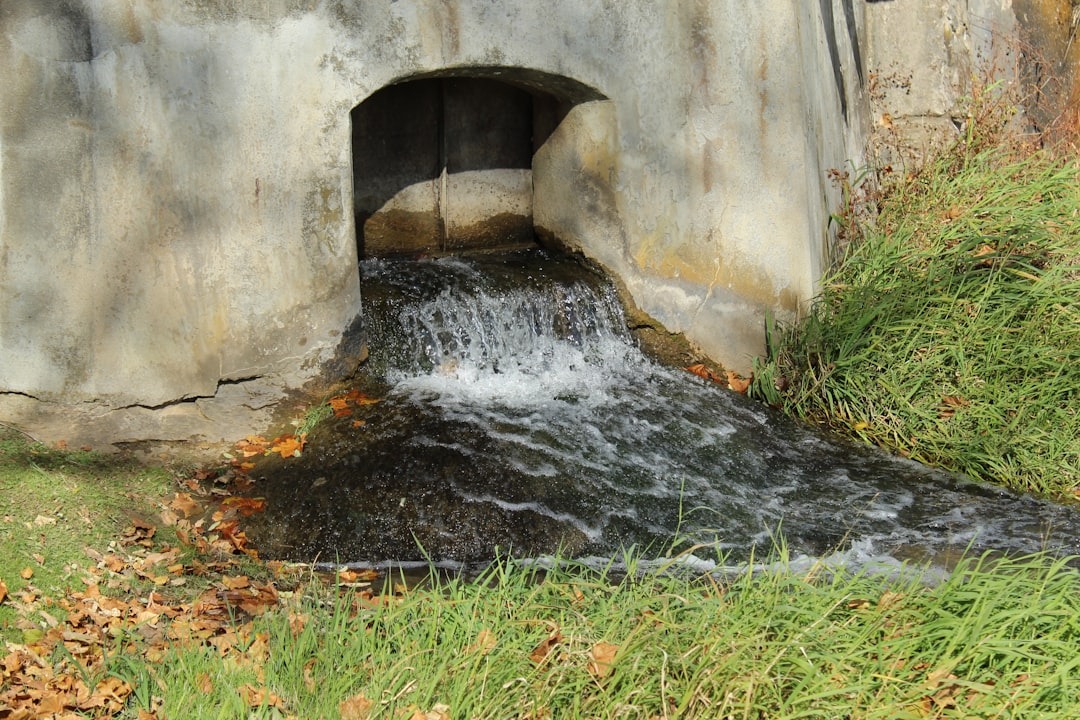
During rainy seasons or floods, instead of letting excess water run off into the ocean, engineers capture it. They pump it into large spreading basins or inject it directly into deep wells. The water slowly filters down, refilling the empty spaces in the rock.
Why “Refilling” Stops the Sinking
In our previous article, we explained how Pore Pressure acts like a cushion for the earth. When that pressure drops, the ground collapses.
By re-injecting water, we re-pressurize the ground.
- It stops subsidence: The ground stops sinking because the “cushion” is back.
- It stabilizes faults: Restoring the natural pressure balance reduces the risk of human-induced earthquakes.
Success Stories
- Santa Clara Valley, California: After decades of sinking, aggressive recharge programs have successfully stopped the land subsidence. The ground level has stabilized, saving billions in potential infrastructure damage.
- Arizona, USA: The “Water Banking Authority” has stored millions of acre-feet of Colorado River water underground, creating a safety net for future droughts.
The Path Forward
We cannot reverse all the damage. The ground that has already collapsed often cannot be “re-inflated.” However, we can stop the crisis from getting worse.
Refilling our aquifers isn’t just about having water to drink next year. It is about physically stabilizing the foundation of our cities.
To understand the full scope of this crisis—from climate change to the bedrock beneath us—read our comprehensive report: The Unseen Link Between Groundwater and Seismicity.
Types of Managed Aquifer Recharge Systems
MAR is not a single technology but a family of approaches, each suited to different geologies, water sources, and land availability:
- Spreading Basins and Infiltration Ponds: Large, shallow basins filled with surface water allow it to percolate down into the aquifer. This is the most common and cost-effective MAR technique, widely used in California’s Central Valley and Arizona.
- Injection Wells: Water is pumped directly into the aquifer through boreholes. This method bypasses the soil layer and is used when surface space is limited or when direct recharge into a deep confined aquifer is needed.
- Aquifer Storage and Recovery (ASR): Water is injected during wet seasons or periods of surplus and extracted from the same well during drought or peak demand. Phoenix, Las Vegas, and parts of Florida rely heavily on ASR.
- Soil Aquifer Treatment (SAT): Reclaimed wastewater is filtered through a soil layer to remove contaminants before entering the aquifer — providing both water storage and natural purification.
- Check Dams and Farm Ponds: Traditional, low-tech approaches used in arid regions of India and the American Southwest to slow runoff and encourage infiltration.
MAR in the American West: A Lifeline for the Drying Colorado Basin
The Colorado River Basin, which supplies water to 40 million Americans and 7 states, is experiencing unprecedented stress. Lake Mead and Lake Powell — the two largest reservoirs in the USA — have both hovered near critical low levels since 2021. MAR is emerging as one of the most viable long-term strategies to build resilience.
Arizona Water Banking Authority: Since 1996, Arizona has stored over 10 million acre-feet of Colorado River water in underground aquifers — enough to supply Phoenix for more than a decade. When the river carries excess water, Arizona banks it underground. When drought hits, those stored reserves provide a buffer. As of 2026, Arizona has the most sophisticated MAR system in the United States, with over 100 active recharge facilities across the state.
California’s Sustainable Groundwater Management Act (SGMA): California’s landmark 2014 law mandated groundwater sustainability plans for all high-priority basins by 2020. MAR is central to those plans. The state has invested over $500 million in spreading grounds, particularly in the San Joaquin Valley, where excessive pumping has caused the land to sink by up to 28 feet in some areas since the 1920s.
Nevada’s Las Vegas Water Strategy: The Southern Nevada Water Authority banks Colorado River water underground during years when the state receives more than its allocated share. This “credit banking” system has become essential as the river’s reliability declines under climate stress.
How Much Water Can MAR Store? The Scale of the Opportunity
A 2023 analysis published in Science estimated that aquifers globally could store an additional 1,000–5,000 km³ of water beyond current levels — more than enough to offset the losses from declining glaciers and increasingly erratic precipitation patterns over the coming decades. In the American West specifically, researchers at Stanford University calculated that California alone has the potential to recharge an additional 2.8 million acre-feet per year using existing farmland during wet years — roughly the amount used annually by 14 million households.
The economics are compelling: storing water underground costs $50–$200 per acre-foot, compared to $500–$2,000 per acre-foot for desalination, making MAR one of the most cost-effective climate adaptation tools available.
Challenges and Limitations
Despite its promise, MAR is not a silver bullet. Several significant challenges must be addressed:
- Water Quality and Contamination Risk: Not all source water is suitable for aquifer recharge. Stormwater and reclaimed wastewater must be treated to prevent introducing pathogens, nitrates, or emerging contaminants (including PFAS) into drinking water aquifers.
- Legal and Water Rights Barriers: Western water law is complex. In many states, the right to capture and store stormwater — historically considered “unowned” — is contested. Legal reforms are needed to facilitate large-scale recharge programs.
- Geology: Not all aquifers accept water easily. Some formations are too dense, too contaminated, or structurally unsuitable for injection or spreading.
- Infrastructure Investment: Building spreading basins, injection wells, and monitoring networks requires significant upfront capital, though long-term operating costs are low.
- Monitoring and Governance: Aquifers cross property lines, county boundaries, and state borders. Managing shared groundwater fairly requires strong institutional frameworks that many regions still lack.
The Future: Floodwater Farming and Atmospheric Rivers
One of the most exciting frontiers in MAR research is using atmospheric rivers — the intense, narrow bands of moisture that deliver up to 50% of California’s annual precipitation — as intentional recharge opportunities. When these “rivers in the sky” make landfall, they can produce more water than conventional water systems can capture or use. Dedicated floodwater capture infrastructure could bank this water underground before it runs off to sea.
Stanford’s Water in the West program estimates that strategic floodwater capture during just 5–10 atmospheric river events per year could recharge California’s aquifers by 1–2 million acre-feet annually — transforming a catastrophic flood risk into a water security asset.
Similarly, researchers are exploring “floodwater farming” — temporarily flooding agricultural land during excess flow periods to recharge aquifers below. Farmers in the Tulare Basin and Sacramento Valley have begun piloting this approach, and early results are encouraging: one acre of agricultural land flooded to a depth of one foot can recharge an aquifer by 100,000–500,000 gallons in a single event.
Key Takeaways: Why MAR Matters for America’s Water Future
- It’s proven technology: MAR has been deployed at scale in Arizona, California, Florida, and internationally in Israel, Australia, and the Netherlands. The science and engineering are mature.
- It builds drought resilience: By banking surplus water during wet years, communities have a buffer when drought arrives — exactly what the American West needs as the Colorado River becomes less reliable.
- It fights land subsidence: By re-pressurizing depleted aquifers, MAR helps stabilize the ground beneath cities, protecting infrastructure worth trillions of dollars.
- It’s cost-effective: At $50–$200 per acre-foot, it’s one of the cheapest water supply strategies available, far below the cost of desalination or new surface reservoirs.
- It needs policy support: Expanding MAR requires legal reforms on stormwater rights, investment in infrastructure, and better regional coordination — including across state lines in the Colorado River Basin.
📖 Related Web Story: US Drought 2026: Critical Water Shortage
Authoritative Source: Bureau of Reclamation – Water Data
📖 Related: America’s Vanishing Groundwater: The Invisible Crisis Beneath Our Feet | Lake Powell Water Crisis: 3 Devastating Hidden Costs
Managed Aquifer Recharge: Can America Refill Its Groundwater in a Changing Climate?
Managed Aquifer Recharge (MAR) is an umbrella term for deliberate strategies that direct surface water, stormwater, or treated wastewater into the ground to replenish depleted aquifers. It represents one of the most promising tools in the water manager’s toolkit—and one of the most underutilized. The U.S. Geological Survey estimates that American aquifer systems have lost more than 1,000 cubic miles of groundwater since large-scale irrigation began in the mid-20th century. In regions like California’s Central Valley and the High Plains Ogallala Aquifer, this depletion directly threatens the long-term viability of agricultural production that feeds the nation.
California’s Sustainable Groundwater Management Act (SGMA), signed in 2014, created the first statewide framework requiring local groundwater sustainability agencies to bring basins into balance by 2040—making MAR a legal necessity, not merely an option, for most of California’s agricultural regions. Innovative approaches including farm-scale flood irrigation of fields during wet winters (known as “on-farm recharge”), spreading basin infiltration, and aquifer storage and recovery (ASR) wells are being scaled across the San Joaquin Valley. USGS monitoring shows that strategic recharge operations during the 2022–23 atmospheric river sequence replenished some coastal aquifers by 10–20 feet—a meaningful reversal of decades-long declines.
The science of MAR has advanced significantly in recent years. USGS researchers have identified “recharge opportunity areas” across the Western United States—zones with highly permeable soils and geology that allow rapid infiltration rates of 10 to 100 inches per hour. Matching these high-capacity recharge sites with available surface water during wet periods, and ensuring that recharge water quality meets drinking water standards to avoid aquifer contamination, are the two central technical challenges. New remote sensing data and machine learning tools now allow groundwater agencies to optimize recharge timing, location, and volume in ways that were computationally impossible a decade ago.
Water security begins with understanding consumption. The Natural Resources Conservation Service (NRCS) estimates that agriculture accounts for 80% of consumptive water use in the American West, but households carry their own meaningful water footprint—including the water embedded in the food, energy, and manufactured goods they consume. Our Water Footprint Calculator helps you quantify your total water impact, including indirect use, and identify the most effective conservation actions in your household and community.
Authoritative Source: U.S. Geological Survey — Managed Aquifer Recharge Research — USGS — Managed Aquifer Recharge Science
💧 Water Footprint Calculator
Groundwater depletion is a national crisis. Understand your full water footprint—including indirect usage—and identify where you can contribute to water security in your region.
Calculate My Water Footprint →Dr. Ahmad Mahmood, Environmental Scientist and Founder of Sustainability Awakening, has reviewed this article for scientific accuracy. Dr. Mahmood specializes in climate systems, environmental policy, and sustainability education. All content reflects current peer-reviewed research and data from official sources.
Last verified: October 2026 | About the Author
Water Footprint Impact Calculator
Measure direct and virtual water consumption across household, agricultural, and industrial supply chains against regional watershed stress metrics.
Calculate Water Footprint →