Lake Powell Water Crisis: 3 Devastating Hidden Costs
The escalating Lake Powell water crisis represents far more than a regional drought; it is a glaring symptom of a collapsing water-energy nexus in the American West. This spring, canyons in eastern Utah will churn with immense volumes of water—equivalent to 50,000 toilets flushing constantly—in a desperate, engineered surge. Federal water managers are executing an emergency release from the upstream Flaming Gorge Reservoir to artificially inflate Lake Powell and keep Glen Canyon Dam’s hydroelectric turbines spinning. Yet, treating this symptom ignores the disease. By sacrificing upstream ecology to temporarily sustain 20th-century grid infrastructure, we are accelerating a systemic environmental breakdown.
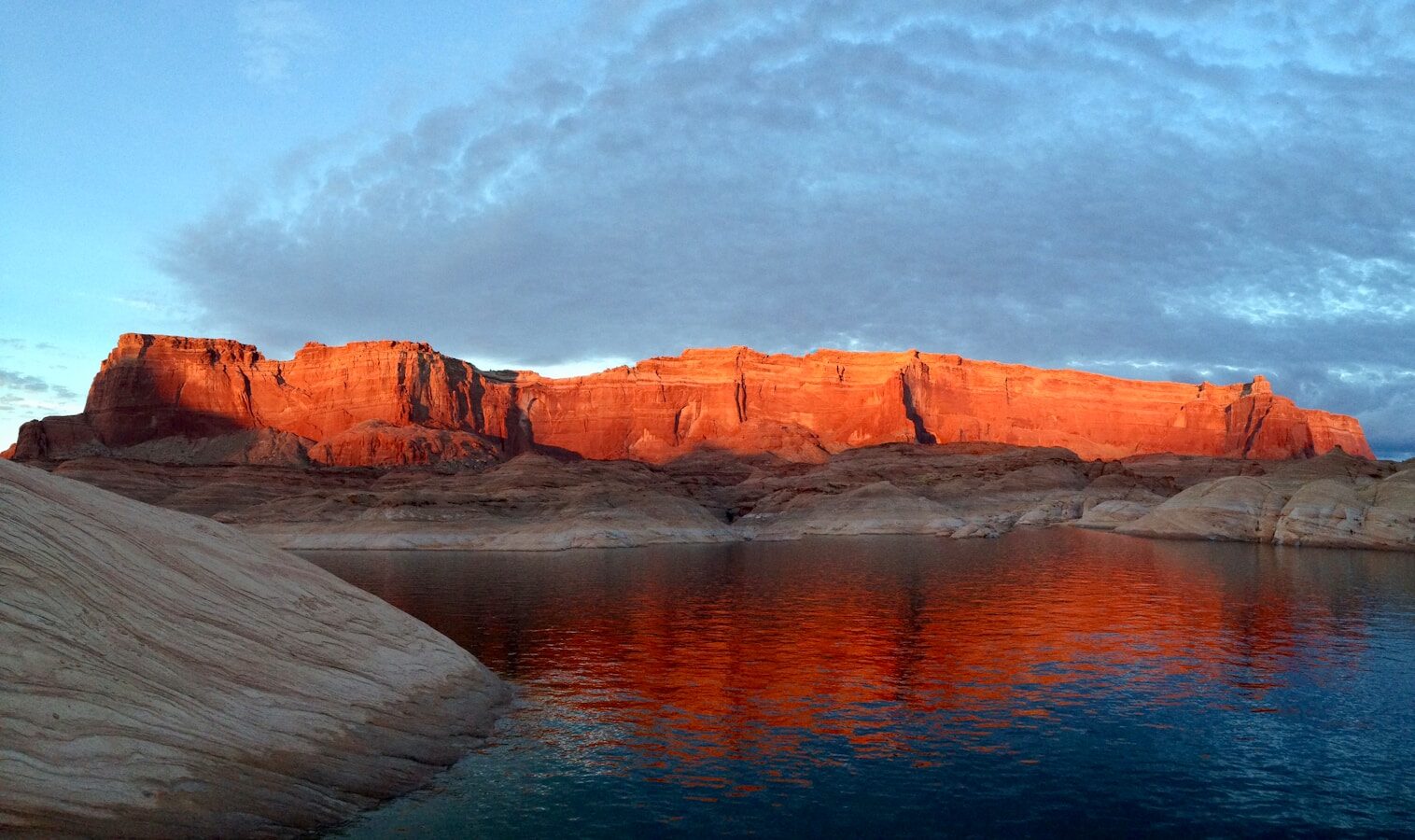
While the sudden influx of Green and Colorado river flows might appear as a bounty of moisture in a parched landscape of sandstone and cacti, it is actually the opposite. This emergency triage exposes the fatal flaws in how we manage the intersection of hydrology and energy.
Table of Contents
The Mechanics of the Lake Powell Water Crisis
The fundamental driver of this emergency intervention is thermodynamic, not just hydrologic. Decades of escalating drought, massive evaporative loss, and unrelenting agricultural demand—particularly for alfalfa irrigation—have decimated the reservoir. Recently, Lake Powell’s surface elevation shrank to a perilous 3,526 feet above sea level, representing just 23% of its total capacity.
The critical threshold for Glen Canyon Dam is 3,490 feet. If the water level drops below the turbine intakes, air enters the penstocks. This causes cavitation—a destructive hydrodynamic phenomenon where collapsing vapor bubbles violently erode the steel machinery. To prevent this multi-million-dollar infrastructure failure, the Bureau of Reclamation is resorting to drastic measures.
- The 2026 Strategy: Officials plan to release as much as one-third of the water stored in Wyoming and Utah’s Flaming Gorge Reservoir.
- Historical Context: This dwarfs the unprecedented 500,000 acre-feet (617 million cubic meters) released in 2022, potentially doubling that volume.
- The Grid Dependency: The dam supplies supposedly “inexpensive” electricity to over 350,000 homes across the Western U.S., serving 155 distinct customers including rural electric cooperatives and tribal nations.
For a deeper understanding of the geopolitical and structural failures leading to this point, explore our systemic breakdown on the Colorado River Crisis: Why Lakes Mead and Powell Keep Shrinking.
Why Flaming Gorge is Paying the Ultimate Price
To alleviate the Lake Powell water crisis, upstream ecosystems and economies are being cannibalized. The planned releases will effectively transfer the hydrologic deficit from Arizona and Utah up to Wyoming.
The Ecological Economics of Water Relocation
If current weather patterns persist, Flaming Gorge’s water levels are forecasted to plummet by up to 27 feet (8 meters) over the next year. The reservoir’s overall capacity is projected to plunge from a healthy 83% down to an alarming 59%.
This creates an immediate economic shockwave for local recreation and tourism infrastructure. At Buckboard Marina in southwestern Wyoming, operators are already bracing for a 10-foot decline by late summer, which will drastically physically alter shoreline access and commercial viability. This localized economic damage highlights a broader theme: we are engaged in a dangerous shell game, moving dwindling water resources across a global water bankruptcy landscape rather than reducing actual consumption.
The Contrarian Gap: Is Hydropower Truly “Renewable” Here?
Mainstream energy policy continues to classify hydropower as a pristine, renewable resource. However, the Lake Powell water crisis severely challenges this label. When hydropower requires the systemic degradation of connected ecosystems to remain viable, its “green” status must be revoked.
The federal Western Area Power Administration is legally obligated to provide electricity to its non-profit customers. When hydropower fails, these agencies are forced onto the open market to purchase non-renewable, expensive alternatives, leading to cascading rate hikes—such as the 13% increase recently forced upon Heber Light & Power in Utah. Yet, the ecological costs of maintaining the hydro-grid are equally devastating.
Invasive Species and the Downstream Ripple Effect
By intentionally holding back 1.5 million acre-feet (1.85 billion cubic meters) of water in Lake Powell to protect its turbines, the federal government is severely starving the lower basin.
- Lake Mead Depletion: The downstream deficit means Lake Mead is on track to match historic lows that previously exposed submerged boats and human remains.
- Hoover Dam Curtailment: Consequently, the Hoover Dam will produce 40% less electricity, severely impacting the Nevada and California grids. You can track these cascading grid vulnerabilities in our analysis of Lake Mead Warming: A Systemic Climate Risk.
- Biodiversity Threats: The release of unnaturally warm surface water from Lake Powell encourages the aggressive propagation of smallmouth bass. This invasive predator directly competes with and threatens the native humpback chub in the Grand Canyon.
To fully grasp the localized extinction risks tied to dam infrastructure, review these 7 Alarming Hydropower Ecological Impacts.
2026 and Beyond: A Predictive Forecast for the Colorado River Basin
The strategy of draining upstream reservoirs like Flaming Gorge relies heavily on the dangerous assumption that a wet winter will eventually “bail out” the system. This is a fundamental miscalculation of modern climate dynamics.
The Colorado River basin is not experiencing a temporary 25-year “megadrought”; it is undergoing permanent, climate-driven aridification. Relying on 20th-century hydrology models to manage 21st-century climate realities guarantees systemic failure. The continuous triage of the Lake Powell water crisis proves that sustaining 155 power-grid customers on a dying river requires sacrificing the basin’s ecological integrity entirely.
Actionable Intelligence: Adapting to Systemic Resource Shifts
The Lake Powell water crisis cannot be solved by moving water from one dwindling bucket to another. True resilience requires systemic decoupling from hydro-dependent energy grids.
- Mandate Agricultural Water Audits: Policymakers must aggressively restrict the basin’s most water-intensive practices, specifically the cultivation of alfalfa for livestock export. Transitioning subsidies toward drought-resistant crops is the only viable path to baseline water conservation.
- Accelerate Grid Decoupling: Utility distributors currently reliant on Glen Canyon and Hoover Dams must legally mandate the diversification of their renewable portfolios (solar, wind, and geothermal) to phase out their dependency on hydro-generation before the dead-pool threshold is breached.
- Implement Deep-Water Mixing Protocols: To mitigate immediate ecological damage, environmental agencies must enforce the mixing of cooler, deep reservoir water into dam releases to halt the downstream propagation of invasive species like the smallmouth bass.