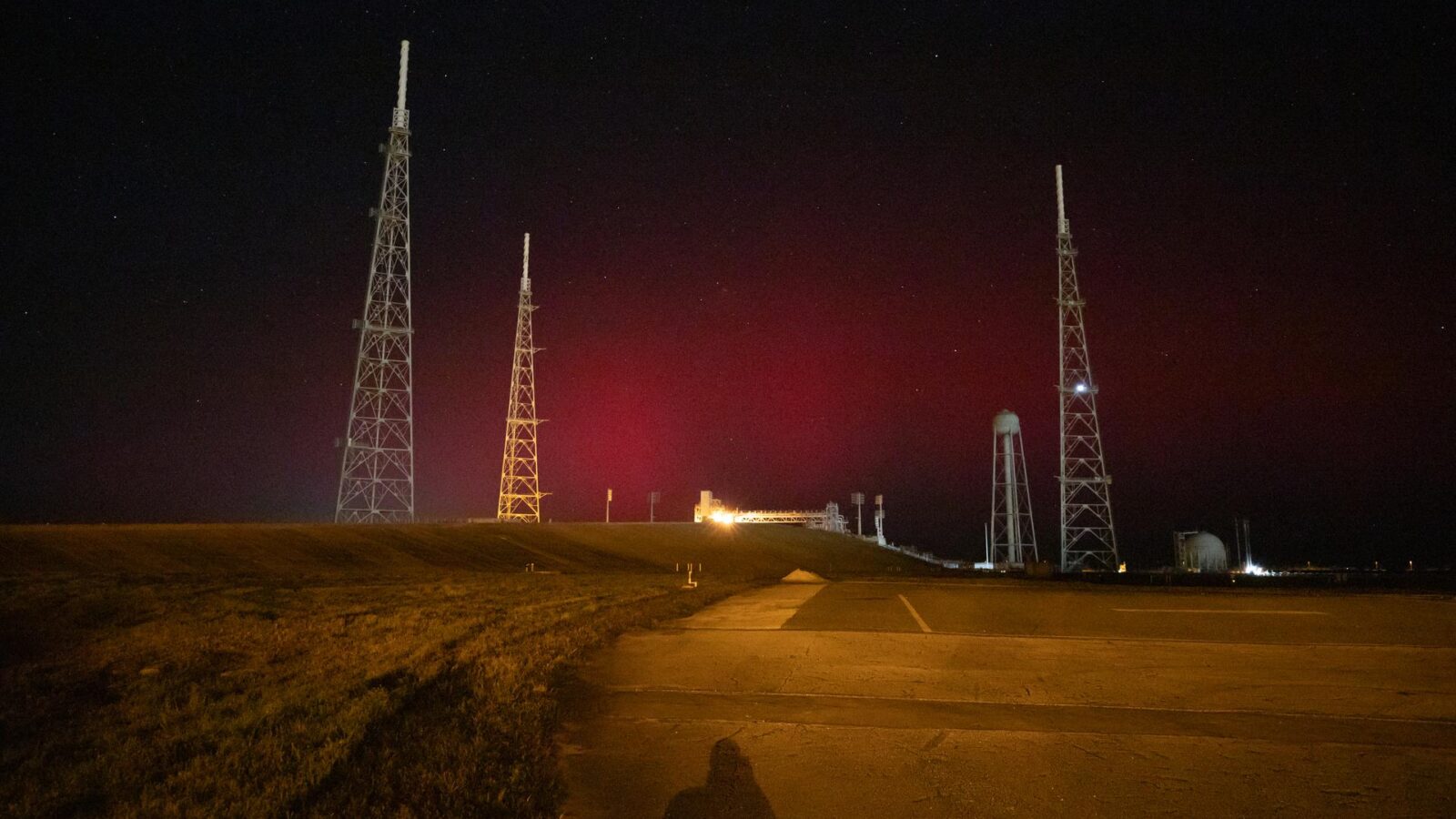
On May 10–11, 2024, Earth experienced a G5 geomagnetic storm — the most powerful in 20 years. Power grids flickered, GPS accuracy degraded by dozens of meters, and Starlink satellites dropped thousands of orbit-maintaining maneuvers. As Solar Cycle 25 peaks through 2025–2026, space weather scientists warn that another G5 or even G6-class event is not just possible — it is probable. This report examines exactly what that means for U.S. infrastructure.
What Is a G5 Geomagnetic Storm?
The NOAA Space Weather Prediction Center (SWPC) uses a 1–5 scale (G1–G5) to classify geomagnetic storms. A G5 storm — Extreme — is triggered when the planetary K-index (Kp) reaches 9, indicating a global disturbance in Earth’s magnetic field caused by a coronal mass ejection (CME) or high-speed solar wind stream.
G5 storms generate geomagnetically induced currents (GICs) in long conductive systems: power lines, pipelines, railway tracks, and fiber-optic cables. The 1989 Hydro-Québec blackout — caused by a G5 event — left 6 million Canadians without power for 9 hours and caused ~$2 billion in damage. The 1859 Carrington Event, estimated as a G5+, destroyed telegraph networks globally.
Solar Cycle 25: Why 2026 Is a High-Risk Window
Solar Cycle 25 is performing significantly above initial predictions. NOAA’s updated forecast (2024) raised the solar maximum prediction to a smoothed sunspot number of 137–173, with peak activity now projected through late 2025 and into 2026. During solar maximum, the frequency of X-class flares — which can produce CMEs — increases dramatically.
According to NOAA SWPC’s Solar Cycle Progression data, the observed sunspot number through mid-2025 already exceeds the prior maximum prediction envelope, placing us in a historically active solar period. Research published in Space Weather journal projects a 12–18% probability of at least one G5+ event before the cycle descends from its peak.
The U.S. Power Grid: Aging Infrastructure Meets Solar Extremes
The continental U.S. power grid consists of approximately 200,000 miles of high-voltage transmission lines, many built 40–60 years ago without geomagnetic resilience in mind. GICs enter the grid through transformer neutral grounds, driving quasi-DC currents that saturate transformer cores, cause reactive power loss, and generate heat that can permanently damage Extra High Voltage (EHV) transformers.
NERC’s 2023 High-Impact, Low-Frequency (HILF) report identified that fewer than 30% of critical EHV transformers have neutral blocking devices installed — the primary hardware mitigation for GIC damage. A G5 storm under worst-case alignment could damage 300+ large power transformers. Each costs $3–10 million and requires 12–18 months to manufacture. The economic impact is estimated at $1–2 trillion in the first year alone (Lloyd’s of London, 2013).
💡 Carbon Impact Note: A prolonged grid outage would trigger emergency diesel generation, releasing an estimated 85–120 million metric tons of CO₂ equivalent per month across the affected region. Use our Carbon Footprint Calculator to estimate your backup power emissions and identify cleaner alternatives.
Satellites and GPS: Invisible Vulnerabilities
During the May 2024 G5 storm, SpaceX reported that its Starlink constellation required increased orbit-raise maneuvers as atmospheric drag spiked from thermospheric heating. GPS accuracy degraded by 10–50 meters in some high-latitude regions due to ionospheric scintillation. Aviation, precision agriculture, autonomous vehicles, and military navigation all depend on sub-meter GPS accuracy.
The U.S. has approximately 2,500 operational satellites. A severe geomagnetic storm accelerates atmospheric density at orbital altitudes, increasing drag. LEO satellites — especially in the 350–600 km band — can lose 1–5 km of altitude per day during a G5 event. High-energy particle events also cause “single-event upsets” (SEUs) in satellite electronics — bit flips that can corrupt navigation data or permanently damage radiation-sensitive components.
Telecommunications: The Undersea Cable Risk
Approximately 98% of international internet traffic flows through undersea fiber-optic cables. While the fiber itself is immune to GICs, the power feeding equipment (PFE) — which uses the cable’s copper sheath to deliver electrical power to repeaters — is highly vulnerable. A 2021 study (Abdu Jyothi, UC Irvine) warned that a G5-level storm could cause “catastrophic and simultaneous failure” of multiple undersea cables, particularly at high latitudes.
On land, cellular base stations typically have 4–8 hours of battery backup. A prolonged grid outage from a G5 storm would cause cascading communication failures within hours. Emergency 911 systems, hospital networks, financial clearing systems, and supply chain logistics all depend on this connectivity.
Renewable Energy Infrastructure: The NREL Perspective
Solar panels are relatively immune to geomagnetic disturbances — their DC output is unaffected by GICs. However, the inverters and grid-tied systems that convert solar DC to AC are connected to the same transformer network that GICs attack. A G5 event that trips grid sections could automatically disconnect millions of solar installations through anti-islanding protection.
The National Renewable Energy Laboratory (NREL) has studied solar irradiance impacts of space weather events. The grid-stability risk from transformer damage far outweighs any marginal generation benefit from solar UV flux increases. Wind turbine SCADA systems and battery storage power electronics both require stable grid references — a G5 event could push a large fraction of grid-connected renewables into island or shutdown mode simultaneously.
🌍 CBAM Consideration: If a G5 storm disrupts U.S. manufacturing for weeks, carbon-intensive backup generation may push exported goods above EU CBAM thresholds. Use our CBAM Calculator to assess your compliance exposure under storm scenarios.
What U.S. Businesses and Households Should Do Now
For Utilities and Grid Operators
- Install neutral blocking devices or series capacitors on EHV transformers at high-risk latitudes (above 40°N)
- Subscribe to NOAA SWPC real-time alerts and integrate 3-day storm forecasts into grid dispatch protocols
- Pre-position spare transformers (NERC’s STEP program) and practice rapid restoration drills
- Identify and harden single points of failure in SCADA control systems
For Businesses
- Audit UPS battery backup runtimes — a G5 event could cause outages of 48–72+ hours in worst-case scenarios
- Establish communication downtime protocols that do not rely solely on cellular or internet connectivity
- Review supply chain dependencies on GPS-guided logistics and autonomous systems
- Consider on-site solar + battery systems capable of island-mode operation
For Households
- Keep 72-hour emergency kits updated, including battery-powered or hand-crank radios (AM/FM, not internet-dependent)
- Download offline maps — GPS may be degraded for hours during a storm peak
- Know your utility’s outage restoration priority order (hospitals and water treatment are typically restored first)
- Register with your utility’s medical baseline or backup power program if dependent on home medical equipment
How to Monitor Space Weather: NOAA SWPC Tools
NOAA’s Space Weather Prediction Center offers free, real-time data including: 3-day Kp-index forecasts (updated every 30 minutes), DSCOVR satellite real-time solar wind data (15–60 minutes of CME advance warning), GOES X-ray flux for near-real-time flare detection, and free email/SMS alert subscriptions for G3+ storm watches and warnings.
The Climate-Space Weather Nexus
Climate change and space weather intersect critically: the clean energy transition depends on a reliable electric grid. A G5 event that sets back U.S. grid infrastructure by years would delay electrification of transportation, heating, and industry — adding to long-term cumulative emissions. Building a resilient grid is therefore not just an engineering challenge but a climate imperative.
The investments needed to make the grid geomagnetically resilient — transformer hardening, distributed generation, microgrids, and battery storage — align directly with clean energy grid modernization priorities. Every dollar spent making the grid storm-proof also makes it better able to absorb intermittent renewables.
Expert Perspective
Dr. Ahmad Mahmood
PhD Environmental Sciences · Faculty, NUST · Environmental Scientist & Educator
“The intersection of solar maximum and our deepening dependence on digital infrastructure makes the 2025–2026 window uniquely consequential. Unlike a hurricane, a major geomagnetic storm gives us at most 60 minutes of warning. The Achilles’ heel is our transformer fleet — those large units take over a year to replace and there simply isn’t a global strategic reserve. The climate case for grid modernization has always been strong; the space weather case makes it urgent.”
Expertise: Climate risk · ecological systems · environmental policy · About the author
Key Takeaways
- A G5 geomagnetic storm during Solar Cycle 25’s 2025–2026 peak carries a 12–18% probability per space weather research
- U.S. power grid transformer vulnerability is the highest-consequence, least-resilient risk vector
- Satellites, GPS, undersea internet cables, and cellular networks all face significant disruption
- Renewables are not immune — grid-tied inverters and BESS will disconnect if the grid trips
- NOAA SWPC provides free real-time monitoring with 15–60 minutes of advance CME warning
- Grid modernization for climate and for geomagnetic resilience require largely the same investments
Related reading: How to See the Northern Lights in the USA in 2026 | US Solar Energy Growth by State 2026
💧 Scientific Water Footprint Calculator
Measure direct and virtual water consumption across household, agricultural, and industrial supply chains against regional watershed stress metrics.
Calculate Water Footprint →