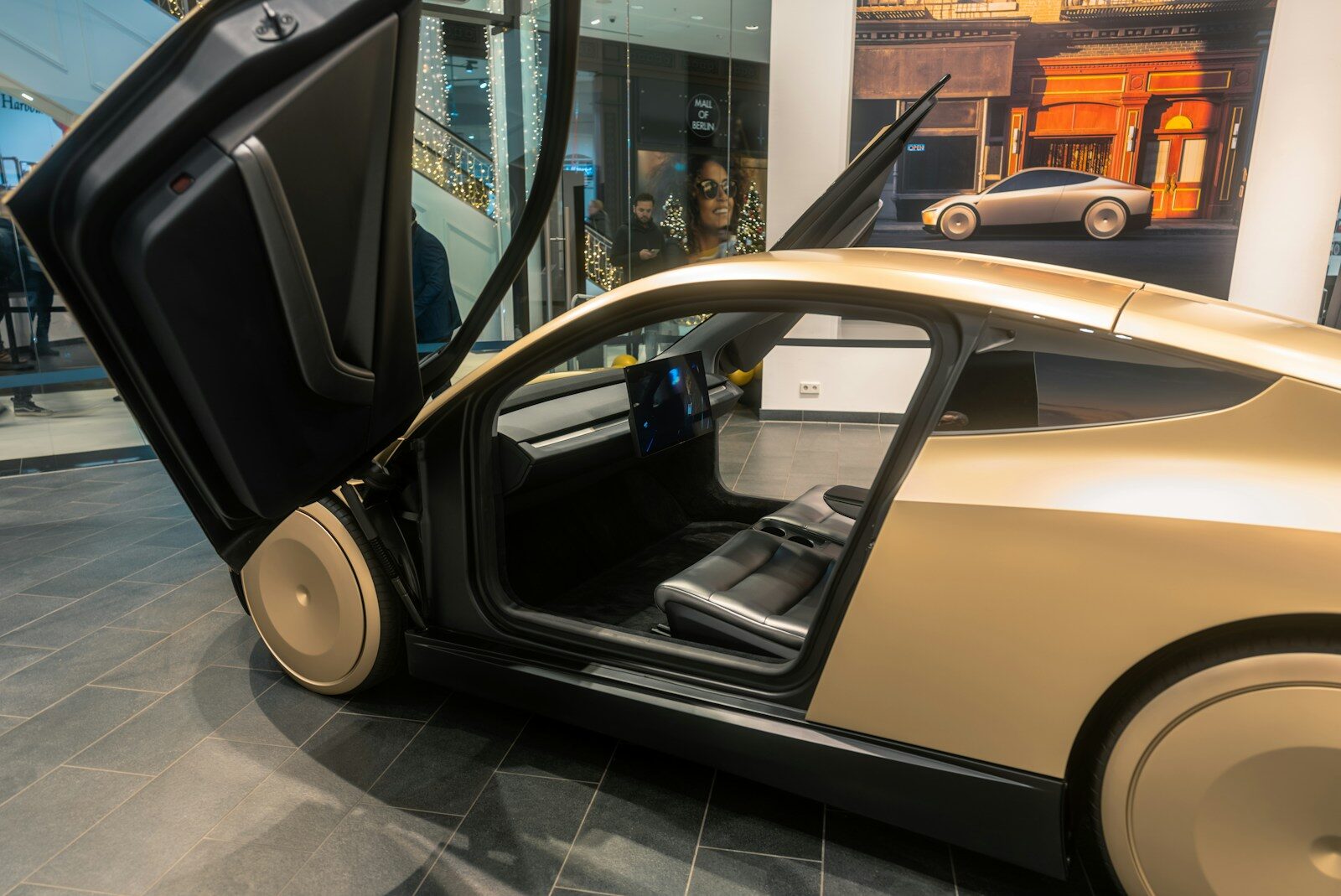
Autonomous vehicles have long been framed as the next revolution in transportation. Now, Tesla is moving closer to turning that promise into reality with its upcoming Robotaxi platform—an autonomous electric ride-sharing service that could transform how people move through cities.
But beyond the technological excitement lies a deeper question: could Tesla’s Robotaxi meaningfully reduce transportation emissions, or might it unintentionally increase them?
Transportation is the largest source of greenhouse gas emissions in the United States. Any major shift in mobility systems—especially one involving millions of vehicles—could significantly shape the future of urban sustainability.
Understanding whether Tesla’s Robotaxi could help the environment requires looking beyond the vehicle itself and examining the entire transportation system it might influence.
Table of Contents
The Robotaxi Model: How Autonomous Ride-Hailing Changes the Environmental Equation
Tesla’s Cybercab and the broader robotaxi concept introduce variables into the environmental calculus that don’t apply to personally owned EVs. Understanding these dynamics requires thinking through the full lifecycle of vehicle use, not just tailpipe emissions.
Vehicle utilization rates are dramatically higher for ride-hailing fleets than for personally owned vehicles. The average American car sits idle approximately 95% of the time — parked at home, at work, at the grocery store. A robotaxi operating in a dense urban market could run 16–20 hours per day, achieving annual mileage of 100,000 miles or more compared to the 12,000–15,000 miles typical of a personally owned vehicle. This high utilization rate changes the environmental math in two important ways: the manufacturing emissions — the carbon cost of building the vehicle, extracting and processing battery materials, and assembling the car — are amortized over far more miles of service, reducing the per-mile lifecycle carbon footprint. Simultaneously, high utilization rates mean more frequent battery replacements and higher vehicle wear rates, which generate their own environmental costs.
Grid electricity source remains the decisive variable for EV environmental performance. A robotaxi fleet operating primarily in states powered by natural gas — peaker plants that respond to variable demand — may deliver modest emissions benefits over efficient hybrid vehicles. The same fleet operating in states with clean grids — California, Washington, Oregon, New York — achieves dramatic lifecycle emissions reductions. Texas presents a mixed case: abundant renewable energy from wind and solar drives the grid increasingly clean during daylight hours, but coal and gas still dominate during some evening and overnight periods when robotaxi demand may be highest.
Charging infrastructure and timing create important nuances. Unlike a personally owned EV that charges overnight at a home charging station, a robotaxi must balance revenue-generating service with charging stops. Smart charging — scheduling charging during periods of peak renewable energy availability and low grid carbon intensity — is technically feasible and could substantially improve the fleet’s lifecycle carbon performance. Bidirectional charging, which allows vehicles to supply power to the grid during peak demand periods, offers additional benefits by supporting grid stability and potentially displacing fossil fuel peaker plants.
The Land Use Dividend: How Robotaxis Could Transform American Cities
The most transformative environmental benefit of widespread robotaxi adoption may not come from direct emissions reductions at all — it may come from the radical restructuring of urban land use that high-utilization autonomous fleets could enable. This is both the most exciting and the most speculative dimension of the robotaxi environmental case.
Parking consumes a shocking proportion of American urban land. Los Angeles has more parking spaces than residents — by some estimates, over 18 million spaces in a city of 4 million people. Houston devotes approximately 30% of its downtown land area to surface parking. Chicago has entire neighborhoods where parking lots and garages outnumber buildings. This land — some of the most valuable urban real estate in the country — exists primarily to accommodate vehicles that sit idle 95% of the time. If high-utilization robotaxis dramatically reduce the number of vehicles in urban areas, the parking land they vacate could be repurposed for housing, parks, urban agriculture, green infrastructure, and transit — transforming cities in ways that deliver profound, enduring environmental and equity benefits.
Urban sprawl patterns could shift. American cities have been shaped by the car in ways that create long commutes, high per-capita emissions, and poor transit performance. If robotaxis make car travel cheap and convenient enough to replace transit, they could worsen sprawl. If instead they complement transit — providing first-and-last-mile connections to rail and bus lines — they could make dense, transit-oriented development more viable and shift regional development patterns toward lower-carbon urban forms. The outcome depends heavily on pricing policy, regulatory choices, and land use planning decisions that governments will need to make proactively.
Urban heat islands could shrink. Asphalt parking lots are among the most intense contributors to urban heat islands, absorbing solar radiation and releasing it as heat. Converting parking lots to green space, permeable surfaces, or buildings with green roofs would measurably reduce urban temperatures — a benefit with cascading effects on energy demand, public health, and stormwater management. Cities that proactively plan for the parking-to-green-space transition as robotaxi adoption grows could accelerate climate adaptation while improving livability and equity.
Induced Demand: The Critical Challenge for Robotaxi Sustainability
Transportation planning research has repeatedly documented a phenomenon called induced demand: when travel becomes cheaper, faster, or more convenient, people travel more. New highways fill with traffic. Lower airfares increase flight frequency. Cheaper ride-hailing spurs more trips. The robotaxi scenario faces a version of this challenge that could substantially undermine its environmental benefits.
If robotaxis reduce the effective cost of personal travel — through higher utilization, competitive pricing, and elimination of parking expenses — they could significantly increase total vehicle miles traveled. People who previously walked, biked, or took transit might switch to cheap robotaxis. People who previously combined trips might make more frequent, shorter trips. The phenomenon of “zero-occupant miles” — robotaxis repositioning themselves without passengers between trips — adds additional vehicle miles that don’t generate revenue but do consume energy and contribute to congestion.
Research on ride-hailing services like Uber and Lyft provides a cautionary data point. Multiple studies have found that ride-hailing services increased total vehicle miles traveled in the cities where they launched, and that they pulled riders away from transit, walking, and cycling rather than replacing privately owned vehicles as originally hoped. Tesla’s robotaxi service may replicate this pattern at scale, particularly if pricing is low enough to compete with public transit.
Regulatory frameworks can address induced demand if governments act proactively. Congestion pricing — charging vehicles for road use in dense urban areas — can internalize the true social cost of road space and reduce vehicle miles traveled while generating revenue for transit investment. Vehicle caps for ride-hailing fleets can prevent the race-to-the-bottom of excessive repositioning miles. Minimum occupancy requirements during peak periods can incentivize pooled trips. These are not hypothetical tools: Singapore, London, and Stockholm have implemented congestion pricing with measurable traffic reduction results, and New York City launched its own program in 2024.
The Verdict: Conditions for Robotaxi Environmental Success
Whether Tesla’s Cybercab and the broader robotaxi revolution helps or hurts the environment ultimately depends on policy choices, grid decarbonization trajectories, and behavioral responses that are not predetermined. The technology creates possibilities — it does not guarantee outcomes.
The optimistic scenario requires clean grids, smart charging, regulatory frameworks that prevent induced demand and support transit integration, and proactive land use planning that captures the parking dividend. In this scenario, robotaxis could contribute significantly to urban decarbonization — reducing emissions from transportation, freeing urban land for green uses, and enabling denser development that reduces per-capita emissions across all sectors.
The pessimistic scenario involves dirty grids, unregulated fleet operations, pricing that undercuts transit, and the conversion of freed parking land to more sprawl. In this scenario, robotaxis could increase total emissions while worsening congestion, undermining public transit, and accelerating suburban development patterns.
The distinction between these scenarios is entirely within human control. The technology is a tool. Environmental outcomes from robotaxis will be determined by the political will to establish and enforce smart regulatory frameworks — not by the vehicles themselves. Advocates for sustainable cities should engage with robotaxi policy now, before patterns of deployment and land use calcify in ways that are difficult to reverse.
Why Transportation Is a Major Climate Problem
In the United States, transportation accounts for roughly 28–30% of total greenhouse gas emissions, according to federal climate data.
Most of these emissions come from:
- Passenger cars
- SUVs
- Light-duty trucks
- Urban commuting patterns
Even as electric vehicles grow more popular, many climate experts argue that simply replacing gasoline cars with electric ones may not be enough.
Urban congestion, inefficient vehicle usage, and car-dependent infrastructure all contribute to unnecessary energy consumption.
This is where autonomous ride-sharing systems like Tesla’s Robotaxi could potentially change the equation.
What Tesla’s Robotaxi System Is Supposed to Do
Tesla’s Robotaxi concept centers on fully autonomous electric vehicles operating as a ride-hailing network.
Instead of owning a car, users would request a ride through an app. The autonomous vehicle would arrive, transport the passenger, and then move on to the next trip.
Key characteristics include:
- Fully electric vehicles
- No human driver
- App-based ride requests
- Continuous vehicle utilization
Because these vehicles could operate nearly all day, Tesla believes the system could dramatically increase how efficiently cars are used.
Today, most personal vehicles sit parked about 95% of the time.
Robotaxis could turn cars into shared transportation assets rather than private property.
The Potential Environmental Benefits
1. Fewer Cars in Cities
If robotaxis become widely adopted, fewer people may feel the need to own a private vehicle.
This could lead to:
- Reduced parking demand
- Less urban congestion
- Lower overall vehicle production
Vehicle manufacturing itself carries a significant carbon footprint, particularly from battery production.
A shared fleet model could reduce the number of vehicles needed to serve the same population.
2. Higher Vehicle Utilization
Shared autonomous fleets can operate far more efficiently than privately owned vehicles.
Instead of sitting unused in parking lots or garages, robotaxis could remain active throughout the day.
Higher utilization means:
- Fewer total vehicles required
- Better energy efficiency per passenger mile
- Reduced material demand across the transportation sector
3. Accelerated Electric Vehicle Adoption
Tesla’s Robotaxi system would be entirely electric.
If autonomous ride-sharing becomes cheaper than owning a gas vehicle, it could accelerate the transition away from internal combustion engines.
This could reduce:
- Tailpipe emissions
- Urban air pollution
- Oil demand
For cities struggling with smog and traffic emissions, this shift could be significant.
The Environmental Risks No One Talks About
Despite these potential benefits, many transportation researchers warn that autonomous ride-sharing could also increase emissions under certain conditions.
1. More Total Driving
If robotaxis become extremely cheap and convenient, people may choose them over:
- Public transit
- Walking
- Cycling
This could increase total vehicle miles traveled (VMT), a key driver of emissions.
Even electric vehicles have environmental costs—from electricity generation to battery manufacturing.
2. Empty Vehicle Trips
Autonomous vehicles often travel without passengers between rides.
These “deadhead miles” can increase traffic and energy use if fleets are poorly managed.
Large fleets circulating through cities could add to congestion rather than reduce it.
3. Urban Sprawl Expansion
Cheap, convenient autonomous rides could make long-distance commuting more attractive.
This might encourage people to live farther from city centers, potentially expanding urban sprawl.
Sprawling development typically leads to:
- More infrastructure demand
- Higher transportation emissions
- Greater land use pressure
The System-Level Question
Whether Tesla’s Robotaxi helps the environment will depend less on the technology itself and more on how cities integrate autonomous transportation into their mobility systems.
Key policy choices will matter:
- Integration with public transit
- Congestion pricing policies
- Fleet regulations
- Urban planning decisions
Robotaxis could either complement public transportation or compete with it.
The difference could determine whether they reduce emissions—or increase them.
What Transportation Experts Are Watching
Researchers studying autonomous mobility are focusing on several key indicators:
Vehicle Miles Traveled (VMT)
Will total driving increase or decrease?
Fleet Size
Will robotaxis replace private vehicles or simply add to them?
Energy Source
How clean is the electricity powering the fleet?
Transit Integration
Will robotaxis replace buses and trains—or connect people to them?
The environmental outcome will likely depend on how these factors interact.
The Bigger Trend: Transportation as a Service
Tesla’s Robotaxi is part of a broader shift known as Mobility as a Service (MaaS).
Instead of owning vehicles, people may increasingly rely on:
- Shared rides
- Autonomous fleets
- Integrated mobility apps
This could fundamentally reshape transportation systems over the next two decades.
In the best-case scenario, cities could evolve toward:
- Fewer private vehicles
- Cleaner transportation energy
- More efficient urban mobility networks
In the worst case, autonomous fleets could simply make car travel even more dominant.
The Bottom Line
Tesla’s Robotaxi could potentially reduce transportation emissions—but the outcome is far from guaranteed.
The environmental impact will depend on whether autonomous ride-sharing replaces private car ownership or simply makes car travel cheaper and more common.
Technology alone rarely determines environmental outcomes.
Instead, the interaction between innovation, policy, and urban design will decide whether systems like Tesla’s Robotaxi become a climate solution—or just another layer of the transportation problem.
FAQs
Will Tesla’s Robotaxi reduce carbon emissions?
It could reduce emissions if it replaces privately owned gasoline vehicles and operates on clean electricity. However, emissions could rise if autonomous rides significantly increase total driving.
Are autonomous vehicles better for the environment?
Autonomous vehicles can improve efficiency and reduce traffic congestion, but their environmental impact depends heavily on how they are deployed and regulated.
When will Tesla Robotaxis launch?
Tesla has suggested plans for a Robotaxi network in the coming years, though full autonomous deployment timelines remain uncertain.
Authoritative Source: Bureau of Reclamation – Water Data
Water Footprint Impact Calculator
Measure direct and virtual water consumption across household, agricultural, and industrial supply chains against regional watershed stress metrics.
Calculate Water Footprint →