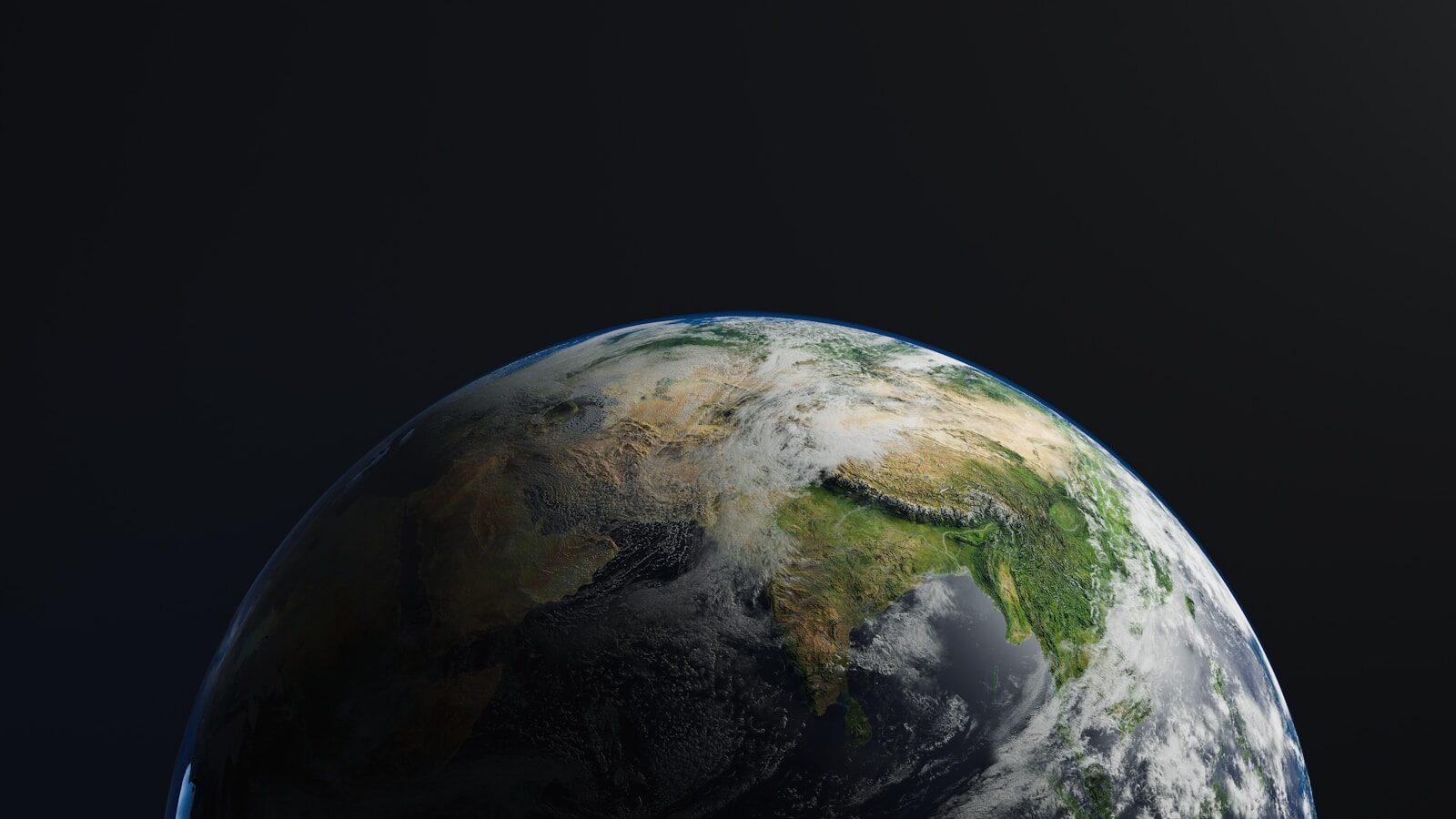
The arrival of Earth Day 2024 signifies more than an annual celebration; it represents a critical juncture in the global effort to confront the plastic crisis. This year, the international community has shifted its focus toward a singular, ambitious goal: achieving a 60% reduction in plastic production by 2040. Under the banner of “Planet vs. Plastics,” the movement highlights the systemic danger that synthetic polymers pose to human health and ecological stability.
The urgency of Earth Day 2024 is rooted in scientific reality. From microplastics in the human bloodstream to the staggering 380 million tons of plastic produced annually, the scale of the challenge is unprecedented. This article examines the scientific foundations of the plastic crisis, the economic shifts required for a circular economy, and the strategic pathways being paved by international policy.
Table of Contents
The Scale of the US Plastic Pollution Crisis: Facts, Figures, and Accountability
The United States is one of the world’s largest producers of plastic waste per capita, generating approximately 42 million metric tons of plastic waste annually — roughly 130 kilograms per American per year. Despite this vast output, the US recycling system captures only about 5-6% of plastic waste for actual recycling, according to a 2022 peer-reviewed study published in Science Advances — a figure that represents a dramatic revision downward from the 9% rate the EPA had previously reported and an indictment of decades of optimistic messaging about recycling that the data no longer support. The vast majority of American plastic waste — roughly 94-95% — ends up in landfills, is incinerated (releasing toxic pollutants and CO2), or escapes into the environment as litter or illegal dumping, ultimately finding its way to waterways and oceans.
The geography of plastic production in the United States is concentrated along the Gulf Coast of Texas and Louisiana, where the petrochemical industry has used natural gas liquids from the fracking boom to dramatically expand plastic resin production capacity since 2010. Environmental justice communities along the stretch of the Mississippi River known as “Cancer Alley” — predominantly Black and low-income communities in Louisiana — live adjacent to facilities that are among the nation’s largest emitters of volatile organic compounds, ethylene oxide, and other carcinogenic compounds associated with plastic manufacturing. The expansion of plastic production infrastructure, including dozens of new ethylene crackers and PVC production facilities permitted since 2015, has locked in decades of continued plastic production at the very moment global momentum is building toward a plastics treaty that would require production cuts.
American plastic waste exports — shipping plastic to developing countries ostensibly for recycling — became a major source of environmental justice concern following China’s 2018 implementation of the “National Sword” policy, which banned imports of most foreign recyclables, including mixed plastics. With China’s market closed, US plastic waste exports shifted to Southeast Asian countries including Malaysia, Vietnam, Thailand, and the Philippines, many of which lacked the processing capacity to handle the volume and instead stockpiled or burned the imported waste. The Basel Convention’s 2019 amendment requiring prior informed consent for plastic waste exports brought the practice under greater international scrutiny, and the Biden administration agreed in principle to US accession to the amendment, representing a significant shift in long-standing US opposition to international regulation of its waste exports.
The UN Global Plastics Treaty: America’s Role in the World’s Most Consequential Environmental Negotiation
The United Nations Environment Assembly’s 2022 resolution to develop a legally binding global plastics treaty — the most significant multilateral environmental agreement since the Paris Climate Accord — placed the issue of plastic pollution at the center of international environmental diplomacy for the first time. The resolution, passed with broad support including from the United States, committed member nations to developing a comprehensive treaty covering the full lifecycle of plastics by 2024, addressing production, design, waste management, and pollution remediation across the terrestrial, freshwater, and marine environments.
The treaty negotiations, which took place through a series of Intergovernmental Negotiating Committee (INC) sessions beginning in 2022, exposed fundamental disagreements about whether the treaty should address plastic production — the upstream source of the problem — or focus primarily on waste management and pollution cleanup — a downstream approach that addresses symptoms rather than causes. The “High Ambition Coalition” of nations, including the EU member states, small island developing states, and many African countries, pushed for treaty provisions that would set binding caps on plastic polymer production and eliminate problematic plastic products globally. Petrochemical-exporting nations including Saudi Arabia, Iran, and Russia — and some manufacturing nations including China and India — argued strongly against production controls, preferring a treaty focused on improved waste management that would not constrain their domestic plastic industries.
The United States’s position in the negotiations was more nuanced and evolved over the course of the INC sessions. The Biden administration expressed support for ambitious treaty provisions including potential production controls, positioning the US closer to the High Ambition Coalition than to the petrochemical-exporting bloc. However, domestic political constraints — including resistance from the American Chemistry Council and other industry groups that argued production restrictions would harm US jobs and economic competitiveness — limited how far US negotiators could commit in practice. The failure of INC-5 in Busan, South Korea in November 2024 to reach a final agreement, amid continued disagreement over production controls, left the treaty process ongoing — with the outcome still uncertain and the US position under a new administration in 2025 less clearly supportive of binding production restrictions.
What Americans Can Do: Reducing Plastic Waste Beyond Individual Action
The discourse around plastic pollution in the United States has often been framed in ways that place disproportionate responsibility on individual consumers — encouraging people to bring reusable bags, refuse plastic straws, and properly sort recyclables. While these individual actions have real value in signaling cultural norms and reducing some fraction of plastic waste, the scale of the problem demands systemic solutions that go far beyond what individuals can achieve through consumer choice alone.
Extended producer responsibility (EPR) legislation — which makes manufacturers financially responsible for the end-of-life management of their products, creating economic incentives to reduce plastic use and design products for recyclability — has been enacted in several US states including California, Colorado, Oregon, and Maine, with more states considering similar legislation. EPR for packaging, properly designed, shifts the cost of recycling and waste management from municipalities and taxpayers to the companies whose packaging creates the waste, fundamentally changing the economic equation that has made single-use plastic so pervasive. Federal EPR legislation, which would create a national standard and prevent industry forum-shopping among states with weaker requirements, has been proposed but not enacted, facing resistance from the packaging and consumer goods industries that benefit from the current system.
Policy interventions that have demonstrated effectiveness in reducing plastic waste include plastic bag bans, which have been enacted by over a dozen US states and reduced bag litter and waste in jurisdictions where they’ve been implemented; bottle bill deposit-return systems, which achieve 70-90% return rates for beverage containers in the 10 US states that have them compared to 30% or less without such programs; and restrictions on single-use polystyrene foam food ware, which has been banned in California, Maryland, New York, and several major cities. These policies work precisely because they change the economics and logistics of plastic use system-wide, rather than depending on individual consumer vigilance. Extending and strengthening them — including at the federal level — is the path to a genuinely plastic-reduced American future that Earth Day’s plastic-free theme demands.
Scientific Foundation: The Biological Cost of Plastic
The theme of Earth Day 2024 is supported by a growing body of evidence regarding the “human health” implications of plastic. Unlike organic waste, plastics do not biodegrade; they fragment into microplastics and nanoplastics. These particles act as vectors for endocrine-disrupting chemicals and heavy metals, which have now been detected in human organs and breast milk.
The environmental mechanism is equally devastating. Plastic leakage into the environment is projected to increase by 50% by 2040 if current production remains unchecked. These materials suffocate marine life and disrupt carbon sequestration processes in the ocean, effectively linking the plastic crisis to the broader climate emergency.
Environmental and Economic Impacts
The financial implications of plastic pollution extend far beyond cleanup costs. Environmental degradation caused by plastics results in health-related economic losses exceeding $1.5 trillion annually. When factoring in damage to tourism, fisheries, and carbon sinks, the cumulative cost could reach $281 trillion by 2040.
Ecologically, the fashion industry remains a primary contributor. Approximately 70% of modern clothing is derived from crude oil. During washing, these garments release millions of microfibers into the water supply. Furthermore, 85% of textiles end up in landfills, where they persist for centuries, leaching toxins into the soil and groundwater.
Real World Case Studies and Applications
Innovative responses to the plastic crisis are emerging globally, aligning with the objectives of Earth Day 2024. In Indonesia, the “Wildlife Ecotourism” project demonstrates how community-led conservation can reduce waste while boosting local prosperity. By involving customary peoples in the management of national parks, the initiative ensures that environmental protection produces tangible economic value.
Technological breakthroughs are also scaling. Researchers at the University of Texas have utilized machine learning to engineer enzymes capable of breaking down PET plastics in 24 hours. Meanwhile, companies are adopting “Circular ERP” systems to track and manage reusable containers, proving that digital transformation is essential for a zero-waste supply chain.
“We will not recycle our way out of the plastic pollution crisis; we need a systemic transformation to a circular economy.” — Inger Andersen, UNEP Executive Director.
Challenges and Barriers to Progress
Despite the momentum of Earth Day 2024, significant obstacles remain. The petrochemical industry continues to invest in virgin plastic production, often locating facilities in vulnerable communities, which exacerbates social injustice.
Politically, the Global Plastics Treaty negotiations have faced delays. Disagreements between nations regarding mandatory reduction targets for plastic polymers have slowed the consensus required for a legally binding instrument. Additionally, the prevalence of “downcycling”—where plastic is turned into inferior products rather than new bottles—fails to diminish the overall demand for new plastic.
Solutions and Strategic Pathways
To move beyond awareness, Earth Day 2024 advocates for concrete policy and industry-level shifts:
- Extended Producer Responsibility (EPR): Mandating that manufacturers fund the entire life cycle of their products, incentivizing durable and recyclable design.
- The 60×40 Goal: A global commitment to reduce plastic production by 60% by the year 2040 to protect human and planetary health.
- Phasing Out Fast Fashion: Transitioning the textile industry toward natural fibers like hemp, linen, and organic cotton to eliminate microfiber shedding.
- Infrastructure Investment: Scaling AI-powered waste sorting and advanced recycling technologies to improve recovery rates.
Frequently Asked Questions
What is the theme of Earth Day 2024?
The theme is “Planet vs. Plastics,” focusing on the health risks of plastic pollution and the urgent need to phase out single-use plastics globally.
Why is Earth Day 2024 focusing on plastics?
Research shows that plastics are a grave danger to human health, with microplastics now found in human blood and organs. Reducing production is essential to stop this biological contamination.
How can individuals contribute to the Earth Day 2024 goals?
Individuals can reduce their footprint by avoiding single-use plastics, choosing sustainable fashion brands, and supporting legislation like the Global Plastics Treaty.
Conclusion
The legacy of Earth Day 2024 will be defined by our ability to transition from “recycling” to “redesigning.” By addressing the full life cycle of materials—from production to disposal—we can protect our ecosystems and our health. The shift toward a circular economy is no longer just an environmental preference; it is a strategic necessity for global resilience.
Take action today by auditing your plastic consumption and advocating for corporate accountability in your community.
Authoritative Source: Bureau of Reclamation – Water Data
Water Footprint Impact Calculator
Measure direct and virtual water consumption across household, agricultural, and industrial supply chains against regional watershed stress metrics.
Calculate Water Footprint →