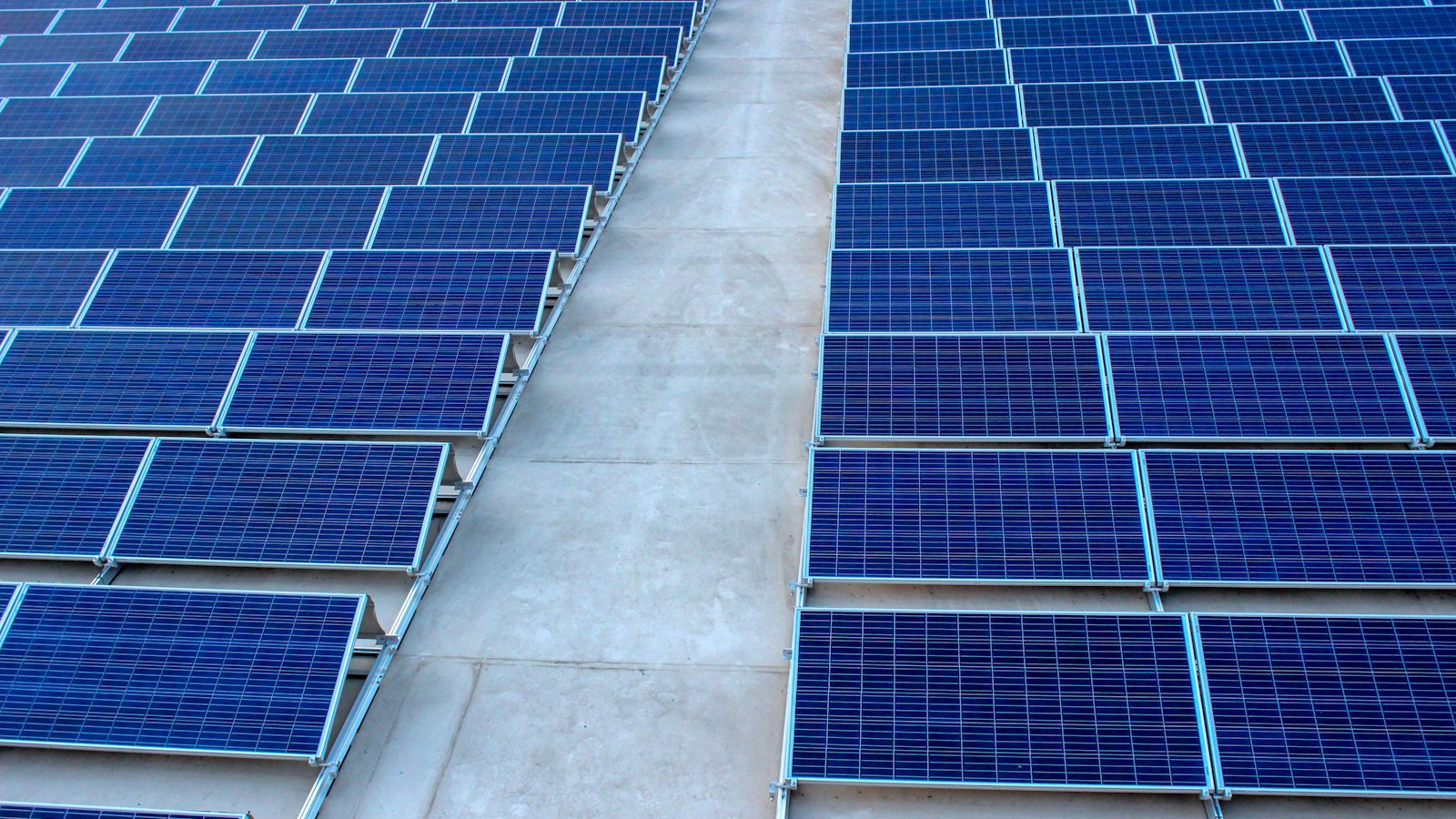
PM Surya Ghar: Muft Bijli Yojana is India’s largest household solar programme. Approved in February 2024 with an outlay of ₹75,021 crore, it pays a central subsidy of up to ₹78,000 to homes that install grid-connected rooftop solar. By early October 2026 the scheme had reached more than 60 lakh households, and the national portal shows it closing on 31 March 2027.
This PM Surya Ghar Muft Bijli Yojana 2026 guide explains the subsidy slabs, the step-by-step application on the national portal, how DISCOM net metering works in five major states, and what a 3 kW system really costs and saves. Prefer a quick summary? See our 11-slide PM Surya Ghar web story, or estimate the emissions your panels would avoid with our Carbon Footprint Calculator.
- The ₹75,021 crore scheme explained
- 2026 subsidy slabs
- Who is eligible
- Applying on the national portal, step by step
- Costs, savings and payback
- Net metering vs gross metering by state
- Loans and state top-ups
- Common mistakes
- Checklist
- FAQs
The ₹75,021 crore scheme explained
The Union Cabinet approved PM Surya Ghar on 29 February 2024 to put rooftop solar on one crore homes. Most of the money goes on central financial assistance (CFA) to households. The rest funds incentives for DISCOMs that connect systems quickly, a model solar village in each district, support for local bodies and awareness campaigns.
Three features make it different from earlier rooftop programmes:
- Direct benefit transfer: the subsidy goes straight to the household’s bank account after commissioning, not through the vendor.
- One national portal: registration, vendor choice, DISCOM approvals, net metering and subsidy release are tracked on pmsuryaghar.gov.in.
- Concessional loans: collateral-free bank loans are available for systems up to 3 kW, so households do not need the full upfront cost.
Progress has accelerated sharply. Government updates reported about 14.8 GW of rooftop capacity commissioned by mid-August 2026, and news reports in early October 2026 put the scheme above 60 lakh households, with around 20 lakh homes reporting zero electricity bills. That still leaves a large gap to the one crore target before the scheme closes.
PM Surya Ghar at a glance: subsidy slabs and what a 3 kW system earns
Central financial assistance (CFA) is paid straight into your bank account after the DISCOM commissions the system. The national portal shows the scheme closing on 31 March 2027.
| System size | General states | Special category states / UTs* | Suitable monthly use (units) |
|---|---|---|---|
| 1 kW | ₹30,000 | ₹33,000 | 0–150 |
| 2 kW | ₹60,000 | ₹66,000 | 150–300 |
| 3 kW | ₹78,000 | Above ₹78,000* | Above 300 |
*Higher rate of ₹33,000/kW for the first 2 kW applies in the North-Eastern states, hill states and island UTs. Many states add their own top-up. Sources: MNRE scheme guidelines; national portal. Not financial advice.
2026 subsidy slabs
The central subsidy is calculated on the capacity you install, not on cost:
- 1 kW: ₹30,000
- 2 kW: ₹60,000 (₹30,000 per kW)
- 3 kW or more: ₹78,000 maximum (₹30,000 per kW for the first 2 kW plus ₹18,000 for the third kW)
A 5 kW system therefore receives the same ₹78,000 as a 3 kW system; the extra capacity is at full cost. In special category states and island UTs the first 2 kW attract ₹33,000 per kW, so a 3 kW system there receives more than the standard ₹78,000; the national portal lists the exact amount for each state. Group housing societies and resident welfare associations get ₹18,000 per kW for common facilities such as lifts and corridor lighting, up to 500 kW.
States can add their own subsidy. Delhi, for example, now adds up to ₹78,000 on top of the central amount and plans zero-upfront-cost 3 kW systems for about 2.3 lakh eligible homes by March 2027. Uttar Pradesh and several other states also offer top-ups, so check your state nodal agency before you sign a quote.
Who is eligible
- An Indian household with its own house and a roof suitable for solar panels.
- A valid electricity connection in the applicant’s name with the local DISCOM.
- No previous central subsidy for rooftop solar on the same connection.
- Panels and vendors must meet scheme rules: modules from the Approved List of Models and Manufacturers (ALMM) and installation by a vendor registered on the portal.
Use your average monthly consumption to size the system. The guidelines link 1–2 kW to homes using up to 150 units a month, 2–3 kW to 150–300 units and 3 kW or more to above 300 units. Sizing far above your use only makes sense if your DISCOM pays a fair rate for surplus power.
Applying on the national portal, step by step
- Register: on pmsuryaghar.gov.in, select your state and DISCOM, enter your electricity consumer number, mobile number and email.
- Apply: log in with your consumer number and mobile, and fill in the rooftop solar application with your sanctioned load and the capacity you want.
- DISCOM feasibility approval: the DISCOM checks that the local network can take the system and approves it on the portal. Many regulators now deem small systems approved; Delhi’s 2026 rules cap the whole process at 10 days for systems up to 10 kW.
- Choose a registered vendor: compare quotes from vendors listed for your DISCOM, and confirm module make, inverter, warranty and maintenance terms in writing.
- Installation and net meter: after installation, submit plant details on the portal and apply for the net meter. The DISCOM installs a bi-directional meter.
- Inspection and commissioning: the DISCOM inspects the system and generates a commissioning certificate on the portal.
- Direct benefit transfer: submit your bank account details and a cancelled cheque. The subsidy is released to your account, usually within about 30–45 days of commissioning.
Keep copies of your application ID, vendor invoice, module serial numbers and the commissioning certificate. They are needed for warranty claims and if your subsidy is delayed.
Costs, savings and payback for a 3 kW system
A 3 kW grid-connected system is the sweet spot of the scheme because it captures the full ₹78,000 subsidy. Market quotes in 2026 for a 3 kW on-grid system with ALMM modules generally range from about ₹1.6 lakh to ₹1.9 lakh before subsidy; the cut in GST on solar equipment to 5% in September 2025 lowered prices by roughly ₹9,000–10,500 per 3 kW system.
In most of India a well-installed system produces about 4 units (kWh) per kW per day averaged over the year. A 3 kW system therefore generates around 360 units a month and 4,380 units a year, slightly more than the scheme’s headline 300 free units.
Payback model: 3 kW grid-connected rooftop system
Generation 3 kW × 4 kWh/kWp/day = 360 units a month, 4,380 units a year. Savings assume every unit offsets grid power at the stated average tariff.
| Scenario | Installed cost | Central subsidy | Net cost | Avoided tariff /unit | Yearly saving | Simple payback | 25-year saving* |
|---|---|---|---|---|---|---|---|
| Efficient case | ₹1,75,000 | ₹78,000 | ₹97,000 | ₹7.00 | ₹30,660 | 3.2 years | ₹7,22,225 |
| Conservative case | ₹1,85,000 | ₹78,000 | ₹1,07,000 | ₹6.00 | ₹26,280 | 4.1 years | ₹6,19,050 |
*25-year savings at a flat tariff with 0.5% annual module degradation; no tariff inflation, inverter replacement or financing cost included. State top-ups shorten payback further. Our calculation; example only.
In the efficient case, a ₹1,75,000 system costs ₹97,000 after subsidy and saves about ₹30,660 a year at ₹7 per unit, a payback of 3.2 years. In the conservative case, a ₹1,85,000 system at ₹6 per unit pays back in 4.1 years. With panels lasting 25 years or more, the system delivers roughly ₹6,19,050–₹7,22,225 of savings over its life before any tariff increases.
There is a climate benefit too. At India’s grid emission factor of about 0.71 kg CO2 per unit, 4,380 units a year avoid roughly 3.1 tonnes of CO2 a year. You can test your own household in our Carbon Footprint Calculator.
DISCOM net metering vs gross metering by state
Your savings depend as much on your DISCOM’s metering rules as on the subsidy. Under net metering, the units you export offset the units you import, so each solar unit is worth your full retail tariff. Under gross metering, all solar output is sold to the DISCOM at a fixed feed-in rate and you pay for your consumption separately, which usually pays less for homes. Most states use net metering for residential systems under the scheme, but the details differ.
| State | Default for homes | How surplus is credited | Other options | 2026 changes to watch |
|---|---|---|---|---|
| Maharashtra (MSEDCL) | Net metering | Units banked; annual settlement for small systems | Net billing, gross metering, group and virtual net metering | MERC draft rooftop regulations (Sept 2026): monthly settlement above 3 kW, banking charges above 10 kW, deemed approval up to 10 kW |
| Gujarat (DGVCL, MGVCL, PGVCL, UGVCL) | Net metering | Surplus bought at a fixed rate, reported at about ₹2.25/unit for homes | Gross metering | Check your DISCOM’s current surplus rate before sizing above your consumption |
| Karnataka (BESCOM and other ESCOMs) | Net metering | Monthly billing; net exports credited at 75% of the KERC generic tariff | Gross metering, net billing, group and virtual net metering | KERC DSPV Regulations 2026: net metering up to 1 MW, battery mandate dropped |
| Delhi (BRPL, BYPL, TPDDL, NDMC) | Net metering | Surplus credited at the average power purchase cost | Group and virtual net metering | Generation-based incentive of ₹3/unit for 5 years (up to 3 kW); state subsidy of up to ₹78,000; DERC 2-stage approval in 10 days |
| Tamil Nadu (TNPDCL) | Net metering for domestic | Units set off against consumption; TNERC network charges may apply to solar generation | Net feed-in and gross metering | Confirm the current network charge and export rate in the latest TNERC tariff order |
Net metering: one bi-directional meter; exported units offset imported units. Gross metering: all solar output is sold to the DISCOM at a fixed tariff and you pay for all consumption. Net billing: exports and imports are valued at different rates. Rules change often; this table summarises regulator and DISCOM information as of October 2026.
Two trends stand out in 2026. Regulators are speeding up approvals, with deemed feasibility for small systems in Maharashtra’s draft rules and Delhi’s amended guidelines. At the same time, settlement is getting less generous for larger systems: Maharashtra’s draft moves systems above 3 kW to monthly settlement, and Karnataka pays 75% of its generic tariff for net exports. For a home, the safest approach is to size the system close to your own consumption. Delhi applicants can register for the state scheme on the Delhi Solar Portal; Karnataka consumers can check rules on the BESCOM DSPV portal; Tamil Nadu consumers use the TNPDCL rooftop portal.
Loans and state top-ups
For systems up to 3 kW, public sector banks offer collateral-free loans of up to about ₹2 lakh at a concessional rate linked to the RBI repo rate (repo plus 0.5%). Rates published by banks in autumn 2026 were around 5.75–6% a year. Because the subsidy arrives after commissioning, many households use the loan to bridge the gap and repay part of it when the subsidy lands.
A loan changes the payback maths only slightly: at around 6% interest, the monthly EMI on the net cost is usually close to the monthly bill saving, so the system is close to cash-neutral from the first month.
Common PM Surya Ghar mistakes to avoid
- Using an unregistered vendor. Only systems installed by portal-registered vendors with ALMM modules qualify for the subsidy.
- Oversizing for the subsidy. Capacity above 3 kW gets no extra central subsidy, and surplus exports may be credited at low rates.
- Ignoring shade. Water tanks, parapets and neighbouring buildings can cut output sharply; ask for a shade analysis.
- Skipping maintenance terms. Insist on a written five-year maintenance commitment and clean panels regularly, especially in dusty regions.
- Paying the subsidy amount to the vendor. The subsidy is paid to you. Do not let a vendor take a lower price in exchange for your subsidy rights.
Checklist before you apply
- Check 12 months of electricity bills to find your average monthly units.
- Confirm the roof area: about 8–10 square metres of shade-free space per kW.
- Check state top-ups and your DISCOM’s metering rules.
- Register on the national portal and get DISCOM feasibility approval before installation.
- Compare at least three quotes from registered vendors.
- Plan finance: savings, a concessional loan or a state zero-cost scheme.
- Track results after commissioning, and estimate your avoided emissions with our Carbon Footprint Calculator.
From rooftop to lower footprint
Frequently asked questions
How much subsidy does PM Surya Ghar give in 2026?
The central subsidy is 30,000 rupees for a 1 kW system, 60,000 rupees for 2 kW and a maximum of 78,000 rupees for 3 kW or more. Special category states and island UTs receive 33,000 rupees per kW for the first 2 kW. Some states add their own subsidy on top.
Is the electricity really free under PM Surya Ghar Muft Bijli Yojana?
The scheme aims to give participating homes up to 300 units of free electricity a month. In practice the free units come from your own rooftop system: a 3 kW plant generates around 300 to 400 units a month, which offsets most or all of a typical household bill.
How do I apply on the national portal?
Register on pmsuryaghar.gov.in with your state, DISCOM, consumer number and mobile number. Apply for rooftop solar, wait for DISCOM feasibility approval, install with a registered vendor, apply for the net meter, and after DISCOM inspection and commissioning submit your bank details for direct benefit transfer of the subsidy.
What is the payback period for a 3 kW rooftop solar system?
With a 3 kW system costing about 1.75 to 1.85 lakh rupees before subsidy, a 78,000 rupee central subsidy and electricity worth 6 to 7 rupees a unit, simple payback is about 3.2 to 4.1 years. Results depend on your tariff, sunlight and installation cost.
Can I get a loan for rooftop solar under the scheme?
Yes. Public sector banks offer collateral-free loans of up to about 2 lakh rupees for systems up to 3 kW at a concessional rate linked to the repo rate. Check the current rate with your bank.
{"@context": "https://schema.org", "@type": "FAQPage", "mainEntity": [{"@type": "Question", "name": "How much subsidy does PM Surya Ghar give in 2026?", "acceptedAnswer": {"@type": "Answer", "text": "The central subsidy is 30,000 rupees for a 1 kW system, 60,000 rupees for 2 kW and a maximum of 78,000 rupees for 3 kW or more. Special category states and island UTs receive 33,000 rupees per kW for the first 2 kW. Some states add their own subsidy on top."}}, {"@type": "Question", "name": "Is the electricity really free under PM Surya Ghar Muft Bijli Yojana?", "acceptedAnswer": {"@type": "Answer", "text": "The scheme aims to give participating homes up to 300 units of free electricity a month. In practice the free units come from your own rooftop system: a 3 kW plant generates around 300 to 400 units a month, which offsets most or all of a typical household bill."}}, {"@type": "Question", "name": "How do I apply on the national portal?", "acceptedAnswer": {"@type": "Answer", "text": "Register on pmsuryaghar.gov.in with your state, DISCOM, consumer number and mobile number. Apply for rooftop solar, wait for DISCOM feasibility approval, install with a registered vendor, apply for the net meter, and after DISCOM inspection and commissioning submit your bank details for direct benefit transfer of the subsidy."}}, {"@type": "Question", "name": "What is the payback period for a 3 kW rooftop solar system?", "acceptedAnswer": {"@type": "Answer", "text": "With a 3 kW system costing about 1.75 to 1.85 lakh rupees before subsidy, a 78,000 rupee central subsidy and electricity worth 6 to 7 rupees a unit, simple payback is about 3.2 to 4.1 years. Results depend on your tariff, sunlight and installation cost."}}, {"@type": "Question", "name": "Can I get a loan for rooftop solar under the scheme?", "acceptedAnswer": {"@type": "Answer", "text": "Yes. Public sector banks offer collateral-free loans of up to about 2 lakh rupees for systems up to 3 kW at a concessional rate linked to the repo rate. Check the current rate with your bank."}}]}Sources
- PM Surya Ghar: Muft Bijli Yojana national portal (subsidy rates, application process, scheme closing date)
- Press Information Bureau releases on PM Surya Ghar (Cabinet approval, February 2024; progress updates, August 2026).
- Ministry of New and Renewable Energy, operational guidelines for CFA to residential consumers under PM Surya Ghar.
- MERC draft Grid Interactive Rooftop Renewable Energy Generating Systems Regulations, 2026; KERC Grid-Interactive Distributed Solar PV Plants Regulations, 2026; DERC Net Metering (Second Amendment) Guidelines, 2026; Delhi Solar Energy Policy (Second Amendment), September 2026.
- Delhi Solar Portal; BESCOM DSPV portal; TNPDCL rooftop solar portal.
This guide is for information only and is not financial or legal advice. Subsidy amounts, state top-ups and DISCOM rules change; confirm the current terms on the national portal and with your DISCOM before you buy.
Water Footprint Impact Calculator
Measure direct and virtual water consumption across household, agricultural, and industrial supply chains against regional watershed stress metrics.
Calculate Water Footprint →