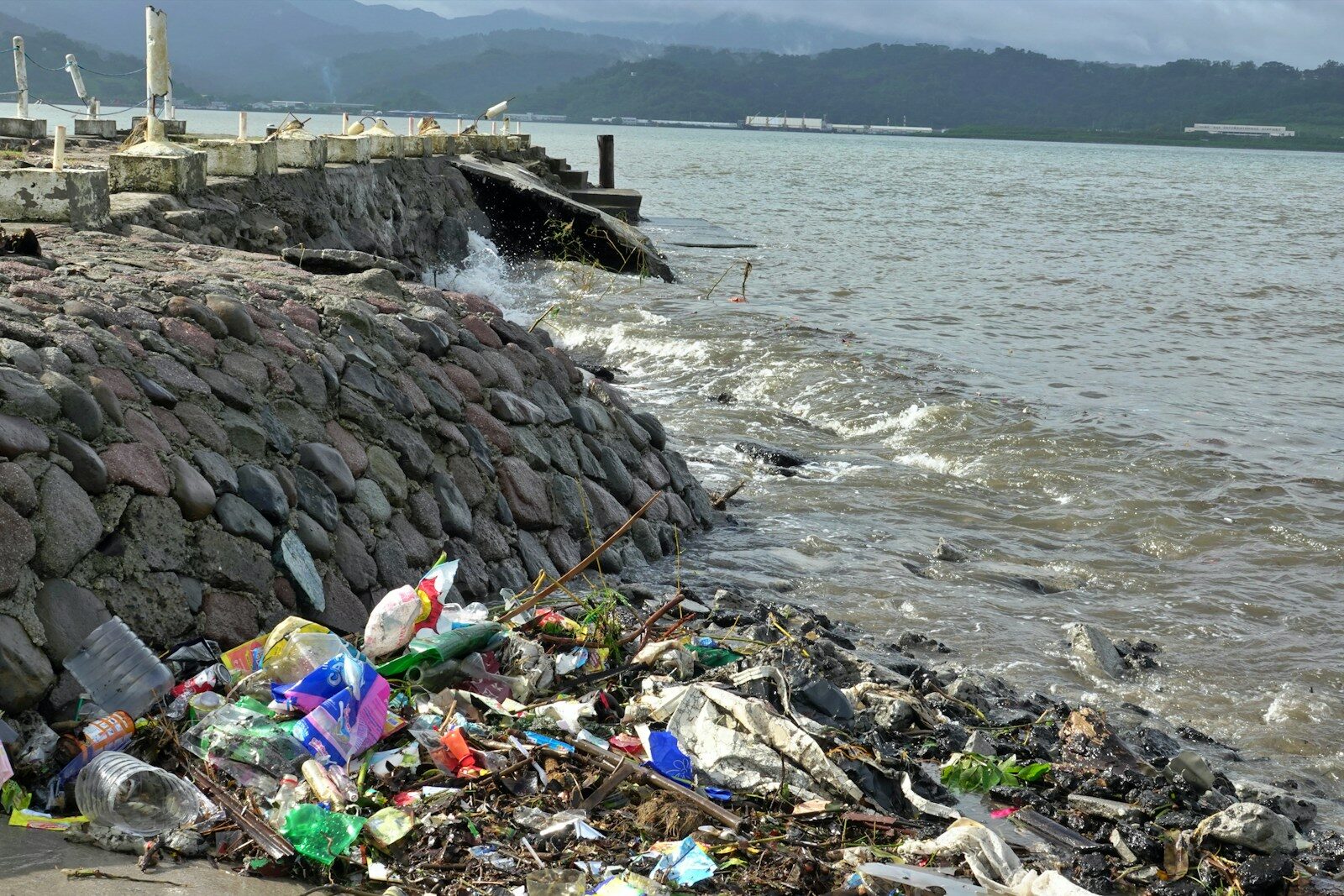
The unprecedented escalation of marine chemical pollution represents one of the most insidious threats to planetary stability in the modern Anthropocene. Driven by rapid urbanization, relentless industrialization, and unchecked consumerism, anthropogenic organic molecules—known as xenobiotics—are currently flooding the world’s largest biome. This invisible crisis extends far beyond localized marine life mortality; it threatens the foundational biogeochemical processes that sustain life on Earth.
Historically, investigations into the distribution of these chemicals have been highly regionalized. This narrow focus has severely limited our systemic understanding of ocean contamination. However, a recent meta-analysis of public non-targeted tandem mass spectrometry datasets has finally mapped the vast, ecosystem-wide footprint of anthropogenic compounds.
By analyzing thousands of seawater samples from coastal estuaries to the deep ocean, scientists have uncovered alarming realities about the composition of marine dissolved organic matter. We must now examine the macroscopic implications of these microscopic pollutants.
Table of Contents
The Hidden Chemistry: How Pollutants Transform in the Ocean
Marine chemical pollution is not static — the ocean is a dynamic chemical environment where pollutants react, transform, accumulate, and amplify in ways that are often far more dangerous than the original compounds. Understanding this transformation chemistry is essential for grasping why certain pollutants pose such persistent and severe threats to marine ecosystems and human health.
Bioaccumulation and biomagnification are the core mechanisms by which trace-level chemical contamination becomes a major ecosystem and human health crisis. Bioaccumulation describes the uptake and retention of a chemical by an organism faster than it can be eliminated — common among lipophilic (fat-soluble) compounds like PCBs, DDT, PFAS, and methylmercury, which dissolve into fatty tissues and concentrate there over time. Biomagnification describes the amplification of this accumulation as it moves up the food chain: a marine worm might accumulate a contaminant at 1,000 times background water concentration; a small fish eating many worms accumulates it at 10,000 times; a large predatory fish reaches 100,000 times; a marine mammal or seabird at the top of the food chain can reach concentrations 1,000,000 times or more above background water levels.
This magnification explains why apex marine predators — killer whales, sharks, tuna, swordfish, polar bears — carry the highest body burdens of persistent organic pollutants and heavy metals, even in remote ocean regions far from direct pollution sources. It also explains why Indigenous communities and Pacific Island peoples who rely on marine mammals and large predatory fish for subsistence nutrition bear disproportionate exposure burdens from pollution they did not generate.
Ocean acidification interacts synergistically with chemical pollution in ways that are only beginning to be characterized. As the ocean absorbs excess atmospheric CO2, it becomes more acidic — a process that has lowered ocean pH by 0.1 units since pre-industrial times, representing a 26% increase in acidity. This acidification alters the speciation and bioavailability of many metals: copper, zinc, lead, and cadmium become more bioavailable as pH drops, increasing their toxicity to marine organisms. The combination of direct chemical pollution and ocean acidification creates a compounding threat that is more severe than either stressor alone.
Emerging Chemical Threats: The Frontier of Marine Pollution Science
Beyond the well-documented legacy pollutants — PCBs, DDT, mercury — a new generation of chemical threats has emerged from modern industrial and consumer economies. These emerging contaminants are present in oceans worldwide but are, in many cases, only partially characterized for their ecological effects.
Pharmaceutical compounds now contaminate coastal waters globally. Human medications — antibiotics, antidepressants, hormones, chemotherapy agents, pain relievers — enter the ocean through wastewater treatment plant effluent (most treatment systems were not designed to remove pharmaceuticals), agricultural runoff from livestock operations where medicated animals excrete drug residues, and direct dumping of unwanted medications. Research has documented that synthetic estrogens from birth control pills cause feminization of fish populations — intersex fish with both male and female reproductive tissue have been documented in rivers and coastal waters worldwide. Antidepressants alter the behavior of crabs, fish, and other marine organisms in ways that affect their survival and reproductive success. Antibiotic residues promote the development of antibiotic-resistant bacteria in marine sediments — a poorly understood pathway for resistance to spread.
Microplastics and the chemicals they carry have emerged as a ubiquitous marine threat. Plastics in the ocean degrade into particles smaller than 5 millimeters — microplastics — and ultimately into nanoplastics that are small enough to penetrate cell membranes. These particles carry adsorbed hydrophobic pollutants — PCBs, PAHs, pesticides — on their surfaces at concentrations far higher than surrounding seawater, acting as chemical vectors that concentrate and transport persistent pollutants to organisms that ingest them. Microplastics have been found in the gut contents of marine organisms from every ocean basin, including deep-sea species in the Mariana Trench. Their effects on marine ecosystem function are still being characterized, but emerging evidence suggests disruption of gut microbiomes, inflammatory responses, and endocrine disruption in a range of species.
PFAS — per- and polyfluoroalkyl substances, sometimes called “forever chemicals” — are now recognized as a pervasive marine contaminant. These synthetic compounds, used in food packaging, firefighting foam, non-stick cookware, and water-resistant textiles, are extraordinarily chemically stable — resistant to heat, water, and biological degradation. They accumulate in the environment indefinitely. PFAS have been detected in remote ocean locations, in deep-sea sediments, in the blood of marine mammals from the Arctic to Antarctica, and in seafood sold in supermarkets worldwide. Long-chain PFAS like PFOS and PFOA are associated with immune system suppression, thyroid disruption, liver damage, and cancer in mammals; their effects on marine organisms are an active area of research.
Policy Solutions: Building a Cleaner Ocean Economy
Addressing marine chemical pollution requires coordinated action across multiple policy domains — international agreements, national regulations, industrial standards, and consumer behavior change. The good news is that policy interventions have demonstrably worked: the global phase-out of leaded gasoline dramatically reduced lead concentrations in ocean surface waters. The banning of DDT under CITES has allowed bald eagle and peregrine falcon populations to recover. The Montreal Protocol’s elimination of ozone-depleting chlorofluorocarbons averted catastrophic ozone depletion. These successes demonstrate that international chemical regulation, when effectively implemented, can achieve measurable environmental recovery.
The 2022 UN agreement to develop a global plastics treaty represents a potential watershed moment for marine pollution governance. Negotiations toward a legally binding agreement to reduce plastic pollution across the full lifecycle — from production through disposal — reflect growing recognition that voluntary industry commitments and national regulations alone are insufficient to address a pollution stream that crosses borders as freely as ocean currents. The treaty, if ambitious and effectively implemented, could reduce marine plastic inputs by 80% by 2040 relative to a business-as-usual trajectory, according to estimates by the High Ambition Coalition.
Extended producer responsibility schemes shift the cost of chemical pollution from society to producers. Under EPR frameworks, manufacturers are financially responsible for the end-of-life management of products they sell — creating economic incentives to design products that can be safely recovered and recycled rather than ones that persist in the environment indefinitely. EPR programs have been implemented for electronics, batteries, packaging, and pharmaceuticals in the EU, Canada, and a growing number of U.S. states. Expanding EPR to cover a broader range of chemical-containing products — particularly those containing persistent pollutants like PFAS — would internalize pollution costs that are currently externalized to ocean ecosystems and public health.
The Expanding Scope of Marine Chemical Pollution
To understand the sheer scale of the contamination, scientists utilized liquid chromatography high-resolution tandem mass spectrometry. This advanced analytical methodology allows researchers to detect and characterize thousands of distinct xenobiotics within the dissolved organic matter pool. By evaluating 21 public datasets comprising 2,315 seawater samples, a comprehensive map of global marine ecosystems has emerged.
The data spans three major ocean basins, including the central and eastern Pacific, the Indian Ocean, and the North Atlantic, as well as the Baltic and Caribbean seas. A total of 248 annotated xenobiotic features were identified. This meta-analysis proves that anthropogenic organic substances are not anomalies; they are a permanent fixture in the modern ocean.
Interestingly, these xenobiotics contributed a median of 2% to the total detected peak area per sample across all environments. To put this in perspective, this indicates a massive baseline of contamination that interacts continuously with natural organic matter. Understanding this foundational baseline is critical for organizations like the National Oceanic and Atmospheric Administration when developing global conservation frameworks.
Bridging the Gap: Consumerism and Ecological Economics
The presence of widespread marine chemical pollution is not merely a biological issue; it is a profound failure of modern ecological economics. The linear economic model of “take, make, dispose” has externalized the true costs of industrial production. Consequently, the biosphere is forced to absorb millions of tons of unpriced synthetic chemicals annually.
Every time agricultural systems rely on synthetic fungicides like metalaxyl, or urban populations consume beta-blockers like atenolol, the chemical residues eventually flow into marine sinks. This represents a systemic disconnect between terrestrial industrial activities and marine ecological health. We are effectively subsidizing global consumerism by depleting the resilience of our ocean ecosystems.
To truly address this, we must pivot toward a circular economic model that internalizes ecological degradation into the cost of goods. This requires stringent regulatory frameworks that mandate chemical accountability from the point of manufacture to the ultimate environmental sink. For a deeper understanding of how terrestrial practices influence aquatic health, explore our analysis on sustainable agriculture and pesticide runoff.
How Marine Chemical Pollution Alters the Carbon Cycle
The intersection between xenobiotics and planetary climate regulation is an emerging frontier of environmental science. The global influx of anthropogenic organic molecules into certain marine ecosystems has reached levels comparable to natural organic matter. This artificial chemical loading possesses the potential to fundamentally disrupt global carbon cycling.
Marine dissolved organic matter is one of the largest reservoirs of reduced carbon on Earth. When synthetic chemicals bind with or alter this natural organic pool, they can change how microbial communities metabolize carbon. If microbial respiration rates are modified by toxic industrial additives, the ocean’s capacity to sequester atmospheric carbon dioxide may be severely compromised.
This means that chemical pollutants are not just poisoning fish; they are actively interfering with the ocean’s ability to buffer against anthropogenic climate change. This compounds the already dire warnings issued by global climate authorities, such as the Intergovernmental Panel on Climate Change, regarding the fragile state of marine carbon sinks.
Distribution Gradients: From Coasts to the Open Ocean
The distribution of marine chemical pollution is not uniform; it follows a distinct spatial gradient driven by proximity to human infrastructure. The recent meta-analysis revealed that xenobiotic contribution levels reached up to 20% in coastal datasets. Estuaries, temperate coastal shelves, and near-shore environments bear the absolute brunt of humanity’s chemical waste.
In these highly impacted zones, localized marine food webs are constantly exposed to complex cocktails of pesticides, pharmaceuticals, and industrial surfactants. As we move further from the shore, the concentration of these specific, dataset-specific pollutants like agricultural runoff begins to decline. However, the open ocean is by no means pristine.
Even in the most remote open ocean datasets, xenobiotics maintained a baseline contribution level of 0.5%. Industrial chemicals and additives, including polyalkylene glycols, phthalates, and organophosphates, were found to be incredibly persistent and widely distributed. This proves that ocean currents are highly efficient at transporting stable synthetic compounds to the furthest reaches of the globe.
Dominant Pollutant Categories in Marine Systems
The composition of marine contamination is heavily skewed toward specific classes of consumer and industrial products. To effectively regulate these compounds, we must first categorize their ecological prevalence. The table below summarizes the primary xenobiotics fundamentally altering our oceans.
| Pollutant Category | Common Annotated Compounds | Primary Distribution Zone | Macro-Ecological Vector |
| Industrial Additives | Phthalates, Polyalkylene glycols, Organophosphates | Widespread (Coast to Open Ocean) | Persistent structural persistence in global currents; disrupts natural organic matter pools. |
| Pharmaceuticals | Atenolol acid (beta-blocker metabolite) | Dataset-specific (Highly concentrated near urban coasts) | Incomplete wastewater treatment; alters microbial and physiological functions in marine life. |
| Agricultural Pesticides | Metalaxyl (fungicide), DEET (repellent) | Estuaries and near-shore temperate shelves | Terrestrial agricultural runoff; acute toxicity to localized benthic and pelagic food webs. |
Industrial pollutants, encompassing plastic-related chemicals, personal care products, and surfactants, unequivocally dominate the contamination profiles. These compounds were detected universally across various ecosystems, highlighting the inescapable reach of industrial manufacturing.
Conversely, pharmaceuticals and agricultural pesticides exhibited more localized distribution patterns. These compounds were primarily linked to datasets from highly populated coastal regions, such as the Southern San Diego Coast and South Africa. This localized severity underscores the urgent need to overhaul municipal wastewater infrastructure and reform agricultural practices at the watershed level. Readers interested in broader oceanic impacts can review our comprehensive breakdown of ocean acidification dynamics.
Systemic Solutions for Ecological Resilience
Addressing marine chemical pollution requires a monumental shift away from reactive cleanup efforts and toward proactive, systemic mitigation. We can no longer rely on the vastness of the ocean to dilute our toxic byproducts. The data clearly shows that anthropogenic compounds are fundamentally rewriting the chemical baseline of the sea.
The first step is implementing “green chemistry” principles at the industrial level, ensuring that newly synthesized molecules are designed to be benign and biodegradable in aquatic environments. Secondly, global agricultural systems must aggressively transition to agroecological models that eliminate reliance on synthetic pesticides and fungicides. Finally, international policies must enforce strict regulations on the discharge of persistent organic pollutants into marine sinks.
The ocean is the life support system of our planet, regulating our climate and sequestering our carbon. By allowing widespread chemical pollution to persist, we are gambling with the stability of the entire biosphere. We must bridge the gap between human consumerism and ecological reality before the damage to marine dissolved organic matter becomes entirely irreversible.
Water Footprint Impact Calculator
Measure direct and virtual water consumption across household, agricultural, and industrial supply chains against regional watershed stress metrics.
Calculate Water Footprint →