America’s infrastructure is aging, underfunded, and increasingly tested by climate extremes it was never designed to withstand. Roads buckle in record heat. Bridges flood in storms of unprecedented intensity. Power grids fail in cold snaps that historical design parameters never anticipated. Rebuilding the physical foundation of American life to be resilient against the climate of the 21st century—not the climate of the 20th century—is one of the defining challenges of our era. The good news: we know how to do it. The question is whether we will act with sufficient scale and speed.
The Scale of the Challenge
The American Society of Civil Engineers (ASCE) 2021 Infrastructure Report Card gave the United States a C-minus grade overall—reflecting a system that functions but is showing serious stress across nearly every category. Roads: D. Bridges: C. Drinking water: C-minus. Stormwater: D-plus. Aviation: D-plus. The ASCE estimates that the US faces an infrastructure investment gap of $2.6 trillion over 10 years to achieve a state of good repair—before accounting for the additional investment needed to make that infrastructure climate-resilient.
The Bipartisan Infrastructure Law, enacted in November 2021, committed $1.2 trillion in infrastructure investment—the largest in American history. Of this, roughly $50 billion is designated specifically for climate resilience, including investments in weatherization, coastal protection, and infrastructure hardening against extreme weather. A meaningful start, but engineers and climate scientists stress that much more will be needed as climate impacts accelerate.
The economic case for proactive resilience investment is compelling. Research from the National Institute of Building Sciences found that every $1 invested in hazard mitigation saves $6 in future disaster recovery costs. The Congressional Budget Office estimates that unmitigated climate change will reduce US GDP by 1–3% by 2090—costs that aggressive resilience investment could substantially reduce. Reactive disaster response consistently costs more, causes more harm, and provides less protection than proactive resilience design.
Transportation Infrastructure: Roads, Bridges, and Rails Under Stress
Road Surfaces and Extreme Heat
Conventional asphalt road surfaces are engineered for specific temperature ranges. As climate change drives more frequent and extreme heat events, roads are buckling, rutting, and degrading faster than anticipated. Phoenix, Arizona—where pavement surface temperatures regularly exceed 150°F in summer—is experimenting with cool pavement technologies including lighter-colored surfaces, reflective coatings, and rubberized asphalt that better tolerates thermal expansion cycles.
The Federal Highway Administration (FHWA) has developed climate change vulnerability assessment tools to help state transportation departments identify which road segments face greatest risk from specific climate stressors—heat, flooding, freeze-thaw cycles, and sea level rise. States including California, Oregon, and Massachusetts have integrated these assessments into their long-range transportation planning, enabling more strategic prioritization of resilience investments.
Bridges: Flood and Scour Risk
More than 42% of US bridges are over 50 years old. Approximately 7,500 are classified as “structurally deficient.” Climate change adds new stressors: more intense rainfall drives higher peak flood flows that erode the soil and rock around bridge foundations—a process called scour—which is already the leading cause of bridge failures in the United States. The I-5 bridge collapse in Washington state in 2013, while caused by a truck strike, brought renewed attention to the vulnerability of aging bridge infrastructure to multiple simultaneous stressors.
The FHWA’s Hydraulic Engineering Circular 18 governs bridge foundation design for stream stability and scour, but the hydrology data underlying these standards uses historical flow records that increasingly underestimate peak flows in a warming climate. Updating bridge design standards to reflect projected future hydrology—and retrofitting the most vulnerable existing bridges—is an urgent priority for transportation agencies nationwide.
Rail and Transit Resilience
Rail infrastructure is particularly vulnerable to temperature extremes. Steel rails expand in heat and contract in cold; design tolerances that worked historically may be insufficient as temperatures exceed historical ranges. Track buckling—”sun kinks”—forced speed restrictions and service disruptions on Amtrak’s Northeast Corridor during the 2022 heat waves, highlighting vulnerabilities in one of America’s busiest rail corridors.
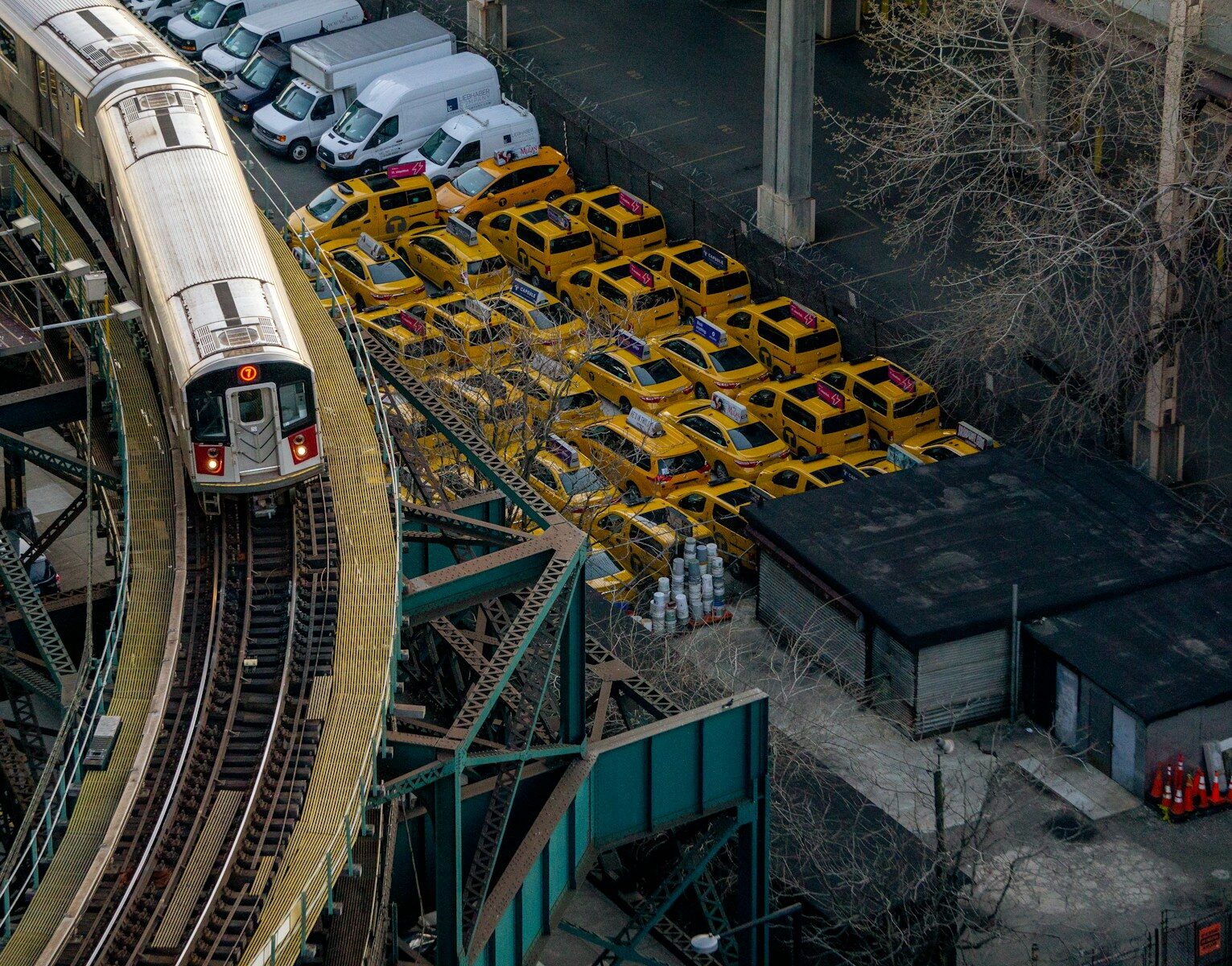
The Metropolitan Transit Authority in New York City has invested $300 million in subway system flood protection following the catastrophic flooding of the subway during Superstorm Sandy (2012), which caused $5 billion in damage to the transit system. Flood barriers at critical entry points, improved pump systems, and hardened electrical infrastructure are among the measures deployed. Sandy’s lessons are being applied in transit systems from Miami to Boston, though full implementation remains years away and billions of dollars off in most systems.
Energy Infrastructure: The Grid’s Climate Challenge
The February 2021 Texas power grid failure—which killed over 250 people and caused $195 billion in economic damage when extreme cold overwhelmed inadequately weatherized natural gas infrastructure—was the most dramatic reminder in recent memory of how catastrophically infrastructure designed for historical climate conditions can fail when the climate shifts outside those parameters. But Texas was not a unique outlier; it was a preview.
The US electric grid spans 7,700 power plants, nearly 160,000 miles of high-voltage transmission lines, and millions of miles of distribution lines. Much of this infrastructure was built decades ago and is approaching or has exceeded its design lifespan. The electricity system’s transition to higher renewable penetration—wind and solar displacing dispatchable fossil fuel plants—requires new thinking about grid resilience and reliability that accounts for both the variability of renewable generation and the increasing frequency of extreme weather disruption.
Climate resilience investments in the energy sector include:
Transmission hardening: Underground high-voltage lines are far more resistant to storm damage than overhead lines but cost 5–10 times more to build. Strategic undergrounding of the most critical transmission segments—particularly in hurricane and ice storm zones—offers significant resilience benefits. Florida Power & Light has invested heavily in underground distribution lines since Hurricane Irma (2017), reducing outage durations significantly in subsequent storms.
Grid modernization and smart technology: Advanced sensors, automated switching, and digital control systems allow grid operators to detect faults faster, isolate damaged segments more precisely, and restore power more quickly. The Department of Energy’s Grid Deployment Office is funding demonstration projects for these technologies across the country.
Distributed energy and microgrids: Solar panels with battery storage, community microgrids, and combined heat and power systems allow critical facilities and communities to maintain electricity supply even when the central grid is down. FEMA has funded microgrid installations at emergency management facilities across the country, ensuring these facilities remain operational during grid failures.
Water Infrastructure: Drinking Water and Wastewater Under Pressure
America’s water infrastructure faces climate challenges on multiple fronts. Drought threatens water supply in the West. More intense rainfall overwhelms combined sewer systems that send untreated waste into waterways. Aging water mains fail at higher rates as soil moisture variability increases. Lead pipes—still present in millions of homes across the country—leach lead more readily as water chemistry shifts.
The Bipartisan Infrastructure Law allocated $55 billion to water infrastructure—the largest federal water investment in US history. Key components include $15 billion specifically for lead pipe replacement, funding for water system resilience planning, and investment in drought resilience in the West. These investments are welcome but represent only a fraction of the estimated $300–500 billion in water infrastructure investment needed nationally over the next 20 years.
Nature-based solutions are increasingly integrated into water infrastructure planning. Green infrastructure—bioswales, rain gardens, green roofs, urban tree canopy—intercepts and absorbs rainfall before it can overwhelm sewer systems. Philadelphia’s landmark green infrastructure program, which has invested over $300 million in green stormwater infrastructure since 2011, has become a national model. The program manages more than 4.5 billion gallons of stormwater annually while improving neighborhood aesthetics and reducing urban heat island effects.
Building Codes and Land Use: The Front Line of Climate Resilience
Infrastructure resilience begins with where and how we build. Building codes establish minimum standards for structural resistance to wind, flood, snow, and seismic events. Land use regulations determine whether communities allow development in flood plains, wildfire interfaces, and coastal zones that face escalating climate risk.
The International Building Code (IBC) and International Residential Code (IRC) set the baseline for construction standards adopted by most US jurisdictions. Climate change creates pressure to update these codes more frequently and to incorporate projected future conditions rather than historical data into design requirements. FEMA’s Hazard Mitigation Assistance programs reward communities that adopt more stringent building codes with additional hazard mitigation funding.
Perhaps the most difficult resilience question is managed retreat—the planned, community-supported relocation of people and assets away from areas where climate risk is becoming unmanageable. Some coastal communities in Louisiana and Alaska have already undergone community-wide relocation. The social and political challenges are enormous, but the alternative—repeatedly rebuilding in the same high-risk locations at public expense—is increasingly difficult to justify economically or ethically.
Equity in Climate-Resilient Infrastructure
Climate infrastructure investment, if not deliberately designed with equity in mind, risks widening existing disparities. Affluent communities with strong political representation and tax bases can invest in resilience measures that low-income communities and communities of color cannot afford. Historic patterns of discriminatory land use—redlining that concentrated minority communities in flood-prone, heat-exposed, and pollution-affected areas—mean that climate vulnerability is already distributed unequally.
The Biden administration’s Justice40 initiative committed to directing at least 40% of the benefits from federal climate and clean energy investments to disadvantaged communities. Implementing this commitment through infrastructure programs—ensuring that resilience investments prioritize the most vulnerable communities, not just the most vocal or politically connected—is essential both for equity and for effective risk reduction.
A Vision for 21st-Century Climate-Resilient Infrastructure
Building truly climate-resilient infrastructure requires a fundamental shift in planning philosophy: from designing for the climate of the past to designing for the climate of the future. This means incorporating climate projections—not just historical data—into design standards; planning for the full lifecycle of infrastructure assets (40–100 years) across the range of possible climate futures; and integrating nature-based solutions alongside engineered structures.
It also requires institutional change—building climate expertise into infrastructure agencies at all levels of government, creating funding mechanisms that reward proactive investment rather than just disaster response, and building the workforce capable of designing and building the infrastructure we need. The Department of Transportation, Department of Energy, EPA, and Army Corps of Engineers all have important roles to play in establishing and enforcing climate-resilient standards for federally funded infrastructure.
The infrastructure we build in the next 20 years will shape American communities for a century. Getting it right—building it to last, building it to be resilient, and building it equitably—is not optional. It is the foundation on which American prosperity, safety, and quality of life will rest as the climate continues to change.
Related reading: Sustainability Policy | Climate Adaptation
Water Footprint Impact Calculator
Measure direct and virtual water consumption across household, agricultural, and industrial supply chains against regional watershed stress metrics.
Calculate Water Footprint →