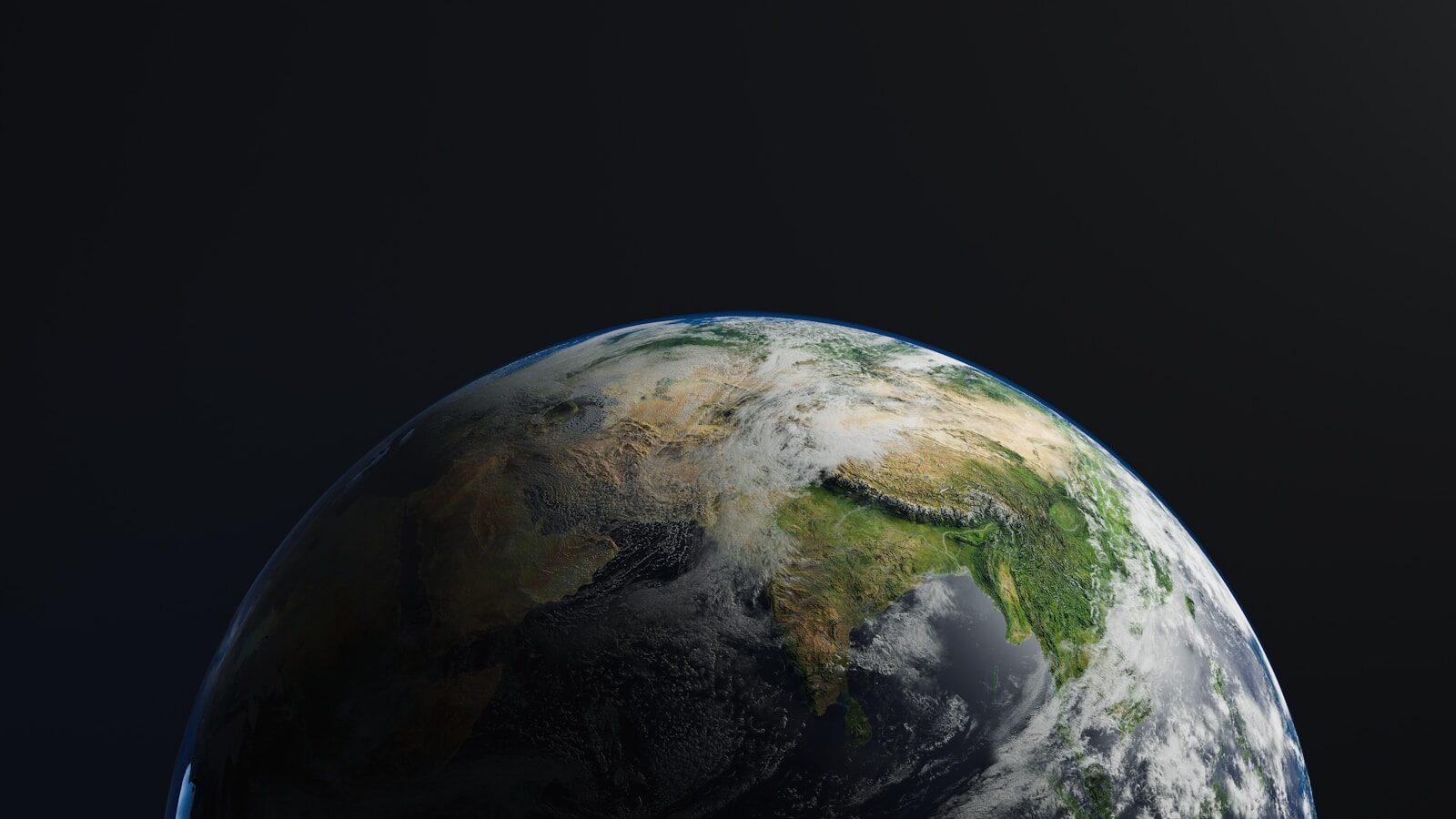
For decades, the motion of galaxies in our local neighborhood has posed a persistent paradox for the scientific community. While gravity suggests that nearby celestial bodies should be drawn toward the massive concentration of the Local Group, observations show the opposite: most neighboring galaxies are speeding away. This phenomenon has remained one of the most significant “missing pieces” in our understanding of local galactic evolution.
Recent breakthroughs in cosmological simulation have finally provided the answer. Researchers have identified a massive, flattened cosmic sheet around the Milky Way that dictates the gravitational dance of our local universe. This structure, primarily composed of dark matter, acts as a balancing force that explains why the expansion of space appears to override local gravity in specific directions. Understanding this structure is not just a win for theoretical physics; it is essential for mapping the long-term stability and trajectory of our own galaxy.
Table of Contents
Key Concepts and the Scientific Foundation
To understand the cosmic sheet around the Milky Way, one must first grasp the concept of the “Cosmic Web.” On the largest scales, the universe is not a uniform soup of stars; rather, it is a web-like network where galaxies congregate along thin filaments and flat sheets. These structures are separated by enormous, nearly empty regions known as cosmic voids.
The Local Group, which includes the Milky Way and Andromeda, was previously thought to be a somewhat isolated cluster. However, new data confirms we are embedded within one of these massive sheets. This structure is a “pancake-like” distribution of matter that stretches for tens of millions of light-years.
Dark matter plays the lead role here. Although it does not emit light or heat, its gravitational footprint is what allows these sheets to form. The sheet provides a local gravitational “landscape” that is much flatter than previously modeled, creating a specific pull that competes with the central mass of the Milky Way and Andromeda.
Environmental and Economic Impacts of Cosmological Research
While the cosmic sheet around the Milky Way exists on a scale far removed from Earth’s immediate environment, the pursuit of this data has significant terrestrial implications.
Data and Technological Spillovers
The computational power required to simulate a “virtual twin” of our universe drives innovation in high-performance computing (HPC). These same algorithms are frequently adapted for climate modeling and complex agricultural yield predictions.
Financial Implications for Satellite Infrastructure
Understanding the local gravitational environment and the distribution of dark matter is critical for long-term deep-space navigation. As the private space sector expands, with investments reaching billions of dollars, precision in cosmological mapping reduces the risks associated with long-range trajectory calculations for future interstellar probes.
Global Research Investment
Funding for large-scale astronomical projects, such as the telescopes that provided the data for the University of Groningen study, supports thousands of high-tech jobs globally. It fosters international cooperation, a necessary “social environment” for solving other global crises like climate change.
Real-World Case Studies: The Virtual Twin Model
The discovery of the cosmic sheet around the Milky Way was made possible by the creation of a “virtual twin” of our local universe. Led by Ewoud Wempe at the University of Groningen, the research team used a specific methodology to bridge the gap between theory and observation.
- The Early Universe Blueprint: Researchers utilized measurements from the Cosmic Microwave Background (CMB) to set the initial conditions of their simulation.
- The Simulation Process: By evolving these conditions forward through 13.8 billion years of cosmic time, the model naturally produced a flat sheet of matter that matches our current observations.
- Validation: The model successfully predicted the velocities of 31 galaxies outside the Local Group. It confirmed that these galaxies move away not just because of the expansion of the universe, but because they are being pulled by the mass distributed throughout the sheet itself.
This application of “Reverse Engineering the Universe” demonstrates how digital twin technology is becoming a cornerstone of modern science, from astrophysics to urban sustainability planning.
Challenges and Barriers in Modern Cosmology
Despite this breakthrough, several obstacles remain in fully mapping the cosmic sheet around the Milky Way.
- The “Zone of Avoidance”: The gas and dust within our own Milky Way disc block our view of roughly 20% of the extragalactic sky. This makes it difficult to map the full extent of the cosmic sheet behind our own galactic center.
- Dark Matter Detection: Since we cannot see dark matter directly, we must infer its presence through gravity. Any errors in our understanding of gravity (such as potential deviations from General Relativity) could skew our maps of the sheet.
- Data Processing Bottlenecks: The sheer volume of data from next-generation telescopes requires energy-intensive data centers, creating a sustainability challenge for the research community.
Solutions and Strategic Pathways for Future Discovery
Advancing our knowledge of the cosmic sheet around the Milky Way requires a multi-faceted approach involving technology, policy, and international collaboration.
- Next-Generation Space Telescopes: Prioritizing missions like the Euclid Space Telescope and the Nancy Grace Roman Space Telescope will allow us to peer through the dust of the Milky Way and see the sheet with unprecedented clarity.
- AI-Driven Analysis: Implementing machine learning to process petabytes of sky-survey data can help identify subtle gravitational lensing effects caused by the cosmic sheet.
- Sustainable Science Initiatives: Research institutions are increasingly moving toward carbon-neutral supercomputing centers to ensure that exploring the cosmos does not come at the cost of our own planet’s climate health.
- Public Policy Support: Continued government funding for “blue-sky” research is essential. History shows that fundamental discoveries about our place in the universe often lead to unforeseen technological revolutions on Earth.
Frequently Asked Questions
What is the cosmic sheet around the Milky Way?
It is a vast, flattened structure of dark matter and galaxies that surrounds our Local Group. It acts as a gravitational framework that influences how nearby galaxies move.
Why are galaxies moving away from the Milky Way?
While the universe is expanding, galaxies within the cosmic sheet around the Milky Way move away specifically because the mass distributed throughout the sheet counteracts the local gravitational pull of our galaxy.
How was this discovery made?
Astronomers used advanced computer simulations to create a “virtual twin” of our local universe, starting from the conditions immediately after the Big Bang.
Conclusion
The identification of the cosmic sheet around the Milky Way marks a turning point in our understanding of our cosmic home. By proving that our galaxy resides within a giant, flat structure of dark matter, scientists have finally resolved the mystery of why our galactic neighbors appear to be drifting away. This discovery reinforces the importance of the Cosmic Web in shaping the evolution of galaxies.
As we continue to map these invisible structures, we gain more than just academic knowledge; we refine the tools and technologies that will define our future, both in the stars and here on Earth. Staying informed about these developments is the first step in fostering a society that values scientific progress and environmental stewardship.
Authoritative Source: NOAA Climate Data
Earth’s Place in the Cosmos and the Urgency of Planetary Stewardship
Astronomical discoveries that reveal the vast architecture of the universe—from cosmic filaments and galactic sheets to the large-scale structure of dark matter—serve a profound role beyond pure science: they provide cosmic context for the Earth’s singular value. NASA’s ongoing surveys of galaxy formation and planetary systems have so far identified over 5,500 confirmed exoplanets, yet none with the confirmed combination of liquid water, breathable atmosphere, active carbon cycle, and rich biological diversity that makes Earth uniquely habitable. The nearest potentially Earth-like planet, Proxima Centauri b, is 4.2 light-years away—effectively unreachable with any foreseeable human technology.
This astronomical perspective is not merely philosophical. NASA’s Astrobiology Program, which studies the origin, evolution, and distribution of life in the universe, consistently uses Earth as the benchmark habitable world—and the agency’s climate research division documents with precision how human activities are actively degrading the systems that make Earth the only known home of life. From stratospheric ozone chemistry to ocean salinity gradients and atmospheric carbon concentrations, the planetary systems that support human civilization are interlinked in ways that cosmic exploration is only beginning to map.
The carbon cycle, in particular, is a defining feature of Earth’s habitability. Over geological timescales, carbon is locked into rocks, oceans, and biomass, then released through volcanic activity, decomposition, and—in the current era—industrial combustion. NASA’s satellite monitoring shows that the global atmospheric concentration of CO₂ has risen from 280 parts per million (pre-industrial) to over 420 ppm today—a level not seen in at least 3 million years. This rapid change is unique in Earth’s geological record for its speed and is directly linked to human fossil fuel consumption.
Understanding the scale of our planetary home is the first step toward protecting it. In the cosmos, Earth is a rare and fragile oasis. On the ground, individual carbon choices collectively determine whether that oasis remains stable for future generations. Use our Carbon Footprint Calculator to measure your contribution to atmospheric carbon and identify your most effective pathways to reduction.
Authoritative Source: NASA Astrobiology — Habitable Worlds Research — NASA Astrobiology Program
🪐 Carbon Footprint Calculator
In a universe of billions of galaxies, Earth is our only confirmed home. Protect it—calculate your carbon footprint and take action to preserve the planet’s habitability.
Calculate My Carbon Footprint →Dr. Ahmad Mahmood, Environmental Scientist and Founder of Sustainability Awakening, has reviewed this article for scientific accuracy. Dr. Mahmood specializes in climate systems, environmental policy, and sustainability education. All content reflects current peer-reviewed research and data from official sources.
Last verified: October 2026 | About the Author
Water Footprint Impact Calculator
Measure direct and virtual water consumption across household, agricultural, and industrial supply chains against regional watershed stress metrics.
Calculate Water Footprint →