
The environmental impact of AI is growing as artificial intelligence systems expand across industries. Training large models, running data centers, and powering digital infrastructure require significant energy and water resources. As a result, AI development now intersects directly with climate policy and environmental management.
While AI offers efficiency gains in transportation, energy optimization, and research, it also increases electricity demand. Therefore, understanding the environmental impact of AI is essential for responsible innovation.
What Drives the Environmental Impact of AI
The environmental impact of AI comes primarily from three sources:
• Electricity consumption
• Water use for cooling
• Hardware manufacturing
Training advanced machine learning models requires massive computing power. Data centers run continuously to process queries, store data, and deliver real time results.
Consequently, global electricity demand from data infrastructure continues to rise.


Caption: AI systems rely on energy intensive data centers that require constant electricity and cooling.
Energy Consumption and Carbon Emissions
The environmental impact of AI depends heavily on the energy source powering data centers. If facilities rely on fossil fuels, emissions increase. However, if renewable energy supplies the grid, carbon intensity decreases.
In the United States, electricity generation varies by region. Some states rely heavily on natural gas, while others integrate wind, solar, or hydropower.
Therefore, the climate footprint of AI is location dependent.
At the same time, rising digital demand adds pressure to grid stability. You can explore broader grid challenges in our analysis of renewable energy transition.
Water Use and Cooling Demands
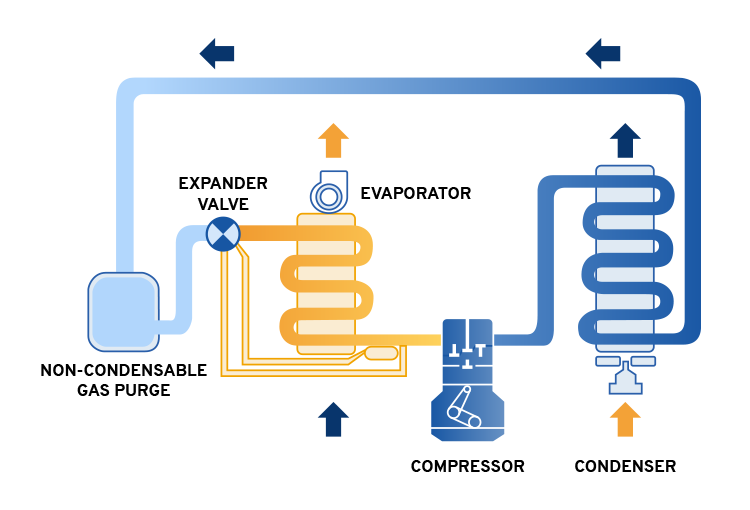
Beyond electricity, the environmental impact of AI includes water consumption. Data centers require cooling systems to prevent overheating. Many facilities use evaporative cooling that consumes large volumes of water.
In drought prone regions, this creates tension between digital growth and water security.
Moreover, climate change intensifies heat waves, which increases cooling demand. As temperatures rise, water consumption for cooling may also rise.
Water stress already affects many regions. You can see related risks in our coverage of global water risk.
Caption: Cooling systems link digital infrastructure growth to regional water availability.
Hardware Manufacturing and Resource Extraction
The environmental impact of AI also extends to hardware production. Advanced chips require rare earth elements, lithium, cobalt, and other minerals.
Mining and processing these materials generate land disturbance, water pollution, and carbon emissions.
In addition, rapid hardware upgrades increase electronic waste. Discarded servers and devices contribute to growing e waste streams worldwide.
This issue connects to broader concerns about resource extraction and circular economy strategies. You can explore systemic resource management in our discussion of circular economy principles.
Can AI Reduce Its Own Environmental Impact
Although AI consumes energy, it can also optimize systems. For example, AI tools improve:
• Smart grid management
• Energy efficiency in buildings
• Supply chain logistics
• Climate modeling accuracy
Therefore, the environmental impact of AI is not purely negative. The net effect depends on policy, energy sources, and system design.
If companies power data centers with renewable energy and improve hardware efficiency, environmental pressure decreases.
However, without oversight, rapid expansion may outpace efficiency gains.
Regulation and Corporate Accountability
Governments increasingly examine the environmental impact of AI infrastructure. Policymakers now consider reporting requirements, energy transparency, and grid integration planning.
At the corporate level, technology firms publish sustainability reports to address investor concerns.
Transparency matters. As digital infrastructure grows, public scrutiny increases.
Responsible AI development must include environmental metrics, not just performance benchmarks.
The Future of AI and Environmental Sustainability
The environmental impact of AI will likely expand as adoption accelerates. However, the direction of that impact remains flexible.
If energy grids decarbonize and cooling systems become more efficient, AI could operate within sustainable limits. Conversely, if fossil fuel dependence persists, emissions may rise sharply.
Therefore, policymakers, engineers, and business leaders must align digital innovation with climate goals.
AI is not separate from environmental systems. It depends on electricity, water, minerals, and land. Understanding these dependencies helps societies balance technological progress with ecological stability.
The environmental impact of AI ultimately reflects broader infrastructure decisions.
Authoritative Sources: EPA environmental footprint of data centers | DOE data center energy efficiency
The Data Center Boom: America’s AI Infrastructure and Its Energy Demands
The artificial intelligence revolution is being built on data centers — vast, power-hungry facilities filled with specialized processors (GPUs and custom AI accelerators) that require extraordinary amounts of electricity to train large AI models and run inference at scale. The United States is home to the majority of global AI compute capacity, concentrated in Northern Virginia (the world’s largest data center market), Phoenix, Silicon Valley, Dallas, and Chicago. The electricity demand from these facilities is growing at a rate that is straining grid capacity and reshaping utility planning assumptions that were developed before large-scale AI deployment was a planning scenario.
The numbers are striking. OpenAI’s GPT-4 training run consumed an estimated 50 gigawatt-hours (GWh) of electricity — equivalent to the annual electricity consumption of approximately 4,500 average American homes. Google has reported that its AI operations now consume 10 times more electricity than its traditional search infrastructure. A single ChatGPT query consumes roughly 10 times the energy of a Google search. Multiply those per-query numbers by billions of daily queries, and the scale of AI’s energy demand becomes apparent. The International Energy Agency projects that data center electricity demand globally could double between 2022 and 2026, with AI workloads driving a significant portion of that growth. In the U.S., some grid operators have told regulators that previously dormant demand growth is now accelerating faster than their interconnection queues can accommodate. The IEA’s data center energy analysis provides the most comprehensive global picture of this trend.
Water Consumption: AI’s Hidden Environmental Cost
Beyond electricity, data centers require enormous quantities of water for cooling. Servers generate heat when operating; excess heat must be removed to prevent equipment failure and maintain performance. Most large data centers use evaporative cooling systems — cooling towers that remove heat by evaporating water — which consume millions of gallons of water per day. A single hyperscale data center can consume 1-5 million gallons of water per day, comparable to a small city.
The geographic distribution of data centers places this water consumption in some of the most water-stressed regions in the country. Arizona’s Phoenix metro area — one of the fastest-growing data center markets — is also one of the most water-stressed regions in the U.S., dependent on a combination of Colorado River water (now subject to shortage declarations), groundwater depletion (the Phoenix Active Management Area faces long-term overdraft), and reclaimed water. The rapid construction of AI data centers in Phoenix has attracted scrutiny from local water advocates who argue that unlimited data center water use is incompatible with responsible water management in a desert region facing a structural water supply deficit.
Microsoft has publicly committed to being “water positive” by 2030 — replenishing more water than it consumes across its data center portfolio — a goal that requires investment in water recycling, alternative cooling technologies, and watershed restoration. Google has made similar commitments. But the verification, accountability, and timeline for these commitments remain subjects of scrutiny from environmental advocates who note that voluntary corporate commitments without regulatory enforcement have often failed to materialize into binding outcomes. Technology industry water consumption in drought-stressed regions is an emerging regulatory and environmental justice issue.
Carbon Footprints and the Race to Renewable Energy
The climate impact of AI’s electricity consumption depends critically on the carbon intensity of the power grid supplying the data centers. In Virginia, where about 70% of U.S. data center capacity is located, Dominion Energy’s grid still draws significantly from natural gas and nuclear power. In Texas, where the ERCOT grid has abundant wind power capacity but significant natural gas baseload, the carbon intensity of AI operations varies by time of day and season. In the Pacific Northwest, where hydropower provides low-carbon baseload, data centers have historically had lower carbon footprints per unit of computation.
The major tech companies have made commitments to power their data centers with 100% renewable energy — but the definition of “100% renewable” matters enormously. “Matching” approaches that purchase renewable energy certificates (RECs) to offset consumption on an annual basis do not ensure that the actual electrons powering servers at any given moment come from renewable sources; they simply ensure that somewhere on the grid, renewable energy equal to total consumption was generated during the year. Genuine 24/7 carbon-free energy — matching clean energy generation to consumption on an hourly basis — is a significantly more demanding standard that Google has committed to for 2030 and that Microsoft has announced as a goal.
The practical reality is that the data center construction boom is outpacing renewable energy deployment in many markets, and utilities are reporting that meeting data center demand growth may require building new natural gas plants or extending the life of existing fossil fuel generation that was scheduled for retirement. In Virginia, Dominion Energy’s long-range planning acknowledges that data center load growth is a primary driver of resource needs over the next decade. The result could be that AI infrastructure, despite corporate renewable energy commitments, drives a net increase in fossil fuel generation in the near term. Corporate climate commitments and AI’s energy footprint require scrutiny beyond press release-level claims.
E-waste and Hardware Obsolescence: The Material Footprint of AI
AI’s environmental impact is not limited to operational energy and water consumption. The hardware on which AI runs — GPUs, custom AI chips (TPUs, Trainium, Gaudi), networking equipment, servers — has its own material footprint. Manufacturing a high-end GPU like NVIDIA’s H100 requires rare earth elements, high-purity silicon, copper, and precious metals; the fabrication process at semiconductor facilities (principally TSMC in Taiwan) is itself energy- and water-intensive. The rapid pace of AI chip development — with each new generation delivering substantially better performance per watt — creates both an incentive for hardware upgrades and a wave of rapidly obsolete equipment.
Data center hardware has a typical operational lifespan of 3-5 years before being replaced by newer, more efficient equipment. The volume of servers being retired from AI data centers is large and growing; responsible disposal and recycling of this equipment is essential to prevent heavy metals and other harmful materials from entering landfills or being processed in unsafe e-waste recycling conditions in developing countries. The electronics recycling supply chain in the U.S. remains fragmented, with significant volumes of e-waste exported to informal recycling operations despite regulations that are supposed to prevent this. E-waste and sustainable technology management is an underappreciated dimension of the AI environmental footprint.
AI as a Tool for Environmental Solutions
The environmental impact of AI must be weighed against its potential to accelerate environmental solutions. AI is already being applied to climate and environmental problems in ways that could yield significant positive impacts: optimizing the siting and grid integration of renewable energy, improving the accuracy of climate models, accelerating the discovery of new battery chemistries and low-carbon materials, reducing energy consumption in manufacturing through better process control, improving the efficiency of building systems, and enabling precision agriculture that applies fertilizers and pesticides more efficiently. Climate scientists are using AI to extract more signal from satellite and sensor data, improving the quality of environmental monitoring.
Whether AI’s positive environmental applications outweigh its direct resource footprint is an empirical question that depends on how AI is deployed, how quickly its energy supply is decarbonized, and how effectively the solutions it enables are implemented. What is clear is that treating AI as environmentally neutral — as many tech industry communications implicitly do — ignores real and growing impacts that deserve transparent measurement, honest reporting, and meaningful regulatory attention. The environmental footprint of the digital economy is not a peripheral concern; it is a central feature of any credible plan for sustainable technological development.
Water Footprint Impact Calculator
Measure direct and virtual water consumption across household, agricultural, and industrial supply chains against regional watershed stress metrics.
Calculate Water Footprint →