The unprecedented scale of America’s extreme weather this past summer serves as an undeniable, stark warning of climate crisis escalation. When analyzing these meteorological hazards, it is scientifically inadequate to view heatwaves, floods, and wildfires as isolated regional anomalies. Instead, we must examine the macro-level physical drivers dictating these catastrophic events.
🎬 Watch our Web Story: America’s Extreme Weather Escalation: 7 Terrifying Climate Facts
By bridging the gap between localized destruction and global climate systems, we uncover a disturbing mathematical reality regarding our rapidly warming planet. The shifting baseline of thermal energy within our oceans and atmosphere has fundamentally altered the hydrologic cycle. Consequently, we are witnessing a systemic breakdown of historical weather patterns that once governed agricultural stability and urban planning.
This analysis explores the underlying atmospheric physics and ecological economics driving these events. Understanding the “why” behind the crisis is the first critical step toward developing resilient, long-term adaptation strategies for vulnerable communities.
Table of Contents
Table of Contents

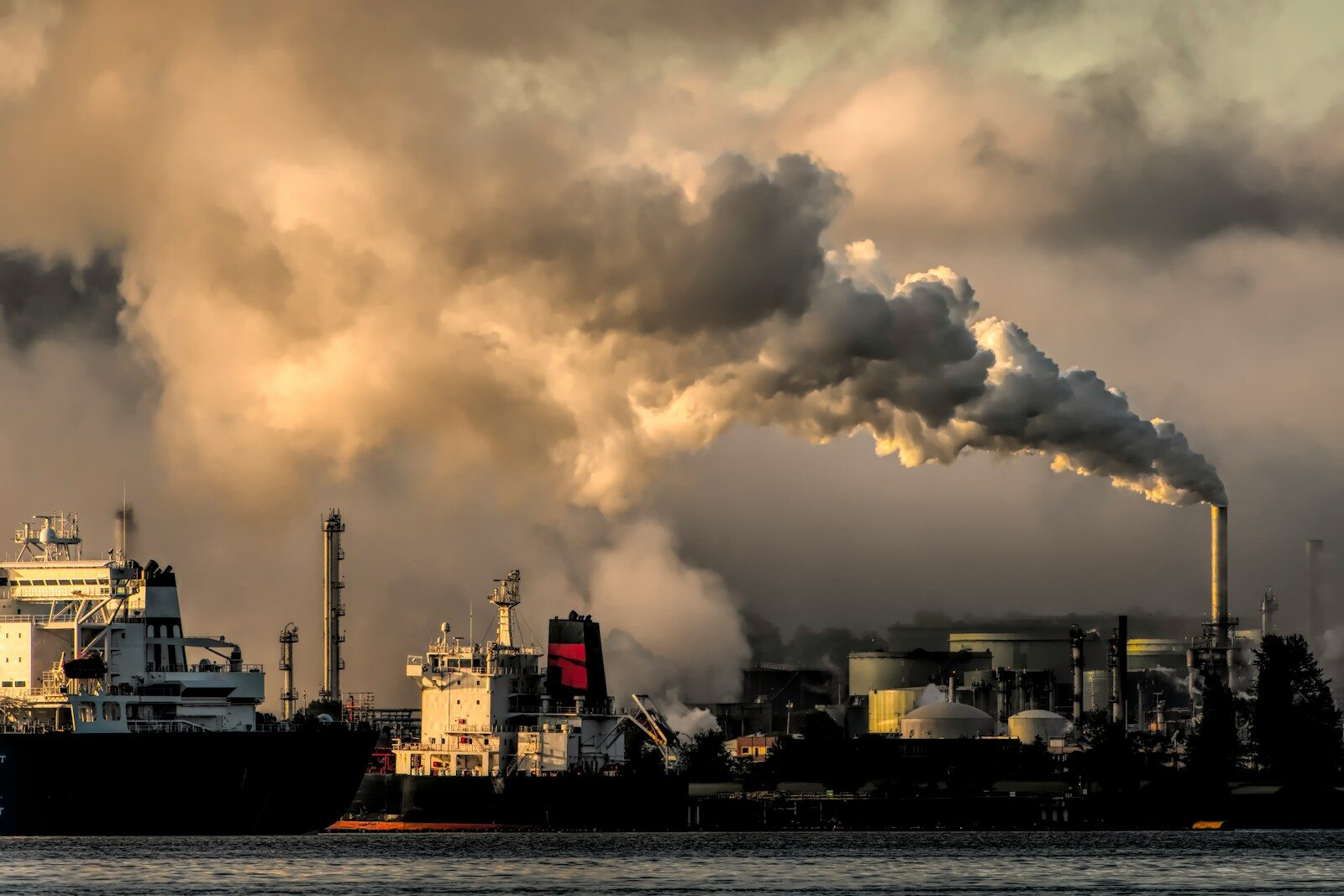
Severe drought conditions leave the soil cracked and barren, a frequent consequence of America’s extreme weather. The climate crisis is rapidly shifting precipitation patterns, leading to severe ecological consequences.
Prolonged droughts severely degrade soil health and threaten regional food security.
The Systemic Drivers Behind America’s Extreme Weather
To comprehend the sheer magnitude of recent climate events, we must first analyze the vast atmospheric circulation systems governing the Northern Hemisphere. America’s extreme weather is not a random occurrence; it is the direct physical consequence of a destabilized jet stream and rapidly warming oceanic currents.
Historically, a stable polar vortex and a swiftly moving jet stream kept atmospheric anomalies relatively brief. However, Arctic amplification—the phenomenon where the Arctic warms at a significantly faster rate than the rest of the globe—has drastically reduced the temperature differential between the equator and the poles.
This reduction causes the jet stream to meander and stall. When these massive atmospheric currents slow down, they create persistent “blocking patterns.” These high-pressure systems trap weather phenomena over specific regions for extended periods, turning standard summer heat into lethal, prolonged thermal anomalies.
For further context on how shifting oceanic temperatures amplify continental hazards, see our related analysis on Extreme Weather 2025: How ENSO and IOD Drove Global Disasters, which thoroughly examines the relationship between ocean cycles and global catastrophes.
The Role of Oceans in Fueling the Climate Crisis
Our oceans act as the planet’s primary thermal buffer, absorbing over 90% of the excess heat generated by anthropogenic greenhouse gas emissions. However, this buffering capacity comes with severe meteorological consequences.
Elevated sea surface temperatures directly influence the moisture-carrying capacity of the atmosphere. According to the Clausius-Clapeyron relation, for every 1°C increase in atmospheric temperature, the air can hold approximately 7% more water vapor.
This translates into massive atmospheric rivers that unleash unprecedented precipitation upon coastal regions, triggering catastrophic inland flooding. Conversely, in regions subjected to high-pressure heat domes, the intensified evaporation rates rapidly deplete soil moisture, accelerating the onset of flash droughts.
Analyzing Regional Vulnerabilities and Ecological Economics
The geographical vastness of the United States means that the impacts of a shifting climate manifest in vastly different, yet equally destructive, ways depending on the region. The American South and West have found themselves at the epicenter of this ongoing environmental crisis.
When discussing systemic regional shifts, the recent devastation in the Gulf Coast provides a grim case study. The unexpected transition from a humid, subtropical baseline to an arid fire zone demonstrates how rapidly ecosystems can collapse. This phenomenon is extensively documented in our report on Unprecedented Louisiana Wildfires: Evacuations and Burn Bans Amid Extreme Drought.
We are witnessing a fundamental realignment of ecological economics. The financial models underpinning the agricultural and insurance sectors rely on historical data that is no longer valid. The increasing frequency of America’s extreme weather is rendering vast swaths of land uninsurable and economically unviable for traditional farming.
The Socio-Economic Cost of America’s Extreme Weather
The financial toll of these escalating meteorological events is staggering, cascading through local economies and global supply chains. Extreme heat severely diminishes labor productivity, particularly in the construction and agricultural sectors.
Furthermore, infrastructure designed in the 20th century is failing under the stress of 21st-century thermal extremes. Power grids buckle under the immense demand for cooling, while transportation networks suffer as asphalt melts and train tracks warp.
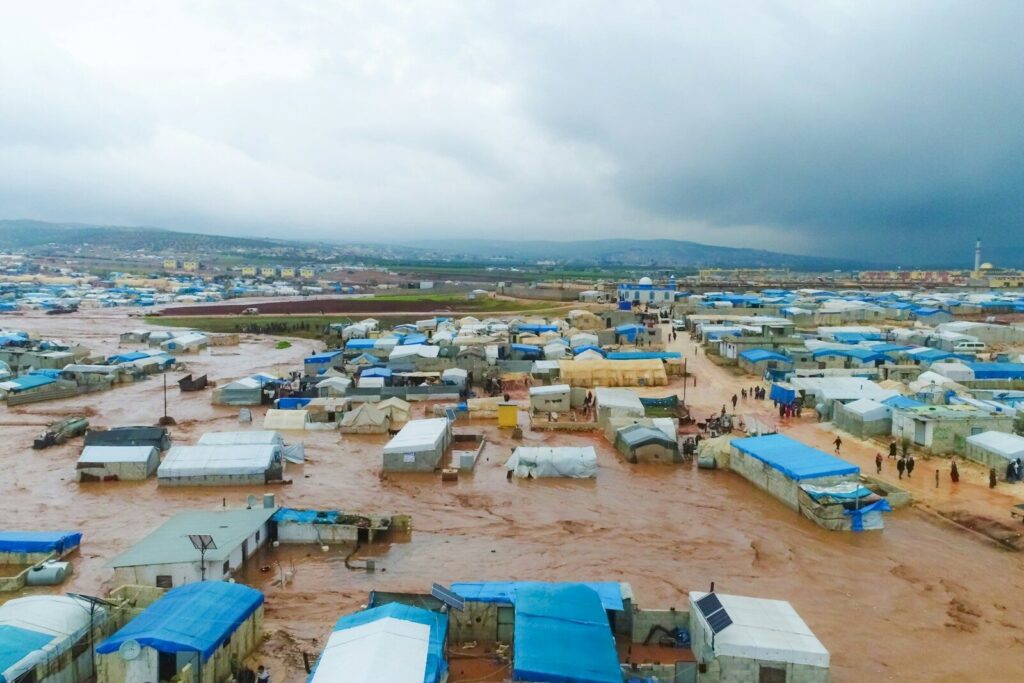
Rising floodwaters inundate a suburban community, showcasing the destructive reality of America’s extreme weather. Mitigating the climate crisis requires urgent upgrades to municipal water management infrastructure.
Urban infrastructure frequently fails to manage the immense water volumes associated with atmospheric rivers.
Atmospheric Anomalies: Droughts, Floods, and Heat Domes
The duality of America’s extreme weather—where historic droughts occur concurrently with record-breaking floods—often confuses the public. However, from a meteorological standpoint, these are two sides of the same climate crisis coin.
A supercharged hydrologic cycle means that water is evaporated from arid regions with unprecedented speed, only to be dumped in concentrated, devastating deluges elsewhere. The mechanics behind these deadly heatwaves are complex but highly predictable.
Understanding the precise physics of these thermal anomalies is crucial for municipal planning and emergency response. For a deeper dive into the mechanisms behind lethally high temperatures, refer to our comprehensive guide on The Scorching Truth: How Extreme Heat Waves Redefine Global Climate Risk (The Scorching Truth: How Extreme Heat Waves Redefine Global Climate Risk).
Data Analysis: The Rising Toll of Climate Events
To quantify the sheer scale of the escalation, we must examine historical disaster data. The National Centers for Environmental Information meticulously tracks billion-dollar weather and climate disasters.
The data reveals an exponential increase in both the frequency and financial severity of these events over the past four decades. This is not merely a product of inflation or population growth; it is a clear statistical indicator of a destabilized global climate system.
| Decade | Average Annual Billion-Dollar Disasters | Primary Meteorological Drivers |
| 1980s | 3.3 events | Severe storms, periodic droughts |
| 1990s | 5.7 events | Hurricanes, regional flooding |
| 2000s | 6.7 events | Wildfires, severe storms, hurricanes |
| 2010s | 13.1 events | Superstorms, mega-fires, extreme heat |
| 2020s (Current) | 20.4+ events | Heat domes, atmospheric rivers, rapid-intensification hurricanes |
Note: Data reflects the accelerating trend of high-cost environmental disasters, adjusted for inflation.
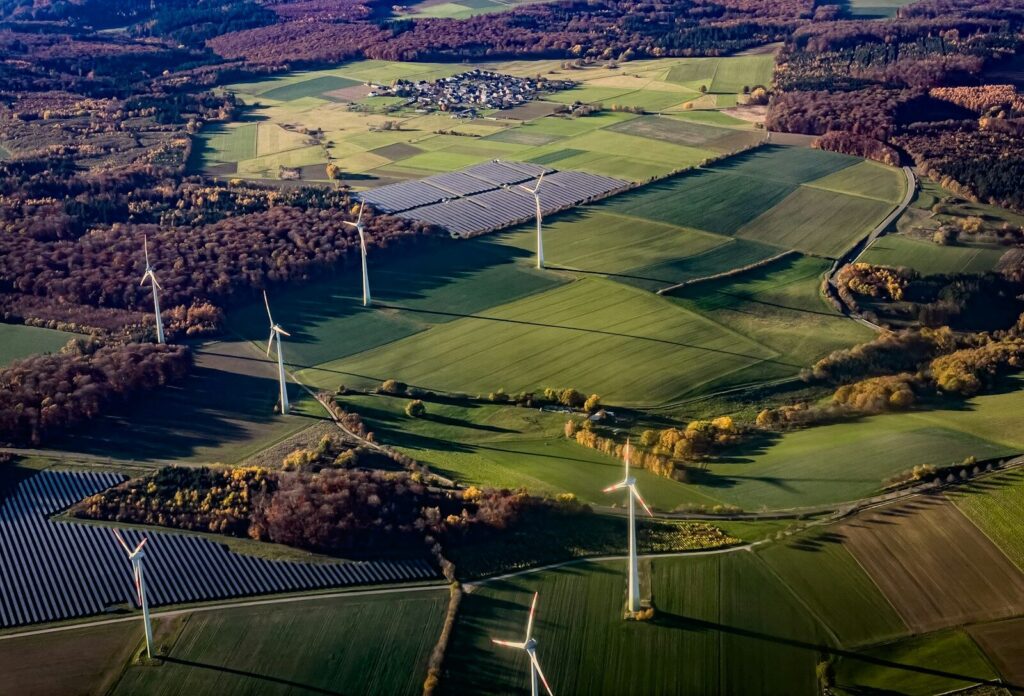
A field of solar panels and wind turbines stands as a resilient response to America’s extreme weather. Transitioning to renewable energy is vital for mitigating the worst impacts of the global climate crisis.
Decarbonizing our energy grid is the foundational step in addressing systemic climate escalation.
Adapting to America’s Extreme Weather Escalation
As the scientific community sounds the alarm, the focus must urgently shift from mere observation to aggressive climate adaptation. America’s extreme weather is no longer a distant threat; it is a current operational reality that requires immediate legislative and infrastructural intervention.
We must prioritize ecological economics by factoring the true cost of carbon emissions into policy decisions. This involves fortifying coastal defenses, redesigning urban landscapes to mitigate the heat island effect, and revolutionizing our agricultural practices to conserve water.
However, robust adaptation requires significant federal investment in earth sciences and meteorological forecasting. Concerningly, current legislative trends threaten to defund these critical agencies. You can explore the dangerous implications of these policy shifts in our article, The Anatomy of the 2027 Federal Science Budget Cuts (The Anatomy of the 2027 Federal Science Budget Cuts).
Furthermore, authoritative bodies like Nature Climate Change continuously publish peer-reviewed research emphasizing that adaptation without rapid decarbonization is ultimately a futile endeavor.
Conclusion: A Mandate for Transformative Climate Action
The relentless progression of America’s extreme weather highlights a fundamental truth: incremental changes are no longer sufficient to secure a stable future. The climate crisis has breached a critical threshold, shifting from theoretical modeling to devastating empirical reality.
The systemic breakdown of oceanic currents, the erratic behavior of the jet stream, and the supercharging of the hydrologic cycle all demand a unified, science-based response. To survive this escalating threat, we must drastically reduce global greenhouse gas emissions while simultaneously re-engineering our societal infrastructure.
By understanding the macro-level physical drivers behind these disasters, communities can better prepare for the thermal anomalies and atmospheric disruptions ahead. The warning signs are clear; the only remaining variable is the speed and scale of our collective response.
📖 Related: Climate Change and Hurricanes: 9 Alarming Truths | Decoding the ECMWF Forecast: A Record-Strength El Niño 2026?
The Science Behind America’s Escalating Extreme Weather: Attribution, Attribution, Attribution
A decade ago, scientists were cautious about linking individual extreme weather events to climate change. That caution has been replaced by a robust and rapidly expanding field called extreme event attribution—and its findings for the United States are unambiguous. NOAA’s National Centers for Environmental Information (NCEI) tracks billion-dollar weather and climate disasters in the United States, and the trend is stark: between 1980 and 2023, the U.S. averaged 8.5 billion-dollar disasters per year. In the five years from 2017 through 2021, that average surged to 18.2 per year. In 2023 alone, the U.S. experienced 28 separate billion-dollar weather and climate disasters—the highest annual count in the 44-year record—causing $92.9 billion in total damages and 492 deaths.
Attribution science now allows researchers to quantify how much more likely or intense a specific event was due to human-caused climate change. The findings are consistently alarming. The 2021 Pacific Northwest heat dome, which killed more than 800 people in Oregon, Washington, and British Columbia, was found by World Weather Attribution researchers to have been made at least 150 times more likely by climate change—and would have been virtually impossible without it. Hurricane Harvey’s rainfall totals, which caused catastrophic flooding in Houston in 2017, were increased by 15–38% due to warming. The 2022 Kentucky flash floods, the 2023 Maui wildfires, and the 2024 Southeast flooding all bear measurable human fingerprints confirmed by peer-reviewed attribution studies.
These are not random acts of nature. They are the predictable output of a warming system driven by greenhouse gas accumulation. NOAA’s research confirms that for every 1°C of additional warming, the atmosphere can hold approximately 7% more water vapor—intensifying precipitation events—while simultaneously making droughts more severe through increased evapotranspiration. The result is a world of more intense floods and more intense droughts, often in the same regions over the same seasons. The wildfires that burned through California’s desiccated forests in 2020 were followed by mudslides in 2021 as the same terrain, denuded of stabilizing vegetation, was saturated by atmospheric river rainfall.
Every ton of CO₂ added to the atmosphere is a statistical vote for more extreme weather. The relationship is linear, proportional, and peer-reviewed. Our Carbon Footprint Calculator helps you quantify your household or organizational emissions, benchmark them against national averages, and identify the specific reduction actions that deliver the greatest impact—because fewer emissions mean measurably fewer future disasters.
Authoritative Source: NOAA NCEI — Billion-Dollar Weather and Climate Disasters — NOAA NCEI — U.S. Billion-Dollar Weather and Climate Disasters
🌪️ Carbon Footprint Calculator
America’s extreme weather is escalating with every degree of warming. Measure your carbon footprint and take direct action to reduce the emissions driving billion-dollar disasters.
Calculate My Carbon Impact →Dr. Ahmad Mahmood, Environmental Scientist and Founder of Sustainability Awakening, has reviewed this article for scientific accuracy. Dr. Mahmood specializes in climate systems, environmental policy, and sustainability education. All content reflects current peer-reviewed research and data from official sources.
Last verified: October 2026 | About the Author
Water Footprint Impact Calculator
Measure direct and virtual water consumption across household, agricultural, and industrial supply chains against regional watershed stress metrics.
Calculate Water Footprint →