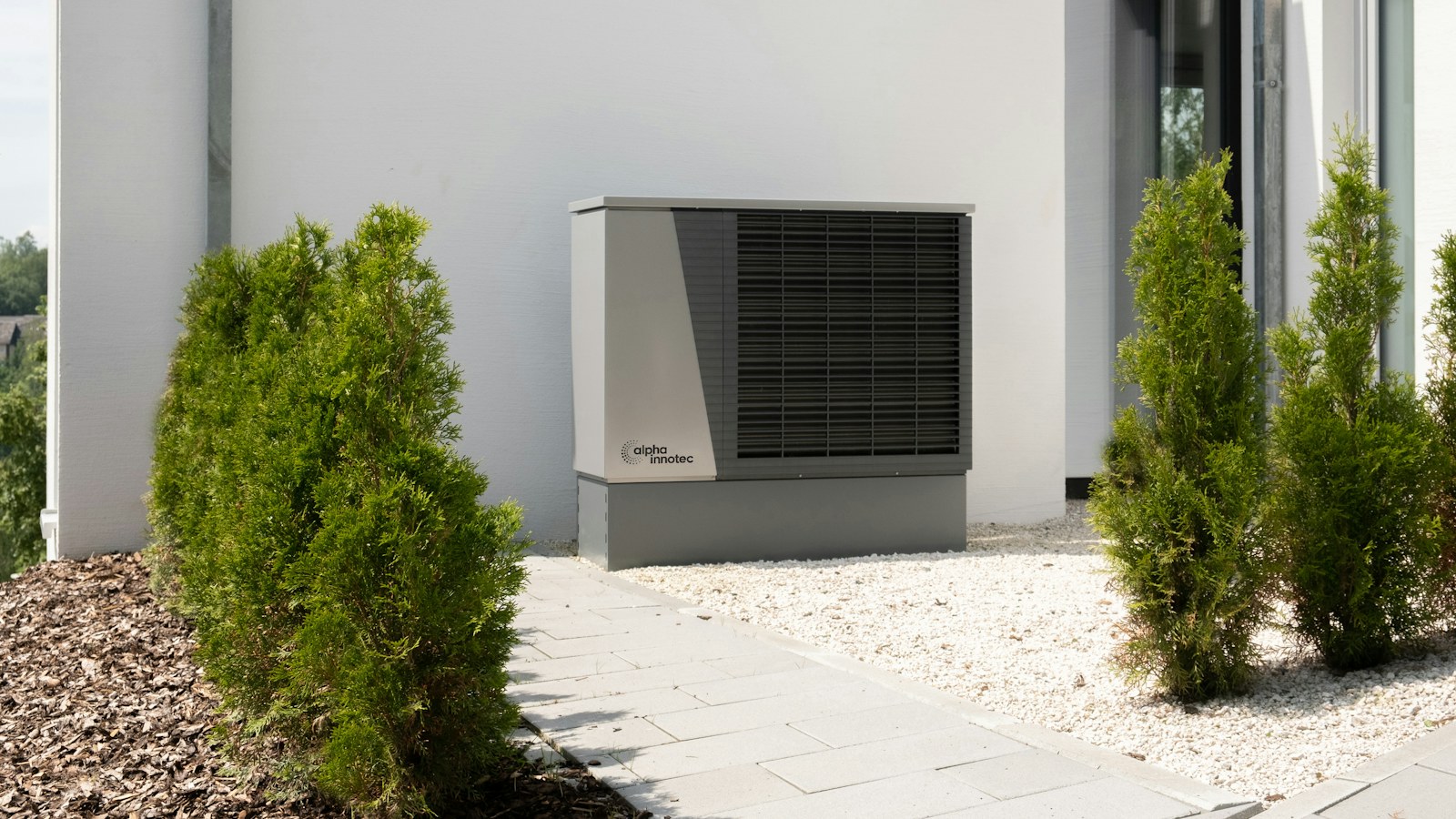
Winter 2026–27 is a turning point for home heating decisions. The US Energy Information Administration (EIA) expects gas-heated homes to spend about 9% less this winter, while electricity prices keep rising. At the same time the federal §25C heat pump tax credit has ended and the rules for state heat pump rebates have been rewritten. Many online comparisons were published before these changes.
This guide compares the cost of a heat pump and a gas furnace using 2026 numbers. It explains the price ratio that decides whether a heat pump saves money, what cold-climate certification means, which incentives still exist, and how the costs and emissions compare. To test your own home, use our Heat Pump vs Gas Furnace Payback Calculator, or flick through the 11-slide web story.
- The 2026 economic inflection: the spark spread
- AFUE, COP and HSPF2 explained
- Cold-climate standards: CEE and ENERGY STAR
- 2026 incentives: 25C checklist and HEAR rollout
- Run the numbers
- Capital costs and payback scenarios
- Emissions per million Btu
- Dual-fuel and the balance point
- FAQs
The 2026 economic inflection: why the spark spread decides profitability
A gas furnace turns fuel into heat at its AFUE efficiency: 80% for a standard model and around 95% for a condensing one. A heat pump does not create heat; it moves heat from outdoor air into the house. Its coefficient of performance (COP) is the units of heat delivered per unit of electricity, so a COP of 3 means 3 kWh of heat for every 1 kWh bought.
Whether that saves money depends on the gap between electricity and gas prices, often called the spark spread or spark gap. One therm of gas holds as much energy as 29.3 kWh of electricity, so the comparison is simple:
Break-even COP = (electricity price per kWh × 29.3) ÷ (gas price per therm ÷ furnace AFUE).
If the heat pump’s seasonal COP is above this number, it costs less to run than the furnace.
At $0.17 per kWh and $1.45 per therm, a therm’s worth of electricity costs $4.98 against $1.45 for gas, a price ratio of 3.4. Against an 80% furnace the heat pump needs a seasonal COP above 2.75; against a 95% furnace it needs 3.26. A modern heat pump easily beats 3 in mild weather but falls towards 2 or below in a cold snap, which is why the same unit can save money in Atlanta and lose money in Minneapolis.
The table applies the formula to EIA’s Winter Fuels Outlook gas price forecasts for each US region and the national average residential electricity price of 18.2 cents per kWh in 2026 (EIA Short-Term Energy Outlook, October 2026). Electricity prices vary even more than gas between states, so put your own rates into the calculator.
| Region | Gas price ($/therm) | Break-even COP vs 80% furnace | Break-even COP vs 95% furnace |
|---|---|---|---|
| Northeast | $1.55 | 2.75 | 3.27 |
| Midwest | $1.00 | 4.27 | 5.07 |
| South | $1.36 | 3.14 | 3.73 |
| West | $1.46 | 2.92 | 3.47 |
| US average | $1.30 | 3.28 | 3.90 |
Gas prices: EIA Winter Fuels Outlook (6 Oct 2026), November–March average residential price per thousand cubic feet converted at 10.37 therms per Mcf. Electricity: 18.2¢/kWh US average (EIA STEO). Lower is better for the heat pump.
Three things move the result more than the equipment itself. First, cheap gas: in the Midwest, where gas averages about $1 per therm, a heat pump needs a COP above 4 to beat even an 80% furnace at average electricity prices. Second, special electricity tariffs: many utilities offer heat pump or time-of-use rates, and at 12 cents per kWh the break-even against an 80% furnace falls to about 1.9. Third, what you are replacing: electric baseboard heat has a COP of 1, so any heat pump cuts the bill by more than half.
AFUE, COP and HSPF2: comparing the ratings
Furnaces and heat pumps are rated on different scales, which makes like-for-like comparison confusing. AFUE is an annual efficiency for fuel-burning equipment. HSPF2 (heating seasonal performance factor, 2023 test procedure) is the seasonal heating output in Btu per watt-hour of electricity for a heat pump, measured for a reference climate (DOE Region IV). Dividing HSPF2 by 3.412 gives an approximate seasonal COP for that climate; colder regions see a lower real-world COP, milder regions a higher one.
| System | Rating | Delivered heat per unit of energy bought | Notes |
|---|---|---|---|
| Standard gas furnace | 80% AFUE | 0.80 | Non-condensing; common in older homes |
| Condensing gas furnace | 95% AFUE | 0.95 | Recovers heat from flue gases |
| Electric baseboard | COP 1.0 | 1.00 | Every kWh becomes 1 kWh of heat |
| Heat pump, entry level | HSPF2 7.5 | ~2.2 (Region IV seasonal) | Federal minimum for split systems |
| Heat pump, ENERGY STAR | HSPF2 8.1+ | ~2.4+ | ENERGY STAR minimum for split systems |
| Heat pump, high efficiency | HSPF2 10.5 | ~3.1 | Variable-speed inverter models; higher in mild climates |
| Cold-climate heat pump at 5°F | COP ≥ 1.75 | 1.75+ | ENERGY STAR cold-climate requirement at full load |
Seasonal COP ≈ HSPF2 ÷ 3.412 for the DOE Region IV reference climate. Field performance depends on sizing, ductwork, defrost and thermostat settings.
The calculator models COP as a function of outdoor temperature, so a 9.0 HSPF2 unit runs at an estimated COP of about 3.7 at 47°F but about 1.85 at 5°F. Weighted over a cold-climate heating season, that averages a seasonal COP of about 2.6 in full heat pump mode.
Cold-climate standards: CEE Tier 1 and ENERGY STAR CCHP
The old worry that heat pumps stop working in a northern winter is out of date, but performance at low temperatures still varies a lot between models. Three standards are worth knowing:
- CEE tiers. The Consortium for Energy Efficiency publishes efficiency tiers for heat pumps. The §25C credit required equipment meeting the highest CEE tier, excluding any advanced tier, in effect at the start of the year of installation.
- ENERGY STAR cold-climate heat pump (CCHP). To carry the cold-climate designation, a heat pump must reach a COP of at least 1.75 at 5°F and keep at least 70% of its rated 47°F heating capacity at 5°F, and pass a controls verification test. Split systems also need an HSPF2 of at least 8.1.
- DOE Cold Climate Heat Pump Challenge. The DOE challenge set a stricter bar: 100% of rated capacity at 5°F with a COP of at least 2.1 (2.4 for smaller units). Several manufacturers now sell products developed under the challenge, and Pacific Northwest National Laboratory published field-test results for challenge units in 2025.
The common thread is an inverter-driven, variable-speed compressor. Instead of switching on and off at full power, it ramps up as the weather gets colder and slows down in mild weather, which keeps both capacity and efficiency higher at low temperatures. Ask installers for the AHRI-certified capacity and COP at 5°F, not just the headline HSPF2, and insist on a Manual J heat-loss calculation so the system is sized to your home’s design temperature.
Larger systems follow the same physics. Our guide to industrial heat pumps shows how factories use higher-temperature heat pumps, and the geothermal district heating guide covers ground-source systems, which avoid the cold-air penalty altogether.
2026 incentives: the 25C checklist and the HEAR rollout
Section 25C: what changed
For three years the Energy Efficient Home Improvement Credit (§25C) paid 30% of the cost of a qualifying heat pump, up to $2,000 a year. The One Big Beautiful Bill Act, signed in July 2025, ended the credit for property placed in service after 31 December 2025. A heat pump installed in 2026 gets no federal tax credit. The calculator keeps a §25C switch for homeowners checking a 2025 installation, but it is off by default.
If your heat pump was installed in 2025, use this checklist before you file or amend:
- The heat pump was placed in service (installed and working) by 31 December 2025, in your main home, an existing US home rather than new construction.
- It met the highest CEE efficiency tier (excluding advanced tiers) in effect on 1 January 2025.
- It was made by a qualified manufacturer, and you have the product identification number (PIN or QMID) to report on your return, which is required for 2025 installations.
- You subtracted utility subsidies and point-of-sale rebates that count as a purchase-price adjustment from the qualifying cost.
- You claim it on Form 5695, Part II. The credit is non-refundable and capped at $2,000 for heat pumps in the year.
HEAR and HOMES rebates: the new rules
The Inflation Reduction Act’s Home Energy Rebates are run by states. The Home Electrification and Appliance Rebates (HEAR, originally called HEEHR) pay up to $8,000 for a heat pump for space heating and cooling, within a $14,000 household cap: 100% of the cost for households below 80% of area median income (AMI) and 50% of the cost for households between 80% and 150% of AMI. States may set lower caps. Minnesota, for example, allows up to $4,000 for moderate-income households. The separate HOMES program pays for whole-home upgrades based on modelled energy savings of at least 20%.
On 29 May 2026 DOE issued Program Notice 26-2, which changes the deal for gas-heated homes. HEAR rebates can no longer pay to replace fossil-fuel equipment. There is one exception for heating: a rebate can still fund a heat pump as long as the existing fossil-fuel system is not removed, as the US Green Building Council summarises. In practice, a gas-heated home can only use HEAR for a dual-fuel set-up that keeps the furnace as backup. Homes replacing electric baseboard or an old electric heat pump are unaffected.
Launch timing is uneven. New Hampshire said in July 2026 that its HEAR program was expected to launch in the fall. Minnesota’s Save Energy Minnesota program had still not launched on 12 October 2026 while it waited for DOE approval. Rhode Island and Virginia have published their program rules. Rebates are not paid retroactively for equipment bought before a state launches, so check your state energy office before signing a contract.
| Incentive | Value | 2026 status | Key condition |
|---|---|---|---|
| §25C tax credit | 30%, max $2,000/yr | Ended for installs after 31 Dec 2025 | Placed in service by end of 2025 |
| HEAR, income below 80% AMI | 100% of cost, max $8,000 | Live in some states | Gas furnace must stay in place |
| HEAR, income 80–150% AMI | 50% of cost, max $8,000 (some states $4,000) | Live in some states | Gas furnace must stay in place |
| HOMES | Based on modelled savings | Live in some states | Whole-home savings of at least 20% |
| Utility rebates and heat pump tariffs | Varies | Widely available | Check your utility |
Run the numbers for your home
The four numbers that decide your payback
Our default case is a 2,200 sq ft home in a cold Northeast or Midwest climate, with electricity at $0.17/kWh and gas at $1.45/therm.
Capital costs and payback scenarios
Upfront cost is the biggest variable. A 2024 study by NREL and Lawrence Berkeley National Laboratory (Wilson et al., Joule) modelled mean installed costs of about $9,000 for a minimum-efficiency ducted heat pump and $20,000 to $24,000 for medium- and high-efficiency systems, and found heat pumps were most cost-effective when they replaced both gas heating and air conditioning. The calculator uses a default of $12,000 and lets you enter a range of $8,000 to $16,000.
| Item | Typical value | How it affects payback |
|---|---|---|
| Ducted heat pump, minimum efficiency | ~$9,000 (modelled mean) | Lowest cost but lower cold-weather COP |
| Ducted heat pump, medium/high efficiency | $20,000–$24,000 (modelled mean) | Higher COP, better cold-climate capacity |
| Avoided air conditioner or furnace replacement | Your quote | Subtract it from the cost if the old system is due for replacement |
| HEAR rebate | Up to $8,000 | Income-qualified; dual-fuel only for gas homes |
| §25C credit | $0 in 2026 | Only for 2025 installations |
Modelled means from Wilson et al. (2024), NREL/LBNL. Real quotes vary by region, ductwork condition and electrical panel capacity.
The scenarios below come from the calculator’s defaults: a 2,200 sq ft home with average insulation, an HSPF2 9.0 heat pump costing $12,000, electricity at $0.17/kWh and gas at $1.45/therm, unless stated otherwise.
| Scenario | Old heating bill | Heat pump bill | Annual saving | Net cost | Simple payback |
|---|---|---|---|---|---|
| Cold zone, 80% furnace, full heat pump | $1,244 | $1,304 | −$60 | $12,000 | Never |
| Cold zone, dual-fuel (furnace stays) | $1,244 | $1,168 | $76 | $12,000 | 30+ years |
| Cold zone, dual-fuel + HEAR (80–150% AMI) | $1,244 | $1,168 | $76 | $6,000 | 30+ years |
| Cold zone, full heat pump at 12¢/kWh heat pump tariff | $1,244 | $920 | $324 | $12,000 | 30+ years |
| Cold zone, replacing electric baseboard | $3,420 | $1,304 | $2,116 | $12,000 | 5.7 years |
| Mid-Atlantic, 80% furnace, full heat pump | $861 | $759 | $103 | $12,000 | 30+ years |
| Pacific Northwest, 80% furnace, full heat pump | $919 | $746 | $173 | $12,000 | 30+ years |
Heating only. Cooling savings from replacing an old air conditioner with a more efficient heat pump are not counted, so these results are conservative for homes that also need a new AC.
The pattern is clear. On heating costs alone, replacing a working gas furnace rarely pays back at average 2026 prices. The economics change when the heat pump replaces electric resistance heat (payback under six years), when your furnace or air conditioner is due for replacement anyway so only the price difference counts, or when you can get a low heat pump electricity rate together with a HEAR rebate. A heat pump also replaces your central air conditioner, so a household that needs new cooling should compare the heat pump with the combined cost of a new AC and furnace.
Emissions per million Btu of delivered heat
The climate case is stronger than the cost case. Burning natural gas releases 11.7 lb of CO2 per therm. Grid electricity emissions depend on where you live; the table uses EPA’s eGRID 2023 CO2-equivalent output rates.
| System and grid | Assumption | lb CO2 per MMBtu delivered |
|---|---|---|
| 80% AFUE gas furnace | 117 lb/MMBtu of gas | 146 |
| 95% AFUE gas furnace | 117 lb/MMBtu of gas | 123 |
| Heat pump, Ohio Valley grid (RFCW) | COP 2.5, 916 lb/MWh | 107 |
| Heat pump, US average grid | COP 2.5, 771 lb/MWh | 90 |
| Heat pump, Mid-Atlantic grid (RFCE) | COP 2.5, 599 lb/MWh | 70 |
| Heat pump, New England grid (NEWE) | COP 2.5, 543 lb/MWh | 64 |
| Heat pump, Upstate New York grid (NYUP) | COP 2.5, 243 lb/MWh | 28 |
| Electric baseboard, US average grid | COP 1.0, 771 lb/MWh | 226 |
Gas: 11.7 lb CO2/therm (EPA). Electricity: eGRID 2023 total output CO2e rates. Upstream methane leakage and refrigerant leakage are not included.
On all but the most coal-heavy grids (eGRID subregions such as SRMW and MROE exceed 1,200 lb/MWh), a heat pump with a seasonal COP of 2.5 emits less than a standard furnace, and grids are getting cleaner each year. In the calculator’s cold-zone default, switching fully from an 80% furnace avoids about 1.4 tonnes of CO2 a year; replacing electric baseboard avoids about 5.2 tonnes.
Dual-fuel and the balance point
A dual-fuel (hybrid) system pairs a heat pump with a gas furnace and a smart thermostat that chooses the cheaper source hour by hour. The thermostat switches to gas below an economic balance point: the outdoor temperature at which the heat pump’s COP falls to the break-even COP. In the default case (break-even COP 2.75), an HSPF2 9.0 unit stays cheaper than an 80% furnace above about 26°F, so the furnace only runs on the coldest days.
Dual-fuel makes sense in 2026 for three reasons. It protects comfort on design days in very cold climates. It captures most of the heat pump’s savings in mild weather while avoiding its most expensive hours. And under DOE’s new rules, it is the only way a gas-heated home can use a HEAR rebate. In the calculator’s cold-zone default, dual-fuel turns a $60-a-year loss into a $76-a-year saving and still cuts CO2 by about 0.9 tonnes a year.
The calculator’s cold-climate advisory appears when your winter design temperature is 5°F or below. It recommends an ENERGY STAR cold-climate heat pump sized to your Manual J load and reports the switchover temperature for your rates.
For the wider picture on clean energy incentives after the 2025 tax law, see our guide to clean energy tax credits in 2026. Businesses weighing on-site storage can use our commercial battery storage ROI calculator.
Frequently asked questions
Is a heat pump cheaper to run than a gas furnace?
Only when its seasonal COP is higher than the break-even COP, which equals the electricity price times 29.3, divided by the gas price per therm, times the furnace AFUE. At $0.17 per kWh and $1.45 per therm, a heat pump must average a COP above 2.75 to beat an 80% furnace and above 3.26 to beat a 95% furnace. That is easy in mild climates and hard in cold ones with cheap gas.
Can I still get the IRA 25C tax credit for a heat pump?
Not for a heat pump installed in 2026. The Section 25C credit of 30% up to $2,000 a year applied to heat pumps placed in service from 1 January 2023 to 31 December 2025. The One Big Beautiful Bill Act of July 2025 ended it, so it now matters only for systems already installed by the end of 2025.
Can I get a HEAR rebate to replace my gas furnace with a heat pump?
Not to replace it outright. DOE Program Notice 26-2 of 29 May 2026 stopped Home Electrification and Appliance Rebates from funding the replacement of fossil-fuel equipment. A gas-heated home can still get up to $8,000 if the heat pump is installed alongside the furnace, which stays in place as dual-fuel backup, and if household income is below 150% of area median income.
Do heat pumps work in very cold weather?
Modern cold-climate heat pumps do. ENERGY STAR cold-climate models must deliver a COP of at least 1.75 and at least 70% of their rated capacity at 5 degrees Fahrenheit, and units developed for the DOE Cold Climate Heat Pump Challenge reach 100% capacity at 5 degrees Fahrenheit. Below about minus 13 degrees most systems rely on backup heat.
Does a heat pump cut carbon emissions compared with a gas furnace?
Usually yes. Burning natural gas releases 11.7 pounds of CO2 per therm, about 146 pounds per million Btu of delivered heat in an 80% furnace. A heat pump with a seasonal COP of 2.5 on the US average grid of 771 pounds per MWh emits about 90 pounds per million Btu, and less on cleaner grids.
Sources
- IRS, Energy Efficient Home Improvement Credit (§25C)
- US Department of Energy, Home Energy Rebates Program (HOMES and HEEHR/HEAR)
- US Green Building Council, DOE releases updated guidance for IRA Home Energy Rebate Programs (July 2026)
- Minnesota Department of Commerce, Home Electrification and Appliance Rebate program (update of 12 October 2026)
- EIA, Winter Fuels Outlook 2026–27 (6 October 2026)
- EIA, Short-Term Energy Outlook, October 2026: electricity prices
- US EPA, eGRID 2023 summary data
- US DOE, Residential Cold Climate Heat Pump Challenge
- ENERGY STAR, Heat Pump Equipment Key Product Criteria (cold-climate designation); Wilson et al. (2024), “Heat pumps for all? Distributions of the costs and benefits of residential air-source heat pumps in the United States”, Joule.
This guide is for information only and is not tax or financial advice. Incentive rules vary by state and change often; confirm eligibility with your state energy office and a tax professional.
EU CBAM Duty & Tariff Calculator
Model European Carbon Border Adjustment Mechanism liability, embedded specific emissions, and weekly EU ETS certificate pricing for regulated goods.
Model CBAM Duty →