
The Greenwashing Trap: Why “Our Power, Our Planet” Demands Systemic Disruption
The designation of “Our Power, Our Planet” for Earth Day 2026 marks a critical fracture point in global environmental discourse. For decades, multinational conglomerates and investor-owned utilities have successfully outsourced climate guilt to the consumer. We have been sold a narrative that substituting plastic straws and adopting zero-waste hobbies will stabilize the biosphere.
This is a statistically impossible premise.
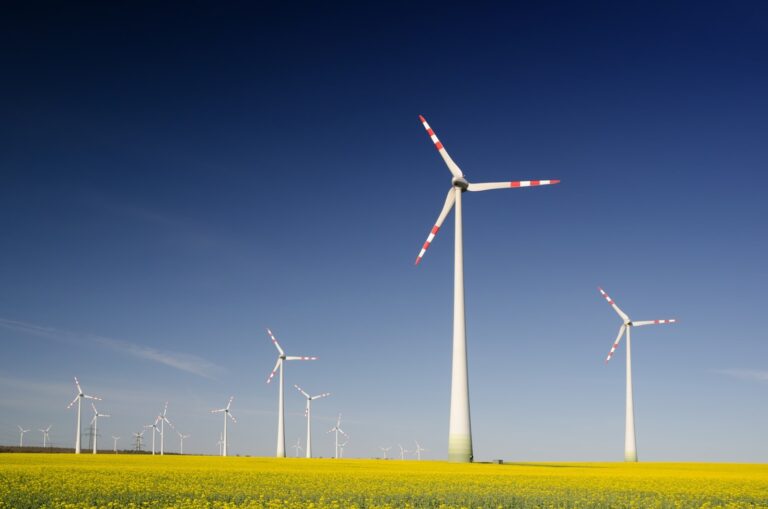
When analyzing the thermodynamics of global emissions through the lens of ecological economics, individual consumptive adjustments barely register against the inertia of industrial-scale fossil infrastructure. If we are to honor the 2026 theme of “Our Power,” we must reclaim the word power in both its literal, electrical sense and its systemic, political reality. The era of the personal carbon footprint is over; the era of decentralized, democratic energy architecture has arrived.
Table of Contents
The Core of “Our Power, Our Planet”
Strip away the corporate social media campaigns, and this year’s Earth Day theme reveals a mandate for structural accountability. “Our Power” is not a plea to turn off the lights when leaving a room. It is a direct challenge to the centralized monopolies that control how electrons are generated, priced, and distributed.
When observing the world’s dismal performance in tackling climate change, a recurring failure point emerges: reliance on top-down, non-binding international treaties that lack localized enforcement mechanisms. To shift the paradigm, power must be localized. This requires transitioning from a centralized grid—dominated by massive, highly polluting power plants—to a cellular, interconnected web of resilient local ecosystems.

Systemic Shifts: Ecological Economics Over Individual Perfection
Ecological economics dictates that an economy is a wholly-owned subsidiary of the environment, not the reverse. Consequently, addressing climate destabilization requires rewiring the financial mechanisms that fund infrastructure.
Breaking the Utility Monopoly with Distributed Energy Resources (DERs)
Centralized utility models are fundamentally misaligned with rapid decarbonization. Investor-owned utilities (IOUs) generate profit through guaranteed returns on massive capital expenditures, such as building natural gas pipelines or monolithic substations. They have zero structural incentive to help consumers generate their own power.
This is where Distributed Energy Resources (DERs) enter the equation. DERs encompass rooftop photovoltaic (PV) arrays, localized battery storage, bidirectional EV chargers, and automated demand-response software. According to the Intergovernmental Panel on Climate Change, integrating decentralized energy resources is no longer merely a transition strategy but an absolute requirement for mitigating warming to within the 1.5°C threshold (IPCC, 2023). By scaling DERs, communities actively bleed capital away from fossil-heavy monopolies and keep energy expenditures circulating within the local economy.
The Financial Mechanics of Community Choice Aggregation (CCA)
Technological disruption is insufficient without financial restructuring. Community Choice Aggregation (CCA) allows local governments to pool the electricity load of their residents and purchase power on their behalf, entirely bypassing the procurement monopolies of traditional utilities.
CCAs fundamentally alter the demand side of the energy market. By leveraging bulk purchasing power, municipalities can demand 100% renewable portfolios, forcing grid operators to aggressively scale wind, solar, and geothermal baseloads to secure lucrative municipal contracts.
Predictive Insight: The Post-2026 Grid Evolution
Mainstream analysis consistently overestimates the impact of federal legislation while underestimating the velocity of localized technological adoption.
The Forecast: By 2030, the traditional unidirectional power grid will be obsolete in tier-one global markets. We project that up to 40% of grid resilience during peak demand will rely on consumer-side Virtual Power Plants (VPPs) rather than utility-scale peaker plants.
As communities navigate what’s next for U.S. climate policy after 2024, it is becoming evident that federal gridlock is a permanent feature, not a temporary bug. VPPs bypass this paralysis entirely. By networking thousands of decentralized residential batteries and EVs via smart software, communities can dispatch stored renewable energy back to the grid during shortages. The International Energy Agency indicates that unlocking demand-side flexibility through VPPs could reduce global grid investment requirements by hundreds of billions of dollars over the next decade (IEA, 2025).
The Contrarian Gap: The Illusion of the Personal Carbon Footprint
The mainstream environmental movement still suffers from a fatal blind spot: it treats the “personal carbon footprint” as a valid scientific metric. It is not. The concept was popularized by a BP public relations campaign in the early 2000s specifically to deflect regulatory scrutiny away from fossil fuel extraction and onto personal consumer choices.
Focusing on individual consumption while ignoring systemic extraction is mathematically futile. If you lived a perfectly zero-waste, off-grid lifestyle, your impact on global emissions would be negligible as long as the global shipping, agricultural, and industrial sectors remain tied to hydrocarbons.
This engineered deflection mirrors the broader backlash against ESG sustainability frameworks, where systemic corporate accountability is diluted into voluntary, unaudited metrics. True sustainability does not ask you to agonizingly calculate the emissions of your grocery trip; it asks you to dismantle the system that forces your groceries to be grown with synthetic fertilizers and transported via diesel freight.
Actionable Intelligence: The Power Playbook
Reclaiming “Our Power” requires abandoning the pursuit of individual eco-purity in favor of high-leverage, systemic disruption. Here are three systems-level actions to deploy immediately:
- Divest and Democratize Capital: Personal banking choices hold immense systemic weight. Transfer capital from mega-banks that underwrite fossil fuel expansion to local credit unions or green banks that explicitly finance regional DER installations and community solar arrays.
- Accelerate Microgrid Participation: If you have capital for home upgrades, shift focus from passive efficiency to active grid participation. Integrate bidirectional EV chargers and residential battery storage, and enroll in local Virtual Power Plant (VPP) aggregation programs to actively supply the grid during peak strain.
- Lobby at the Public Utility Commission (PUC) Level: The most consequential climate decisions are not made in Washington or Paris; they are made in obscure state-level PUC boardrooms. Organize locally to attend PUC hearings and aggressively oppose rate hikes intended to fund new natural gas infrastructure, demanding those funds be diverted to grid modernization and DER incentives.