Sustainable Smart Home Technology: 7 Shocking Climate Fixes
For years, the “Smart Home” was marketed exclusively as a luxury lifestyle upgrade. We were sold the promise of turning on the living room lights without getting off the couch or playing our favorite music with a simple voice command. However, as we navigate the environmental realities of 2026, the narrative has drastically shifted. Sustainable smart home technology is no longer just about personal convenience; it has become an essential mechanism for ecological survival.
As the global community faces unprecedentedly high energy costs and urgent climate mitigation goals, residential home automation has emerged as a powerful tool for systemic sustainability. From AI-driven thermostats that predict complex weather patterns to automated leak detectors that actively prevent water bankruptcy, advanced technology is fundamentally reshaping how humanity consumes natural resources. We are bridging the gap between localized daily habits and macro-level ecological economics.
By decentralizing resource management, we turn individual households into active participants in the global fight against climate change. Here is exactly how sustainable smart home technology is changing the game for a greener, more resilient future.
Table of Contents
Table of Contents
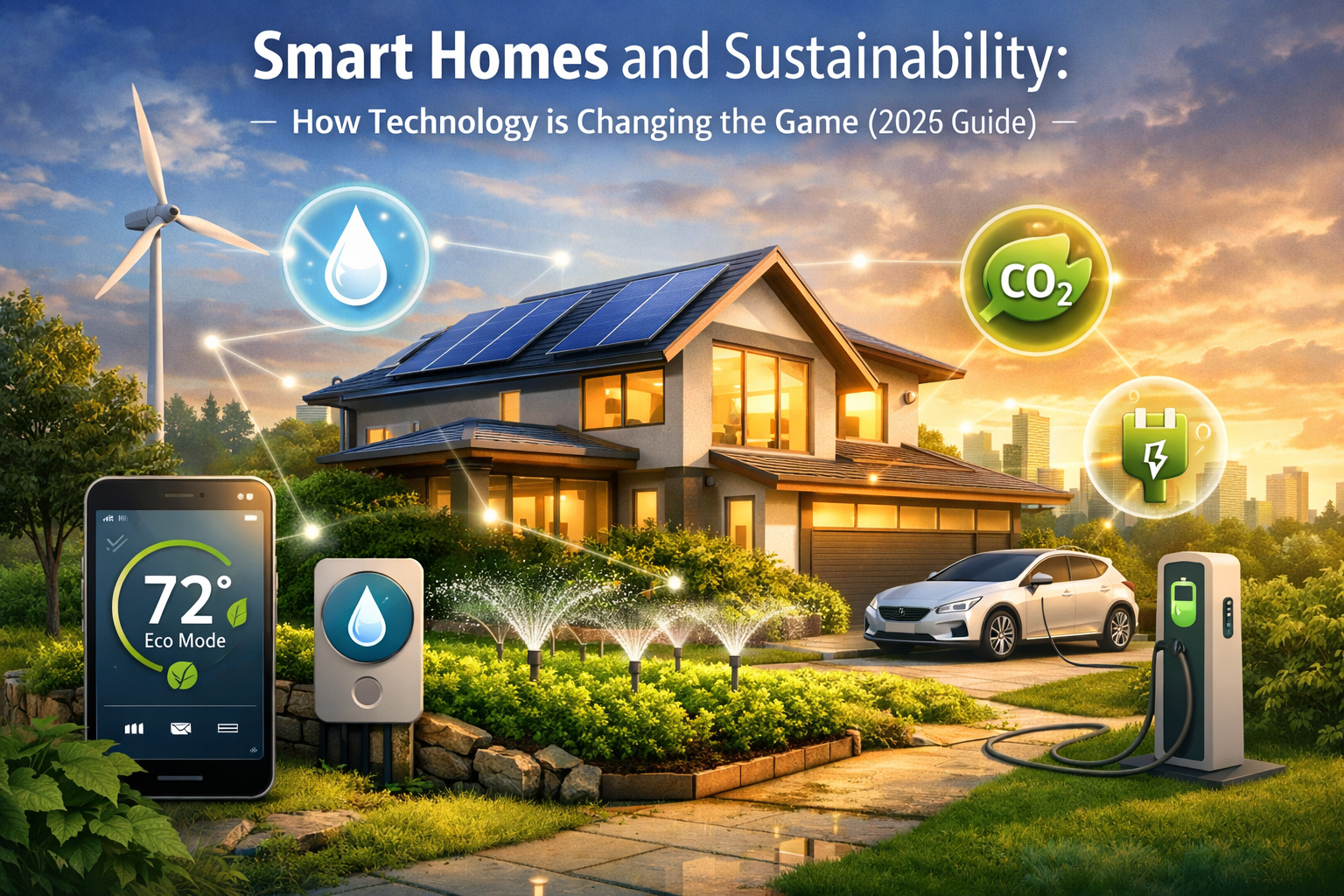
A close-up view of a digital interface controlling sustainable smart home technology. These systems optimize IoT energy efficiency to drastically reduce residential carbon footprints.
The central hub of a conscious home, monitoring real-time energy and water consumption.
The Shift from “Connected” to “Conscious” Living
A decade ago, a “connected” home simply meant having a collection of disparate devices that communicated with your smartphone. Today, a “conscious” home communicates directly with the municipal energy grid and local ecological datasets. This represents a massive evolutionary leap in how we design our living spaces.
Modern intelligent homes utilize the Internet of Things (IoT) not just to blindly obey human commands, but to make autonomous, environmentally sound decisions. They constantly optimize energy use based on real-time infrastructural data, effectively cutting out the resource waste that humans consistently overlook. By removing the burden of manual conservation, these systems ensure that ecological responsibility operates quietly in the background.
According to recent structural analyses, integrating conscious automation can reduce a household’s baseline energy consumption by up to 30-40 percent. This creates a cascading positive effect on the broader energy infrastructure. When millions of homes autonomously reduce their peak loads, the entire regional power grid becomes significantly more stable and vastly less reliant on fossil fuels.
Energy Efficiency: The Core of Sustainable Smart Home Technology
The most immediate and measurable ecological impact of smart residential tech is found in everyday electricity consumption. The way we heat, cool, and illuminate our buildings is directly tied to global carbon emission levels.

A modern smart thermostat displaying an eco-friendly green leaf indicator, representing sustainable smart home technology. This device is vital for robust climate change mitigation.
AI-powered thermostats learn your schedule to eliminate unnecessary heating and cooling cycles.
The AI Thermostat Revolution
Heating and cooling account for nearly half of the average modern home’s total energy utilization. Traditional, analog thermostats are inherently inefficient because they blindly heat or cool empty spaces simply because a human forgot to manually adjust the dial. This results in millions of megawatt-hours wasted annually.
- Geofencing Integration: Intelligent thermostats utilize spatial geofencing technology paired with your smartphone to determine when the house is empty. They automatically transition into an optimized “Eco Mode,” ensuring you never expend energy conditioning an unoccupied room.
- Predictive Weather Modeling: Next-generation AI models now directly integrate with sophisticated local meteorological forecasts. If a severe heatwave is predicted, the system will autonomously pre-cool the home during early morning, off-peak hours.
- Grid Load Balancing: By shifting energy consumption to times when local power is cheaper and generated by renewable sources (like morning solar or night wind), these devices actively prevent grid strain. You can review the U.S. Department of Energy for comprehensive data on how off-peak load shifting prevents municipal blackouts.
Eradicating “Vampire Power” with Smart Lighting
Leaving overhead lights on is a widely recognized energy waster, but “Vampire Power”—also known as standby power—is the silent killer of residential efficiency. Devices plugged into the wall continue to draw ambient current even when ostensibly turned off, creating a massive, invisible drain on the grid.
- Intelligent Smart Plugs: These intuitive devices completely sever the electrical connection to idle electronics when they are not actively in use. This permanently stops energy-hungry appliances like televisions, desktop computers, or gaming consoles from siphoning power in standby mode.
- Automated Spatial Lighting: Advanced motion sensors and infrared detectors ensure that lighting fixtures are only active when a human is physically present in the room.
- Daylight Harvesting: Some sophisticated systems measure ambient natural light streaming through windows. They automatically dim interior artificial lighting to match, utilizing the sun to reduce the electrical load throughout the afternoon.
Combating Global Scarcity: Water Conservation Automation
With severe global water scarcity rapidly transitioning from a theoretical threat to a daily reality, every single drop of clean water must be accounted for. The World Bank (https://www.worldbank.org) recently highlighted that decentralized water management is critical for averting localized ecological disasters.
Outdated, automated lawn sprinklers are notorious for wasting water, often activating during active rainstorms because they run on rigid, unintelligent timers. Conversely, smart irrigation controllers interface with real-time local weather data and localized soil moisture sensors. They autonomously skip scheduled watering cycles if the ground is already saturated or if heavy rain is imminent on the radar. This precise environmental awareness can comfortably reduce outdoor residential water use by up to 50 percent annually.
Furthermore, a microscopic plumbing leak behind a wall can quietly waste tens of thousands of gallons of treated water over a single year. Smart water monitors attach to the main plumbing line and track volumetric flow rates 24/7. If their machine-learning algorithms detect the erratic flow of a burst pipe or the slow trickle of a running toilet, they instantly send a mobile alert. Crucially, they can also automatically trigger a localized shut-off valve, preventing both massive water waste and catastrophic property damage. For a deeper dive into these systemic issues, review our comprehensive analysis on (The Reality of Global Water Bankruptcy).
The Rise of the “Prosumer” and Virtual Power Plants
The ultimate expression of sustainable smart home technology does not just aggressively save energy; it actively generates and distributes it. We are currently witnessing the rapid rise of Virtual Power Plants (VPPs) across the globe.
In this new paradigm, homeowners are transitioning from passive “consumers” to active “prosumers.” Homes equipped with rooftop solar photovoltaic arrays and high-capacity smart batteries can now communicate bidirectionally with the centralized city grid. This turns isolated houses into interconnected, micro-generation nodes.
During periods of extreme peak usage, such as a sweltering summer afternoon when air conditioners max out grid capacity, your smart home can automatically sell its safely stored solar energy back to the community. This vital stabilization mechanism prevents utility companies from being forced to fire up heavily polluting, carbon-dense coal “peaker plants” just to meet the temporary demand spike.
To further understand how home infrastructure is evolving, be sure to explore our related report on (Green Building Materials for 2026), which perfectly complements these advanced digital systems.
A pile of discarded electronic circuit boards highlighting the urgent need for e-waste management. True sustainable smart home technology must embrace the circular economy to be effective.
To achieve true sustainability, the tech industry must solve the looming electronic waste crisis.
The Dark Side: The Ongoing Challenge of E-Waste
We cannot honestly discuss environmental technology without directly addressing the proverbial elephant in the room: the escalating crisis of Electronic Waste. While intelligent devices conserve precious natural resources during their active operational life, they frequently transform into highly toxic waste at the end of their lifecycle.
The rapid, consumer-driven cycle of constantly upgrading to the “newest” gadget directly fuels a global e-waste catastrophe. Devices are heavily laden with rare earth metals, lithium, and unrecyclable plastics that leach dangerous chemicals into soil and groundwater when improperly landfilled. The ecological cost of extracting these raw materials often temporarily outweighs the energy saved by the device itself.
To be genuinely green, consumers and manufacturers must urgently transition toward a robust circular economy. We must consciously choose devices with guaranteed, decade-long software support lifecycles. Furthermore, we must prioritize physical repairability over outright replacement. A home automation system completely fails its environmental mission if the homeowner is forced to discard and replace every plastic sensor, camera, and bulb every two to three years. For more context on solving this supply chain dilemma, read our guide on (Understanding the Circular Economy).
The State of the Industry: Comparing Tech Protocols
To combat the e-waste issue, the technology sector is slowly adopting universal standards. The transition from fragmented, proprietary ecosystems to unified protocols drastically reduces hardware redundancy.
| Feature | Legacy Smart Devices (Pre-2024) | Modern Matter Protocol Devices (2026) | Ecological Impact |
| Interoperability | Brand-locked, required multiple distinct hubs. | Universally compatible across all major brands. | Reduces raw material extraction and plastic housing waste. |
| Software Lifespan | 2-3 years before forced obsolescence. | Extended, mandated security and feature updates. | Keeps functional devices out of landfills much longer. |
| Energy Draw | High constant Wi-Fi polling and standby drain. | Low-energy Thread networks and passive sensors. | Dramatically lowers the baseline “Vampire Power” load. |
| End-of-Life | Proprietary glued casing, impossible to repair. | Standardized screws, replaceable battery units. | Promotes a sustainable, repair-first circular economy. |
Future Trends: What to Expect in 2026 and Beyond
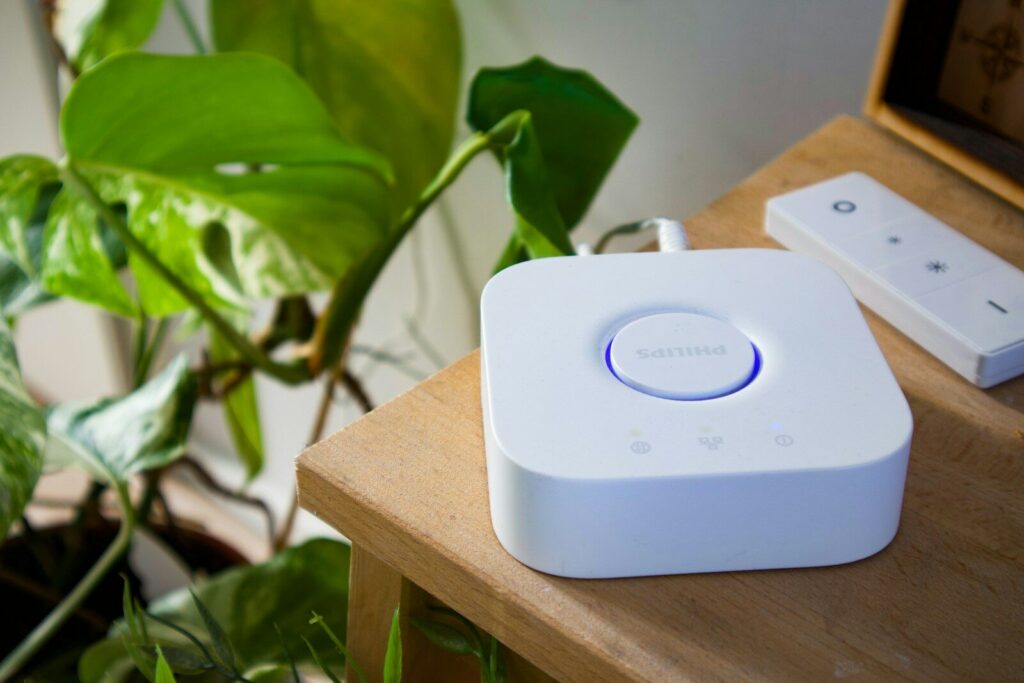
As we move deeper into the late 2020s, the underlying mechanics of home automation are becoming even less resource-intensive. The introduction of the universal “Matter Protocol” is finally allowing competing brands to seamlessly interface locally without connecting to distant, energy-hungry cloud servers.
More excitingly, we are beginning to see the commercial deployment of true energy-harvesting sensors. These microscopic devices require absolutely zero traditional batteries to function. Instead, they run entirely by passively harvesting ambient indoor light, microscopic thermal fluctuations, or even stray ambient radio waves in the air. This technological leap alone has the potential to eliminate the need to manufacture, ship, and ultimately dispose of millions of toxic alkaline batteries every single year.
Conclusion: Designing a Home That Actively Cares
For decades, consumer technology was rightfully blamed for artificially disconnecting human beings from the natural world. However, when applied properly within the built environment, it might be the exact mechanism required to save our fragile ecosystems.
By heavily automating routine conservation efforts, sustainable smart home technology effectively removes the variable of “human error” from the environmental equation. These systems mathematically ensure that being incredibly green becomes the default, effortless setting of our daily lives, rather than a demanding, easily forgotten chore. As we face the mounting pressures of global climate change, upgrading to a conscious home is no longer just a smart financial investment—it is a critical ecological imperative.