Does Groundwater Extraction Cause Earthquakes? The Science Explained
Introduction
The stability of the Earth’s crust is often taken for granted, yet groundwater extraction earthquakes are proving that human activity can shake the very foundations of our planet. While we traditionally view seismic events as purely natural phenomena driven by tectonic plates, the massive redistribution of mass through water pumping is altering local stress fields.
In regions ranging from the Central Valley of California to the agricultural hubs of Spain, the removal of billions of tons of water is not just a resource crisis. It is a geophysical catalyst. When we drain aquifers, we are not simply emptying a “tank”; we are removing the structural support of the earth itself, leading to what scientists call anthropogenic or induced seismicity.
To understand why this is happening, we must bridge the gap between simple water usage and complex ecological economics. The global demand for water-intensive crops in arid regions forces industrial agriculture to mine ancient water, creating a systemic imbalance that manifests as physical tremors.
Table of Contents
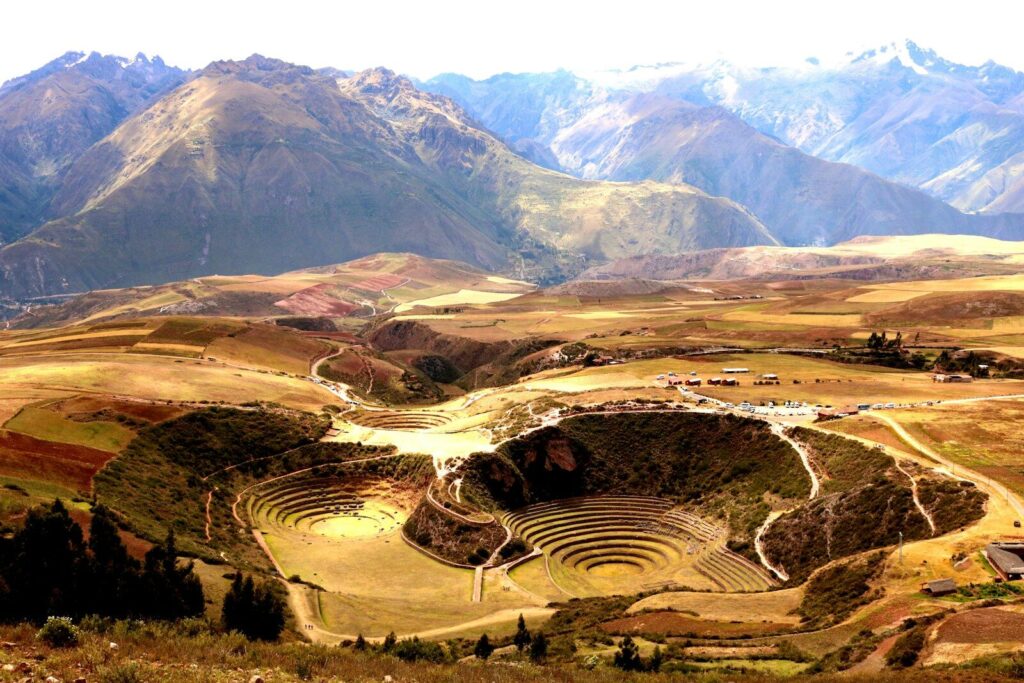
The mechanical relationship between aquifer levels and fault stability.
The Mechanics of Induced Seismicity
The link between groundwater extraction earthquakes and human activity lies in the physics of effective stress. In geological terms, the crust is under constant pressure from the weight of the rocks above (lithostatic pressure) and the pressure of the fluid within the pores of those rocks (pore pressure).
The relationship is defined by the principle of effective stress:
Effective Stress Equation: σ’ = σ – u
(Note: σ’ is Effective Stress, σ is Total Stress, and u is Pore Fluid Pressure)
This change can increase the friction on a fault, effectively “locking” it, or it can cause the surrounding rock to contract, shifting the load onto nearby fault lines.
The Elastic Rebound and Crustal Loading
When we remove massive amounts of water, the earth’s crust actually “flexes” upward. This is known as elastic rebound. As the weight of the water is removed, the lithosphere lightens, causing the crust to rise and potentially triggering groundwater extraction earthquakes on faults that were already near their breaking point.
This phenomenon is not just a local issue; it is a symptom of America’s Vanishing Groundwater: The Invisible Crisis Beneath Our Feet. As we deplete these reserves, the geophysical response becomes more pronounced, leading to measurable shifts in regional stability.
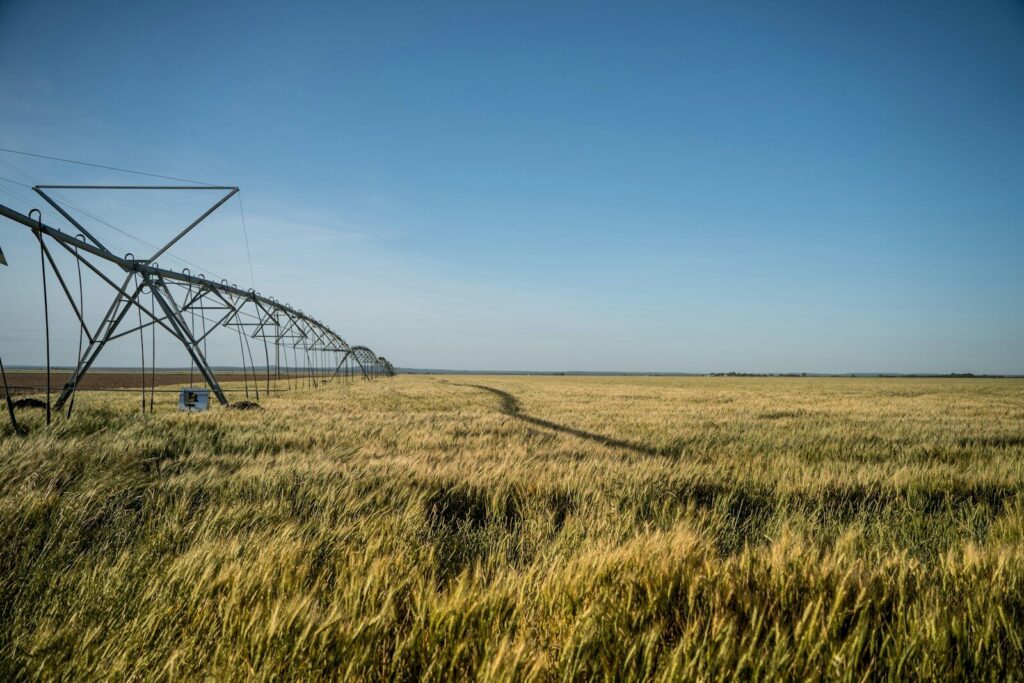
Industrial agriculture’s reliance on deep-well pumping creates long-term geological risks.
Case Study: The 2011 Lorca Earthquake
One of the most cited examples of groundwater extraction earthquakes occurred in Lorca, Spain. In 2011, a magnitude 5.1 earthquake struck the region, causing significant damage and loss of life. Research published in Nature Geoscience concluded that the tremor was directly linked to the decades-long extraction of groundwater for local fruit and vegetable production.
The study found that the water table in the Alto Guadalentín basin had dropped by more than 250 meters over 50 years. This massive loss of mass changed the stress on the Alhama de Murcia fault. The Lorca event serves as a grim warning: our economic preference for short-term agricultural yields is creating long-term seismic vulnerabilities.
Comparing Tectonic and Induced Seismicity
Understanding the difference between natural and human-caused tremors is vital for risk management.
| Feature | Tectonic Earthquakes | Groundwater Extraction Earthquakes |
| Primary Cause | Plate Tectonics | Mass redistribution/Pore pressure change |
| Depth | Usually 10km to 700km | Shallow (typically < 5km) |
| Predictability | High uncertainty | Linked to water extraction rates |
| Geographic Range | Along plate boundaries | Near heavily pumped aquifers |
| Impact | Regional to Global | Localized but highly destructive |
The Global Context of Aquifer Depletion
The issue of groundwater extraction earthquakes is part of a broader systemic failure in water management. In the United States, the situation is particularly dire. US Groundwater Depletion: Powerful Players Block Change as Aquifers Drain highlights how lobbying and lack of regulation accelerate this process.
As aquifers drain, the ground doesn’t just shake—it sinks. This subsidence is a precursor to seismic instability. We see this in 5 Major Cities Sinking Fast: The Hidden Cost of Groundwater Depletion, where the structural integrity of urban environments is being compromised by the same forces that trigger earthquakes.
The Role of Climate Change
Climate change acts as a “threat multiplier.” As surface water sources dry up due to rising temperatures and erratic rainfall, cities and farms turn to groundwater as a last resort. This increased demand accelerates depletion, which in turn increases the frequency of groundwater extraction earthquakes.
The United States Geological Survey (USGS) has documented numerous instances where hydrological changes have influenced seismic activity. The feedback loop is clear: climate change drives water scarcity, water scarcity drives extraction, and extraction drives geological instability.

Monitoring seismic activity is crucial in regions with rapidly declining water tables.
Mitigating the Risk of Groundwater Extraction Earthquakes
To address the threat of groundwater extraction earthquakes, we must move beyond reactive measures and embrace systemic reform. This requires a shift in how we value water as an economic and geological asset.
- Managed Aquifer Recharge (MAR): Instead of only extracting water, we must actively inject surface water back into aquifers during wet seasons. This helps maintain pore pressure and stabilize the crust.
- Strict Pumping Regulations: Limiting the volume of water extracted in seismically sensitive areas is essential.
- Advanced Monitoring: Utilizing satellite data, such as InSAR (Interferometric Synthetic Aperture Radar), to track ground deformation and predict where groundwater extraction earthquakes are most likely to occur.
The complexity of these interactions is detailed in The Unseen Link: A Comprehensive Report on Climate Change, Groundwater, and Induced Seismicity, which explores the multi-faceted nature of our planet’s response to human intervention.
Why “Wait and See” Is Not an Option
The science is definitive: our thirst for water is changing the Earth’s physical behavior. Groundwater extraction earthquakes are a clear signal that we have overstepped the planetary boundaries of hydrological use.
If we continue to mine water at current rates, the frequency and magnitude of these events will only increase. We are no longer just passive observers of natural disasters; we are the architects of our own instability.
By integrating sustainable agricultural practices and robust water policy, we can reduce the stress on our aquifers and, by extension, the stress on the fault lines beneath our feet. The transition to a “Sustainability Awakening” requires us to recognize that every gallon of water removed has a geological consequence.
Summary of Sustainability Impact
The connection between groundwater extraction earthquakes and industrial agriculture demonstrates the need for a circular water economy. Protecting our aquifers is not just about ensuring we have enough to drink or grow food; it is about maintaining the very stability of the ground we build our civilizations upon.