Air Conditioning and Climate Change: A Growing Global Feedback Loop
Air conditioning and climate change are becoming deeply interconnected. As global temperatures rise, more households and businesses rely on cooling systems to survive extreme heat. However, this growing dependence increases electricity demand, refrigerant leakage, and greenhouse gas emissions. In turn, that additional warming drives even greater cooling demand.
Recent research published in Nature Communications highlights the scale of this challenge. By 2050, global air conditioner use could more than double. If low income regions reach cooling access levels similar to high income regions, additional warming of up to 0.05°C could occur, even under strong climate mitigation scenarios.
This feedback loop presents a critical policy dilemma. Access to cooling saves lives. Yet without rapid decarbonization and efficiency gains, air conditioning and climate change will intensify each other. Understanding the science, economic drivers, and solutions is essential for climate resilient development.
The Science Behind Air Conditioning and Climate Change
How Cooling Systems Increase Emissions
Air conditioners contribute to climate change in two primary ways:
- Electricity consumption
Most air conditioners run on grid electricity. In regions where power generation relies on fossil fuels, increased cooling demand leads directly to higher carbon dioxide emissions. - Refrigerant leakage
Many cooling systems use hydrofluorocarbons or HFCs. These are potent greenhouse gases with global warming potentials thousands of times greater than carbon dioxide over a 100 year period.
According to the International Energy Agency, refrigeration and air conditioning account for roughly 7 percent of global greenhouse gas emissions when both electricity use and refrigerants are considered.
Rising Cooling Demand
Cooling demand is shaped by:
- Ambient temperature
- Humidity levels
- Urban heat island effects
- Population growth
- Rising incomes
The number of residential air conditioning units has tripled since 2000, surpassing 1.5 billion units in operation. Projections suggest that by 2030, nearly half of the global population may own an air conditioner.
As incomes rise across South Asia and Africa, demand growth could be particularly steep. These regions face some of the highest exposure to extreme heat but currently have the lowest cooling access.
Environmental and Economic Impacts
Additional Warming Projections
Climate models incorporating Shared Socioeconomic Pathways show that expanded cooling access could add between 0.015°C and 0.05°C of additional warming by mid century.
Although these numbers appear small, they are significant in the context of global climate targets. The remaining carbon budget for limiting warming to 1.5°C is extremely constrained. Even marginal increases can undermine mitigation efforts.
Moreover, air conditioning and climate change interact in a reinforcing cycle:
- Higher temperatures increase AC use
- Increased AC use raises emissions
- Higher emissions drive further warming
Grid Stress and Peak Electricity Demand
Cooling demand often peaks during heat waves. This creates strain on electricity grids, leading to:
- Increased reliance on fossil fuel peaker plants
- Higher electricity prices
- Greater blackout risk
In some regions, air conditioning accounts for over 50 percent of peak electricity demand during extreme heat events.
Urban Heat Amplification
Air conditioners expel heat outdoors. In dense cities, this can elevate local ambient temperatures by 1 to 2°C during peak periods. Consequently, cooling systems not only respond to heat but also intensify local warming conditions.
Real World Case Studies and Policy Responses
Rapid Growth in Emerging Economies
In India, Indonesia, and Nigeria, AC ownership remains relatively low but is expanding quickly. As middle class populations grow, cooling becomes both a health necessity and a symbol of economic advancement.
Without intervention, this growth trajectory could significantly increase electricity demand and emissions.
International Policy Frameworks
The Kigali Amendment aims to phase down HFC refrigerants globally. If fully implemented, it could prevent up to 0.4°C of warming by the end of the century.
However, refrigerant transition alone is insufficient. Electricity decarbonization must occur simultaneously.
Passive Cooling Innovations
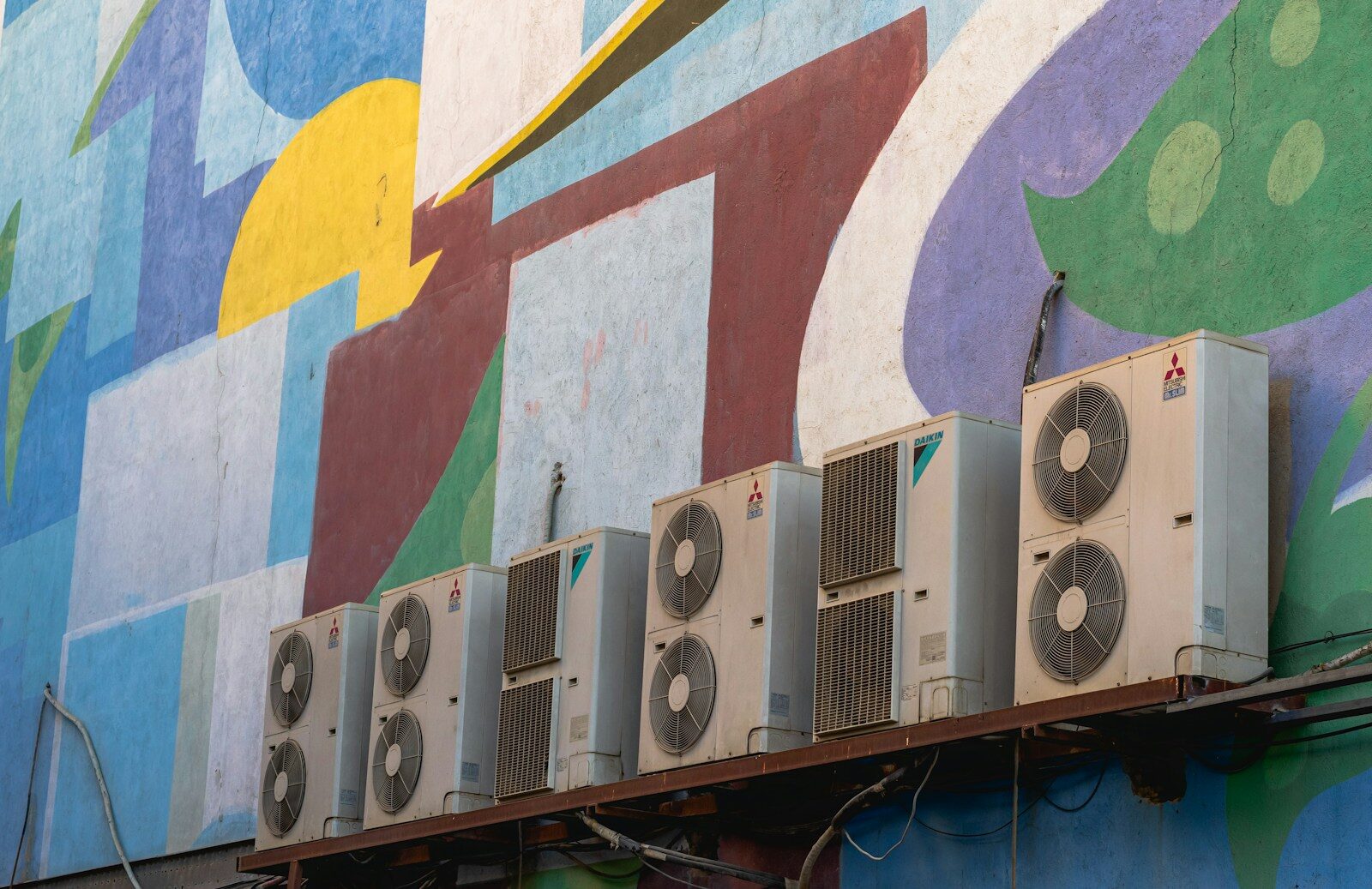
In hot regions such as Cyprus, buildings often display numerous exterior AC units, reflecting heavy reliance on mechanical cooling.

At the same time, countries are investing in passive design strategies:
- Reflective roofing
- Natural ventilation
- External shading
- High performance insulation
These measures reduce cooling loads before mechanical systems are required.
Challenges and Barriers
Equity and Climate Justice
Regions most vulnerable to heat often have the least access to cooling. Denying access is neither ethical nor politically viable. Yet expanding access without clean energy exacerbates emissions.
Balancing equity with climate mitigation remains one of the most complex dimensions of air conditioning and climate change.
Infrastructure Constraints
Many low income countries face:
- Weak grid infrastructure
- Limited renewable capacity
- High upfront appliance costs
Efficient air conditioners remain more expensive than standard models, limiting adoption despite long term savings.
Behavioral Patterns
Consumer behavior also matters. Overcooling buildings, setting very low thermostat temperatures, and operating systems during peak hours amplify emissions.
Behavioral change campaigns have shown measurable reductions in household electricity use when paired with pricing signals.
Solutions and Strategic Pathways
Addressing air conditioning and climate change requires coordinated action across technology, policy, and behavior.
1. Accelerate Grid Decarbonization
Transitioning to renewable electricity reduces the emissions intensity of cooling. Solar power is particularly aligned with cooling demand because peak sunlight often coincides with peak heat.
Investments in storage and smart grids further enhance reliability.
2. Improve Appliance Efficiency Standards
Minimum energy performance standards can dramatically reduce lifetime emissions. High efficiency inverter AC units consume 30 to 50 percent less electricity than conventional systems.
Governments can:
- Mandate higher efficiency thresholds
- Offer rebates for efficient models
- Implement labeling programs
3. Phase Down High GWP Refrigerants
Low global warming potential refrigerants such as R32 or natural refrigerants reduce climate impact. Strict leakage monitoring and recovery protocols are also critical.
4. Promote Passive Cooling and Urban Design
Cities can reduce cooling demand through:
- Urban tree canopy expansion
- Cool roofs and reflective pavements
- Building orientation and ventilation planning
These strategies cut energy demand while improving livability.
5. Encourage Responsible Consumer Behavior
Individuals can reduce emissions by:
- Setting thermostats to 24 to 26°C
- Using fans to supplement AC
- Avoiding peak hour operation
- Maintaining equipment to prevent leaks
Small adjustments across millions of households produce substantial aggregate impact.
Frequently Asked Questions
Does air conditioning directly cause global warming?
Air conditioning contributes to global warming through electricity consumption and refrigerant leakage. Its impact depends on the carbon intensity of the electricity grid and the type of refrigerant used.
How much do air conditioners contribute to global emissions?
Refrigeration and air conditioning together account for about 7 percent of global greenhouse gas emissions when both energy use and refrigerants are included.
Can efficient air conditioners solve the problem?
Efficiency significantly reduces emissions, but it cannot fully offset rising demand. Decarbonized electricity and refrigerant transitions are also necessary.
Is using air conditioning during heat waves irresponsible?
Cooling protects public health, particularly for elderly and vulnerable populations. The solution is not elimination but cleaner energy, better efficiency, and smarter use.
Conclusion
Air conditioning and climate change are now inseparable components of global climate risk. As temperatures rise, cooling demand will expand rapidly, particularly in vulnerable and developing regions. Without intervention, this growth could add measurable warming and strain climate targets.
However, the trajectory is not fixed. Through grid decarbonization, stronger efficiency standards, refrigerant reform, passive cooling design, and informed consumer behavior, societies can break the feedback loop.
Policymakers, investors, and households must act decisively. Expanding equitable access to cooling while reducing emissions is both a climate necessity and a public health imperative.