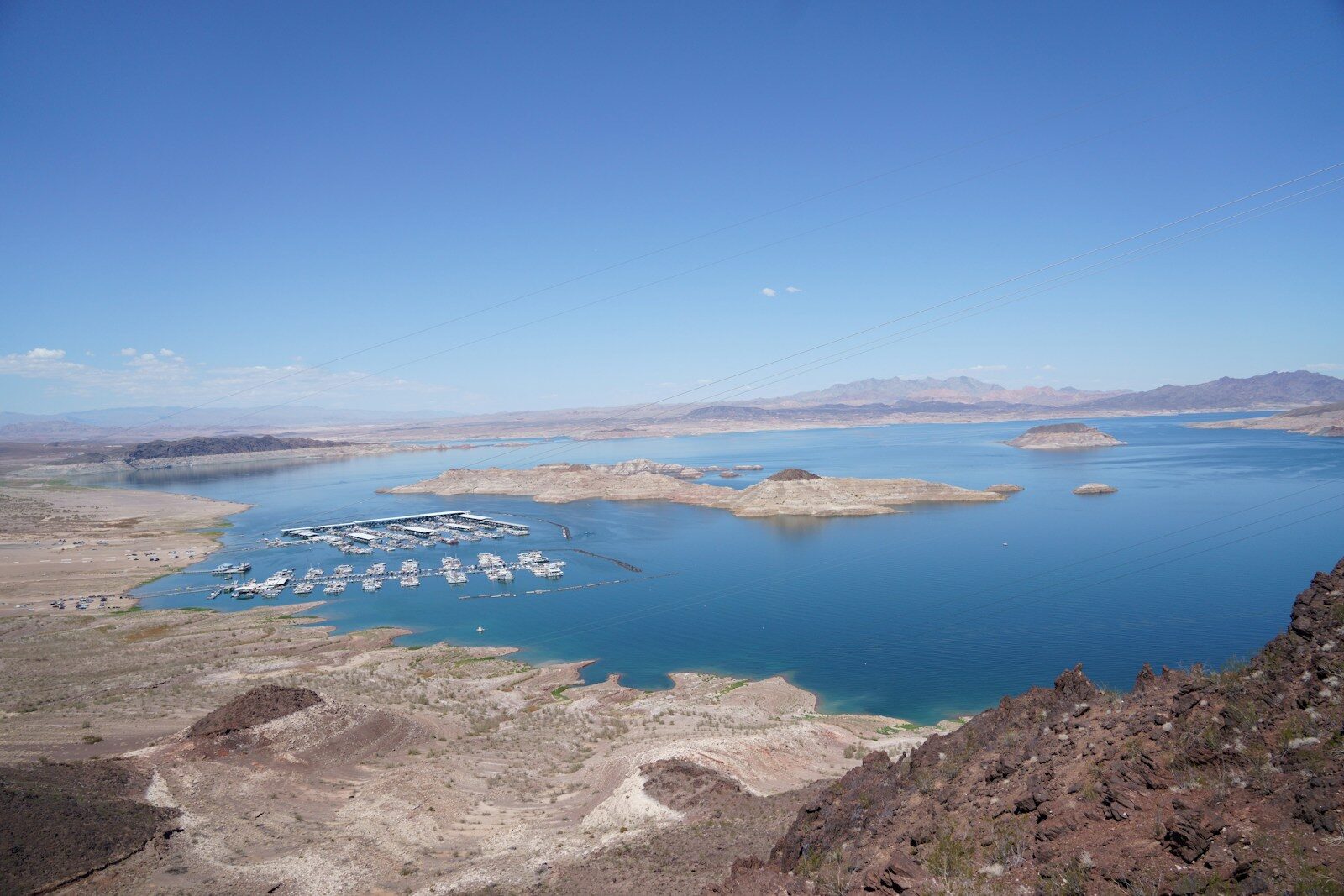
Lake Mead warming is emerging as a critical climate risk for the western United States. New projections indicate that inflowing water temperatures could rise by as much as 10.8°F by 2026. This is not simply a seasonal fluctuation. It represents a structural shift in the hydrology of the Colorado River Basin.
Lake Mead, formed by the Hoover Dam, supplies drinking water to roughly 25 million people and supports hydropower generation across multiple states. However, infrastructure designed for 20th century climate conditions is now operating under unprecedented thermal stress.
This article examines the science behind Lake Mead warming, its environmental and economic consequences, and the adaptation pathways needed to secure water and energy resilience.
Scientific Foundations of Lake Mead Warming


What Is Driving Lake Mead Warming?
Lake Mead warming is primarily driven by three interconnected mechanisms:
- Rising regional air temperatures linked to greenhouse gas accumulation
- Reduced snowpack in the Rocky Mountains
- Lower reservoir levels that amplify heat absorption
Warmer air increases surface water temperatures directly. At the same time, diminished snowpack alters seasonal runoff timing. Earlier snowmelt exposes reservoirs to longer periods of solar heating.
Lower water levels further intensify the effect. Shallow water bodies warm faster because they have less thermal mass to buffer temperature fluctuations.
Thermal Stratification and Water Quality
As Lake Mead warms, stronger thermal stratification develops. This occurs when warm surface water sits above cooler, denser bottom layers.
Stratification reduces vertical mixing. Consequently:
- Dissolved oxygen levels decline in deeper waters
- Nutrient cycling becomes disrupted
- Harmful algal bloom risk increases
These processes complicate water treatment operations and increase operational costs for municipal utilities.
Environmental and Economic Impacts
Hydropower Efficiency at Hoover Dam
Hydropower output at Hoover Dam depends on both water volume and water density. Warmer water is less dense. While the density change is modest, combined with declining water levels, it can reduce turbine efficiency.
Moreover, prolonged high temperatures may affect mechanical systems that were engineered for historically stable thermal regimes.
Lower hydropower generation has economic consequences:
- Increased reliance on natural gas peaker plants
- Higher electricity prices
- Elevated grid vulnerability during heatwaves
Given the scale of Hoover Dam operations, even small efficiency losses can translate into substantial regional energy impacts.
Drinking Water Infrastructure Stress
Lake Mead warming also challenges drinking water treatment systems in Nevada, Arizona, and California.
Warmer source water can:
- Increase microbial activity
- Accelerate biofilm growth in pipes
- Raise treatment chemical demand
Utilities may need to invest in advanced filtration and cooling adaptations. These upgrades increase costs that are ultimately passed to ratepayers.
Ecosystem Disruption
The Colorado River ecosystem evolved under cooler thermal regimes. Rising reservoir temperatures threaten:
- Native fish species
- Riparian habitats
- Biodiversity stability
Warmer waters can favor invasive species while stressing temperature-sensitive native populations.
Over time, ecological imbalance can reduce fisheries productivity and undermine conservation investments.
Real World Signals from the Colorado River Basin
Recent reporting from Nevada indicates that projected inflows could be significantly warmer by 2026. These projections reflect regional climate modeling aligned with observed warming trends across the Southwest.
The broader Colorado River Basin is already experiencing:
- Multi-decade megadrought conditions
- Persistent reservoir depletion
- Increasing water allocation conflicts
Lake Mead warming amplifies these existing pressures. It is not an isolated phenomenon. Instead, it is a multiplier of systemic water risk.
Lessons from Other Warming Reservoirs
Globally, warming reservoirs in Mediterranean climates show similar patterns:
- Increased algal blooms
- Higher evaporation losses
- Declining hydropower reliability
These examples demonstrate that adaptation must begin before thresholds are crossed.
Challenges and Barriers
Infrastructure Designed for a Different Climate
Most of the Colorado River system infrastructure was designed in the early to mid 20th century. Engineers relied on historical hydrological averages that no longer reflect present climate realities.
Redesigning intake systems, turbines, and treatment facilities requires:
- Large capital investment
- Federal and interstate coordination
- Regulatory reform
Political and Interstate Complexity
The Colorado River Compact governs water allocation among multiple states. Any adaptation strategy must navigate:
- Competing agricultural and urban interests
- Tribal water rights
- Federal oversight
This complexity slows reform even as Lake Mead warming accelerates.
Financial Constraints
Modernizing infrastructure is expensive. However, delayed action increases long-term costs through emergency repairs, power shortages, and water quality crises.
Solutions and Strategic Pathways
Lake Mead warming demands systemic adaptation rather than incremental fixes.
1. Infrastructure Modernization
Priority actions include:
- Upgrading turbine systems for variable temperature performance
- Retrofitting water intake structures for thermal flexibility
- Expanding advanced water treatment capacity
Federal infrastructure funding should prioritize climate resilience metrics.
2. Basin-Wide Water Management Reform
Improved water governance can reduce thermal stress indirectly by stabilizing reservoir levels.
Key strategies include:
- Agricultural efficiency incentives
- Urban water recycling expansion
- Managed aquifer recharge
Maintaining higher reservoir volumes reduces warming intensity.
3. Nature-Based Solutions
Riparian restoration and upstream forest management improve watershed cooling. Healthy forests enhance snow retention and moderate runoff timing.
Additionally, shade restoration along tributaries can reduce inflow temperatures before water reaches Lake Mead.
4. Emissions Reduction
Ultimately, Lake Mead warming reflects global atmospheric change. Long-term stabilization requires:
- Accelerated renewable energy deployment
- Electrification of transport
- Industrial decarbonization
Regional adaptation must align with national climate mitigation targets.
Frequently Asked Questions
Why is Lake Mead warming faster than expected?
Regional air temperature increases, prolonged drought, and lower reservoir levels all intensify heat absorption. Reduced snowpack further alters seasonal inflow patterns.
How does warmer water affect hydropower?
Warmer water slightly reduces density and can stress turbine systems. Combined with low water levels, it may reduce generation efficiency and reliability.
Can infrastructure upgrades solve the problem?
Upgrades can reduce risk but cannot eliminate warming trends. Long-term resilience requires both infrastructure modernization and greenhouse gas reductions.
Is this linked to climate change?
Yes. Observed temperature increases across the Southwest align with broader climate change patterns driven by greenhouse gas emissions.
Conclusion
Lake Mead warming is not an isolated anomaly. It is a systemic signal that climate conditions in the Colorado River Basin have shifted beyond historical design assumptions.
Rising water temperatures threaten hydropower reliability, drinking water quality, and ecological stability. While infrastructure modernization can reduce risk, long-term resilience requires coordinated basin management and aggressive emissions reductions.
The path forward demands proactive adaptation rather than reactive crisis management. Policymakers, utilities, and investors must treat Lake Mead warming as a strategic climate risk and act accordingly.
The time for structural climate resilience planning is now.
Related Resources
Related: US Drought Monitor Web Story
Explore how the 2026 drought is spreading across all US states in our visual guide: US Drought Monitor 2026: Which States Face Critical Water Shortage.
Authoritative Source: Bureau of Reclamation – Water Data
Lake Mead’s Thermal Stratification: How Warming Disrupts the Water Column
Lake Mead’s warming crisis goes deeper than rising surface temperatures. As the reservoir warms, it undergoes changes in thermal stratification — the layering of water at different temperatures — that have cascading consequences for water quality, aquatic ecosystems, and the operational management of Hoover Dam’s hydroelectric and water delivery systems. Understanding these stratification dynamics is essential to understanding why rising temperatures create compound, non-linear risks to the reservoir’s function rather than simple linear degradation.
In a healthy, deep reservoir like Lake Mead, water naturally stratifies into distinct layers: a warm surface layer (the epilimnion) heated by solar radiation and ambient air temperature; a transition zone (the thermocline) where temperature drops rapidly with depth; and a cold, dense bottom layer (the hypolimnion) that can remain near 4°C (39°F) year-round regardless of surface conditions. This stratification matters enormously for reservoir management because the penstock intakes that supply water to Hoover Dam’s power generators and water delivery systems draw from specific depths within the reservoir. As Lake Mead’s overall water level declines with drought, the intake depths change relative to the water column, potentially drawing from warmer, less oxygenated, or more chemically altered water layers that create operational challenges for both power generation and water treatment.
The declining depth of the thermocline — a consequence of warmer overall temperatures and reduced inflow of cold snowmelt water — means that the cold, deep water that once dominated intake temperatures is being replaced by warmer water year-round. Southern Nevada Water Authority water treatment plants that process Lake Mead water have had to adjust treatment protocols to manage increased algal growth, higher concentrations of taste-and-odor compounds, and changing turbidity patterns that are direct consequences of the reservoir’s warming and stratification changes. These adjustments add cost and complexity to the water treatment process for the 2.4 million people in the Las Vegas metropolitan area who depend on Lake Mead for approximately 90% of their municipal water supply.
Ecological Collapse in Lake Mead: Fish, Invasives, and the Desert Reservoir’s Changing Biology
Lake Mead supports a complex fishery that provides recreational value to millions of visitors and serves as habitat for native and non-native fish species in an otherwise hyper-arid landscape. The combination of warming temperatures, declining water levels, and changing water chemistry is driving significant ecological disruption in the reservoir’s biological communities, with consequences that extend beyond recreational fishing to affect the broader ecological function of the Colorado River system.
Striped bass, largemouth bass, and rainbow trout — the primary sport fish in Lake Mead — are all cold-water or cool-water species that are physiologically stressed by sustained warm temperatures. Striped bass, which were stocked in Lake Mead beginning in the 1970s and have established self-sustaining populations, are particularly threatened by what biologists call “temperature squeeze”: as surface temperatures exceed the upper thermal tolerance of striped bass and hypolimnetic oxygen depletion makes deeper cool water uninhabitable, the zone of thermally tolerable, oxygenated water available to the fish shrinks. Documented striped bass mortality events, including large die-offs in summer months, have become more frequent as Lake Mead’s thermal conditions have worsened. Nevada Department of Wildlife data shows declining striped bass populations since 2015, correlated with the reservoir’s warming trajectory.
Quagga mussels — an invasive species first detected in Lake Mead in 2007 — have proliferated dramatically in the reservoir and now coat virtually every hard surface below the waterline, including Hoover Dam’s infrastructure, intake pipes, and the boats and equipment of recreational users. These filter feeders consume phytoplankton at rates that have measurably reduced primary productivity in the lake, altering food web dynamics and contributing to the declining forage base available to sport fish. The mussels’ filtration also dramatically increases water clarity, which allows UV light to penetrate to greater depths, shifts the depth at which algae can grow, and alters the thermal properties of the water column. The cost of managing quagga mussels in Lake Mead and preventing their spread to other western reservoirs through mandatory boat inspections and decontamination programs runs to tens of millions of dollars annually.
Hydropower at Risk: Hoover Dam’s Future Under a Warming Climate
Hoover Dam’s 2,074-megawatt hydroelectric generating capacity has historically provided reliable, low-carbon electricity to Nevada, Arizona, and California — and contributed to the financial framework of Bureau of Reclamation water delivery contracts across the Southwest. As Lake Mead’s elevation declines, the hydraulic head available to drive Hoover Dam’s turbines decreases, reducing power output and threatening the dam’s ability to fulfill its power sales contracts. Bureau of Reclamation data shows that power output from Hoover Dam has declined significantly from historical averages during the low-reservoir years of 2020-2024, and the agency has issued warnings about reduced minimum power pool levels that would require turbine shutoffs if the reservoir falls below approximately 950 feet elevation — a level that was nearly reached during the 2022 drought nadir.
The financial implications of reduced Hoover Dam power generation extend beyond the direct revenue loss to the Bureau of Reclamation’s Hoover Power Plant. The dam’s power revenues have historically cross-subsidized water delivery costs for agricultural users in the Lower Basin, and declining revenue threatens this subsidy arrangement at exactly the moment when drought-driven delivery cuts are already imposing economic stress on affected agricultural operations. Energy system operators in Nevada and Arizona must identify replacement generation — increasingly met by natural gas and battery-backed solar — to cover Hoover Dam’s declining output, adding both cost and complexity to grid management.
Climate projections for the Colorado River basin consistently indicate that the conditions driving Lake Mead’s thermal warming and level decline will intensify through the 21st century under any plausible emissions trajectory. Adaptation strategies that can make the reservoir system more resilient to these changes — enhanced evaporation suppression, optimized operating rules that maintain minimum functional water levels, demand management that reduces extraction and allows partial recovery — are the focus of intensive planning by the Bureau of Reclamation and basin water managers. The alternative — managing Hoover Dam and Lake Mead as a declining asset in a fundamentally altered hydrological system — is a future that the Colorado River basin’s 40 million residents and the region’s economy cannot afford to normalize.
Water Footprint Impact Calculator
Measure direct and virtual water consumption across household, agricultural, and industrial supply chains against regional watershed stress metrics.
Calculate Water Footprint →