America’s Vanishing Groundwater: The Invisible Crisis Beneath Our Feet
Fly over Kansas, Arizona, or California, and you will see a miracle: perfectly circular fields of lush green corn and alfalfa thriving in the middle of an arid desert.
But this miracle is an illusion.
Beneath the soil, a catastrophe is unfolding. These crops are not being watered by rain, but by ancient aquifers—underground oceans formed over thousands of years. Today, America is pumping this water to the surface faster than nature can replace it.
According to recent investigations, including a landmark analysis by the New York Times, the United States is systematically depleting its groundwater reserves, leading to a crisis that threatens the nation’s food supply, its economy, and the very ground we stand on.
The Scale of the Drain
Groundwater provides nearly 45% of the water used for irrigation in the US and supplies drinking water to nearly half the population.
However, we are treating this resource like an infinite bank account.
- The Deficit: In many parts of the High Plains and the Southwest, aquifers are being drained at 10 to 50 times the rate of natural recharge.
- The “Fossil” Water: Much of this water is “fossil water,” trapped underground during the last Ice Age. Once it is gone, it is gone forever.
Ground Zero: The Ogallala Aquifer
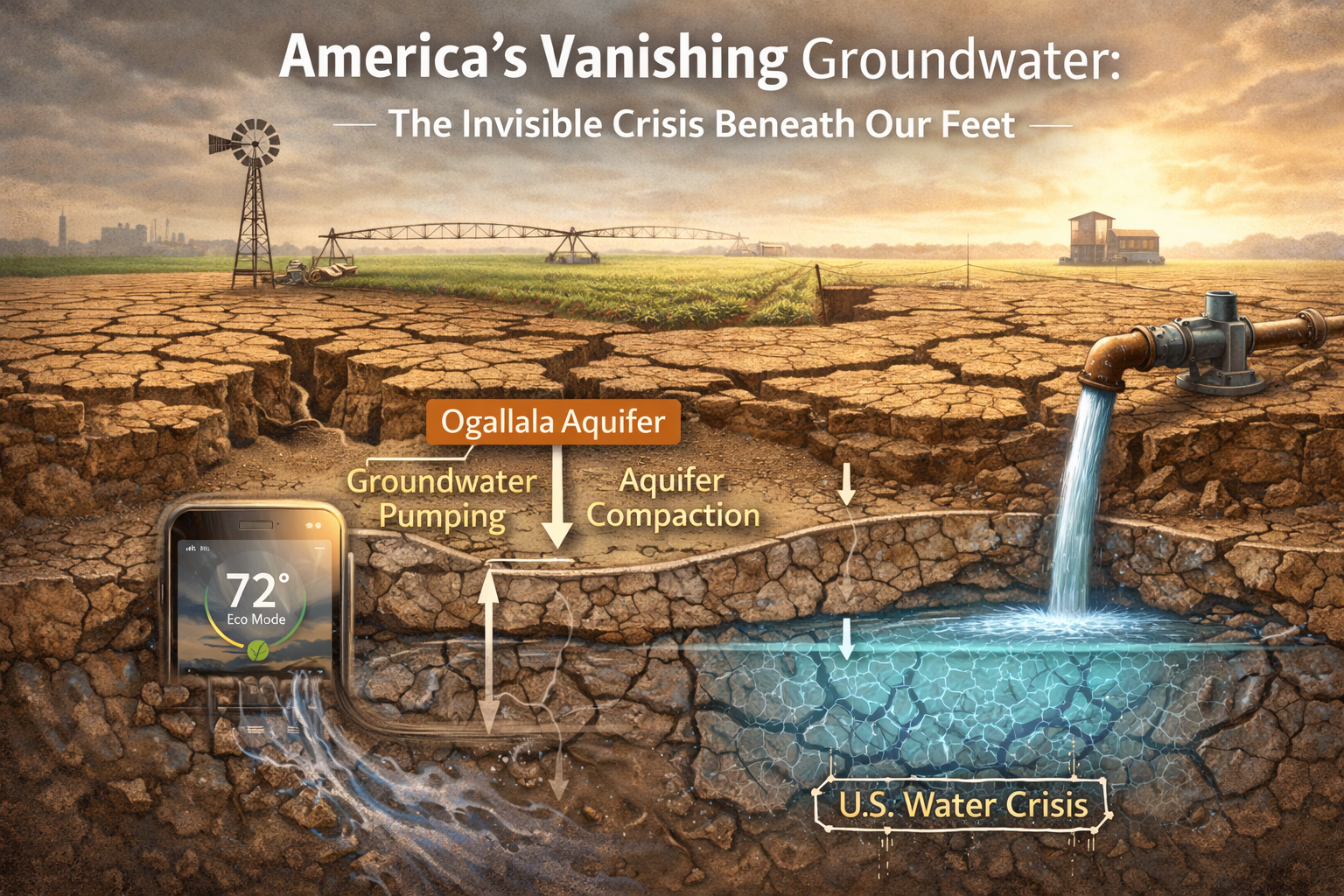
The massive Ogallala Aquifer stretches across eight states, from South Dakota to Texas. It is the engine of American agriculture, supporting the “Breadbasket of the World.”
But the engine is running out of fuel.
- In parts of the Texas Panhandle and Kansas, the water table has dropped by over 150 feet.
- Farmers who once pumped 1,000 gallons a minute are now struggling to pump 300.
- As the water drops, the cost of electricity to pump it from the depths skyrockets, pushing small family farms into bankruptcy.
The Physical Consequence: Sinking Land
When you suck the water out of a sponge, it shrinks. The Earth does the same. This phenomenon is called Land Subsidence.
In California’s San Joaquin Valley, the ground has sunk by as much as 28 feet in the last century. This isn’t just a geological curiosity; it destroys infrastructure.
- Cracked Canals: The very canals meant to deliver surface water are buckling as the ground sinks.
- Damaged Roads: Highways and bridges are warping.
- Aquifer Compaction: The most dangerous part is “compaction.” Once the clay layers in an aquifer collapse, they can never hold water again. We are permanently destroying the storage tank.
Why Is This Happening? The Regulatory “Wild West”
Unlike surface water (rivers/lakes), which is heavily regulated, groundwater in the US is often governed by the archaic “Rule of Capture.”
In many states, if you own the land, you can pump as much water as you want, regardless of how it affects your neighbor. This creates a “Race to the Bottom.” If you don’t pump the water, your neighbor will. This lack of federal oversight has allowed industrial agriculture to drain aquifers unchecked for decades.
The Link to Climate Change
Climate change acts as a “threat multiplier” for groundwater depletion.
- Hotter Droughts: As surface rivers (like the Colorado River) dry up due to aridification, farmers are forced to pump more groundwater to survive.
- Thirsty Air: Higher temperatures increase evaporation from soil and crops, increasing the water demand.
Is There a Solution?
The situation is dire, but not hopeless. Solutions exist, but they require political will.
1. Managed Aquifer Recharge (MAR)
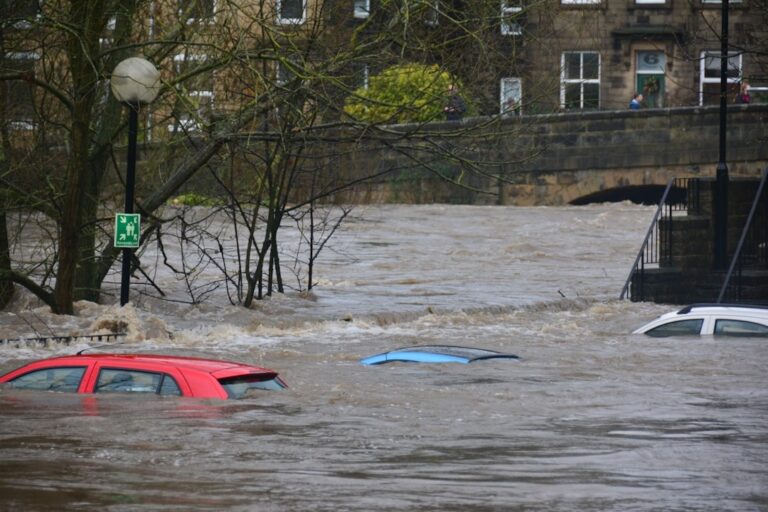
Instead of letting storm water run into the ocean, we can divert floodwaters onto porous landscapes to soak back into the ground. (See our guide on Can We Refill the Earth?)
2. Crop Switching
We are currently growing thirsty crops like almonds, alfalfa, and cotton in the desert. Shifting to drought-resistant crops or high-value, low-water produce is essential.
3. Ending the “Open Loop”
States like Arizona and California are finally beginning to pass laws limiting groundwater extraction, though implementation is slow.
Conclusion: The End of the Free Lunch
The era of unlimited, cheap water in America is over. We have spent the last century living beyond our hydrological means. To save our future, we must make the invisible crisis visible and treat groundwater not as a commodity to be exploited, but as a strategic national reserve to be protected.
Further Reading: