Cities are often described as places where nature disappears — replaced by concrete, traffic, and dense infrastructure. But in Copenhagen, an unusual experiment in the harbor is challenging that assumption.
Floating islands filled with wildflowers, grasses, and small trees now drift quietly in the city’s waterways. Rather than being decorative installations, these islands are designed to bring wildlife back into an urban ecosystem that had largely lost it.
The project offers a glimpse of how cities might reintroduce biodiversity without needing more land.
Table of Contents
The Science of Urban Floating Wetlands: How Nature Does the Heavy Lifting
Floating wildflower islands are far more than decorative installations — they function as engineered ecosystems that exploit well-understood ecological processes to deliver measurable environmental benefits in urban settings. The underlying science draws on phytoremediation, constructed wetland technology, and urban ecology to create systems that are both beautiful and functional.
The mechanism begins below the water surface. Plant roots on floating islands extend downward into the water column, creating dense fibrous mats that host enormous communities of microorganisms. These microbial communities — including bacteria and archaea — are the real workhorses of water purification. They break down organic compounds, convert ammonia to nitrogen gas through nitrification and denitrification, and immobilize phosphorus and heavy metals. The root mat acts as both a biological filter medium and a microbial habitat, dramatically increasing the surface area available for these treatment processes compared to open water.
Nutrient uptake by the plants themselves adds another treatment layer. Aquatic and wetland plants like purple loosestrife, common reed, water forget-me-not, yellow flag iris, and marsh marigold extract nitrogen and phosphorus from water to fuel their growth. These nutrients — the primary drivers of algal blooms and eutrophication — are incorporated into plant biomass rather than remaining dissolved in the water column. When the plant material is periodically harvested or decomposes naturally, the cycle renews. In eutrophic urban water bodies, floating islands can measurably reduce phosphorus concentrations by 20–40% and nitrogen by similar margins within a growing season.
Oxygen dynamics at the water surface improve significantly. The shade cast by floating island vegetation reduces water temperature, and cooler water holds more dissolved oxygen — a critical parameter for fish and invertebrate survival. Roots release some oxygen into the root zone, supporting aerobic decomposition rather than anaerobic processes that produce foul-smelling hydrogen sulfide. The overall effect is a shift from the oxygen-depleted, algae-dominated state characteristic of impaired urban water bodies toward the oxygen-rich, clear-water state that supports diverse aquatic life.
Copenhagen’s Urban Ecology Revolution: Beyond the Floating Islands
Copenhagen’s floating wildflower islands exist within a broader urban ecology transformation that makes the Danish capital one of the world’s leading laboratories for integrating nature into dense urban environments. The city’s approach is distinctive in its combination of ecological ambition, design quality, and community engagement.
The Copenhagen Harbor has undergone one of the most dramatic urban ecological recoveries of any major city in recent decades. Once heavily polluted from combined sewer overflows, industrial runoff, and shipping traffic, the harbor was unsafe for swimming as recently as the 1990s. A sustained program of wastewater infrastructure investment, industrial emission controls, and stormwater management has transformed it into swimmable water — a feat that Copenhagen has celebrated by opening harbor baths that attract hundreds of thousands of bathers each summer. The floating wildflower islands are the latest chapter in this ongoing ecological recovery story.
Denmark’s national biodiversity strategy provides the policy context for local initiatives. Following alarming declines in insect populations — including a 40–60% decline in flying insect biomass documented in German studies that parallel patterns across Scandinavia — Danish municipalities have embraced aggressive urban greening programs. Copenhagen has committed to increasing urban biodiversity indicators annually, with specific targets for expanding pollinator habitat and reducing pesticide use in public green spaces. The floating islands contribute directly to these targets.
Community participation has been central to the initiative’s success. Copenhagen’s floating island program involved extensive consultation with harbor communities, rowing clubs, kayakers, and neighborhood associations before installation. Maintenance partnerships with local schools and environmental groups ensure ongoing care while building ecological literacy. Children who help seed and maintain the islands develop direct relationships with urban nature — a form of environmental education that research shows durably increases pro-environmental attitudes and behaviors.
Scaling Urban Floating Islands: Applications Across American Cities
The Copenhagen model has attracted attention from urban planners, stormwater engineers, and park designers across the United States, where similar challenges of urban water body degradation, biodiversity loss, and climate-driven flooding demand innovative solutions. American cities face the additional urgency of extreme heat and severe storm events that conventional gray infrastructure is increasingly unable to manage alone.
Stormwater management represents the most immediately scalable application. American cities have invested trillions of dollars in gray infrastructure — pipes, tanks, and treatment plants — that are overwhelmed by increasingly intense rainfall events driven by climate change. Combined sewer overflows — the discharge of untreated sewage mixed with stormwater directly into waterways during heavy rain — remain a chronic problem in older eastern and midwestern cities, despite decades of regulatory pressure and infrastructure investment. Floating wetlands in detention ponds and urban water bodies can provide additional stormwater treatment capacity and nutrient removal at a fraction of the cost of expanded treatment plant capacity.
Urban heat island mitigation is an underappreciated benefit. Water bodies surrounded by vegetation — including floating island vegetation — experience lower water temperatures and create cooler air masses in their immediate vicinity. In cities where summer temperatures are increasingly dangerous, the cooling effect of vegetated urban water bodies provides both direct comfort benefits and reduces energy demand for cooling in adjacent buildings. A single hectare of floating island coverage can measurably reduce the temperature of the surrounding water body and contribute to neighborhood-scale cooling.
Waterfront economic development benefits from ecological improvement. Research consistently shows that clean, ecologically rich urban water bodies increase adjacent property values and drive tourism and recreation economies. Baltimore’s Inner Harbor, Chicago’s Riverwalk, and San Antonio’s River Walk all demonstrate the economic power of transformed urban waterways. Floating wildflower islands represent a cost-effective tool for accelerating the ecological dimension of waterfront revitalization — making urban water bodies more beautiful, more ecologically diverse, and more valuable to surrounding communities.
Choosing the Right Plants: Creating Four-Season Pollinator Habitat
The ecological value of floating wildflower islands depends critically on plant selection — choosing species that provide food and habitat for pollinators, support aquatic life, tolerate the challenges of floating mat conditions, and deliver visual interest across seasons. For North American applications, native plant palettes differ substantially from European ones, with important implications for ecological function.
Spring bloomers provide critical early-season resources when pollinators emerge from dormancy before other food sources become available. Marsh marigold, swamp buttercup, and native blue flags (Iris versicolor) offer early nectar and pollen. Water cress, introduced but naturalized, provides shelter for aquatic invertebrates and early-season pollinator resources. Cardinal flower, though it blooms in summer, benefits from early establishment on floating mats where its moisture requirements are easily met.
Summer prairie species can thrive on floating mats with adequate growing medium depth. Wild bergamot, swamp milkweed — a critical monarch butterfly host plant — blue vervain, and native swamp rose mallow create visually dramatic summer displays while supporting a wide range of native bee species and butterflies. Swamp milkweed is particularly valuable: monarchs are one of North America’s most imperiled pollinators, and urban habitat is increasingly recognized as critical for their population recovery.
Fall bloomers extend the season when many pollinators are building energy reserves for winter. Native asters — particularly swamp aster and New England aster — along with boneset and ironweed provide late-season nectar for bees and migrating monarchs. Seed heads from these species persist through winter, providing food for seed-eating birds and structural habitat for overwintering insects. Maintaining some dead plant material through winter — resisting the impulse to cut back everything in fall — substantially increases the winter wildlife value of floating island habitats.
A Harbor Reimagined for Nature
The floating habitats are part of a project known as Copenhagen Islands, sometimes referred to as Parkipelago.
Developed by Australian architect and artist Marshall Blecher together with Danish design studio Fokstrot, the initiative transforms small floating platforms into miniature ecosystems.
Each island is built using recycled and repurposed materials and planted with a mixture of:
- native wildflowers
- grasses
- shrubs
- small trees
These plantings create a layered habitat capable of supporting pollinators, birds, and aquatic life.
The islands drift within Copenhagen’s harbor, a waterway that has undergone decades of environmental cleanup. What was once an industrial shipping zone is now increasingly used for recreation — swimming, kayaking, and waterfront parks.
The floating ecosystems add another dimension: urban biodiversity.
How Floating Islands Support Wildlife
Although small in size, the islands perform several ecological roles.
Pollinator Habitat
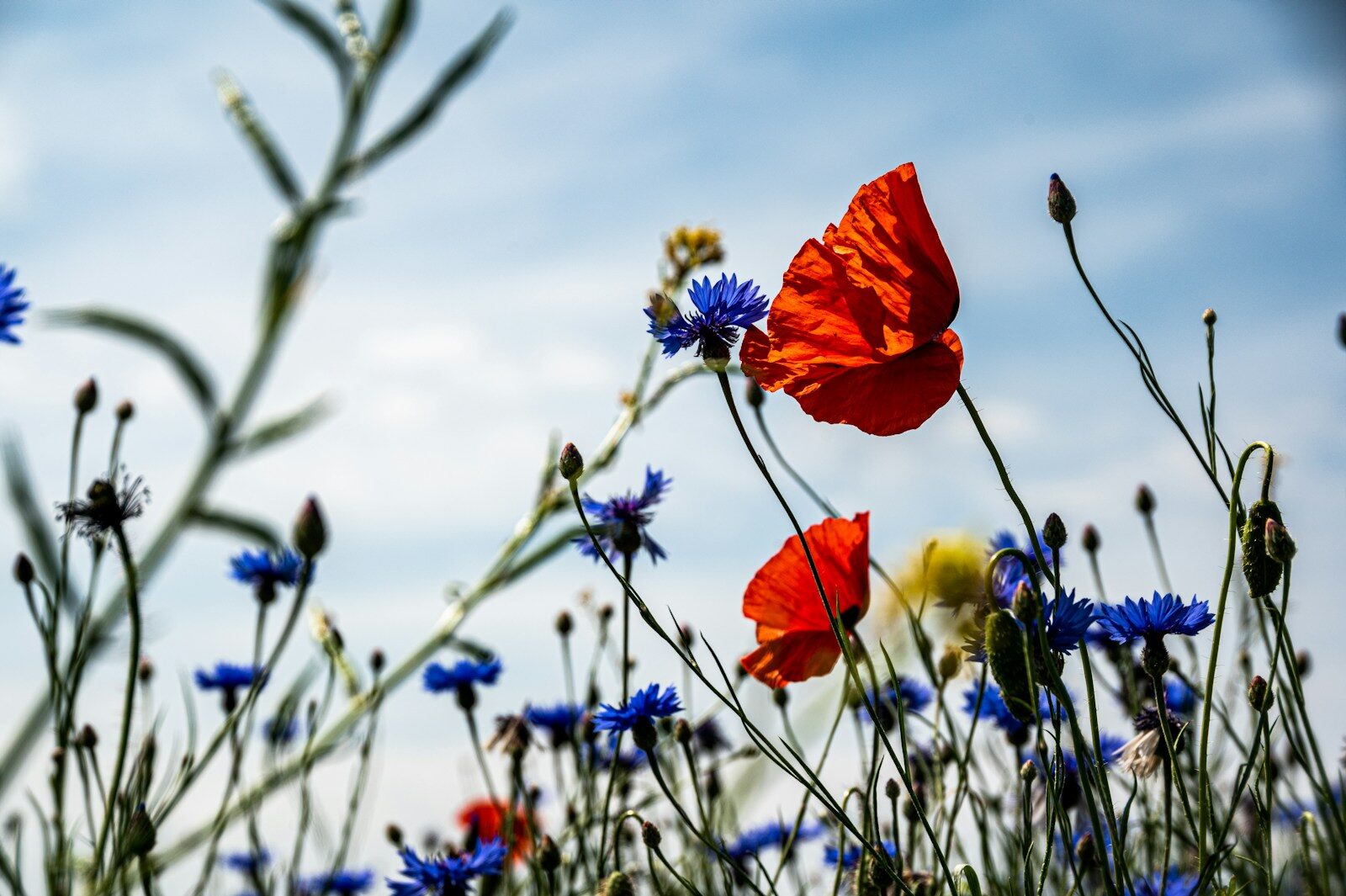
Wildflowers attract bees, butterflies, and other pollinating insects that often struggle to find food sources in dense cities.
Urban areas typically lack continuous flowering landscapes, so even small patches of habitat can significantly improve pollinator survival.
Bird Nesting Sites
Some of the islands provide quiet refuge for birds to rest or nest. A few of the early platforms have already attracted nesting species, demonstrating how quickly wildlife can respond when habitat appears.
Marine Ecosystem Benefits
Because the islands float directly in the harbor, they also influence the water below. Their structures create shaded areas and small underwater refuges that can support fish and marine organisms.
Over time, the submerged surfaces may host algae and marine invertebrates, gradually forming micro-reefs within the urban harbor.
Public Spaces and Wildlife Sanctuaries
One unusual aspect of the Copenhagen Islands project is that not every island serves the same purpose.
Some are open to people.
Kayakers can paddle up to them, swimmers can rest there, and locals occasionally use them for small picnics. These platforms function as tiny floating parks within the harbor.
Others are intentionally left off-limits to humans, allowing them to serve purely as wildlife habitats.
This mixed approach reflects a broader philosophy in urban ecology: cities do not have to separate people and nature entirely. Instead, carefully designed spaces can support both.
Why Cities Are Exploring Floating Ecosystems
Projects like Copenhagen’s islands represent a growing interest in nature-based urban solutions.
Many cities face the same challenge:
Urban land is limited, yet biodiversity loss is accelerating.
Floating ecological structures offer several advantages:
They require no new land
Cities can place them directly in waterways, harbors, canals, or reservoirs.
They restore ecological complexity
Even small habitats can provide food, nesting areas, and ecological stepping stones for species moving through cities.
They improve water systems
Vegetation and structural habitat can help support aquatic biodiversity and improve environmental conditions in urban waterways.
Because of these benefits, floating ecological platforms are beginning to appear in projects from New York to Singapore.
Small Interventions, Visible Impact
The Copenhagen Islands project demonstrates something important about urban ecosystems.
Large-scale conservation projects often dominate environmental conversations, but small interventions can still matter.
A few floating islands cannot restore an entire ecosystem. But they can:
- reintroduce habitat where none existed
- create biodiversity stepping stones across cities
- inspire new approaches to urban design
In Copenhagen’s harbor, early signs suggest the concept works. Pollinators have begun visiting the flowers, and birds have started using the platforms.
Nature, when given even a small opportunity, often returns faster than expected.
A Model for Climate-Resilient Cities
Urban planners increasingly recognize that cities must adapt not only to climate change, but also to biodiversity decline.
Projects like Copenhagen’s floating wildflower islands represent a new kind of infrastructure — one that blends design, ecology, and public space.
Rather than replacing nature, the goal is to invite it back into the built environment.
As coastal and riverfront cities around the world rethink how their waterways function, Copenhagen’s harbor experiment offers a simple but powerful lesson:
Even in the middle of a dense city, ecosystems can begin again.
FAQ
What are Copenhagen’s floating wildflower islands?
They are small floating platforms planted with wildflowers, grasses, and trees that create habitats for birds, bees, and marine life in Copenhagen’s harbor.
Who created the Copenhagen Islands project?
The project was designed by Australian architect and artist Marshall Blecher in collaboration with Danish design studio Fokstrot.
Why are floating islands useful for cities?
They allow cities to add biodiversity habitats without using valuable land, helping support pollinators, birds, and aquatic ecosystems.
Are the islands open to the public?
Some islands are accessible for recreation such as kayaking and swimming, while others are protected as wildlife sanctuaries.
Authoritative Source: Bureau of Reclamation – Water Data
Water Footprint Impact Calculator
Measure direct and virtual water consumption across household, agricultural, and industrial supply chains against regional watershed stress metrics.
Calculate Water Footprint →