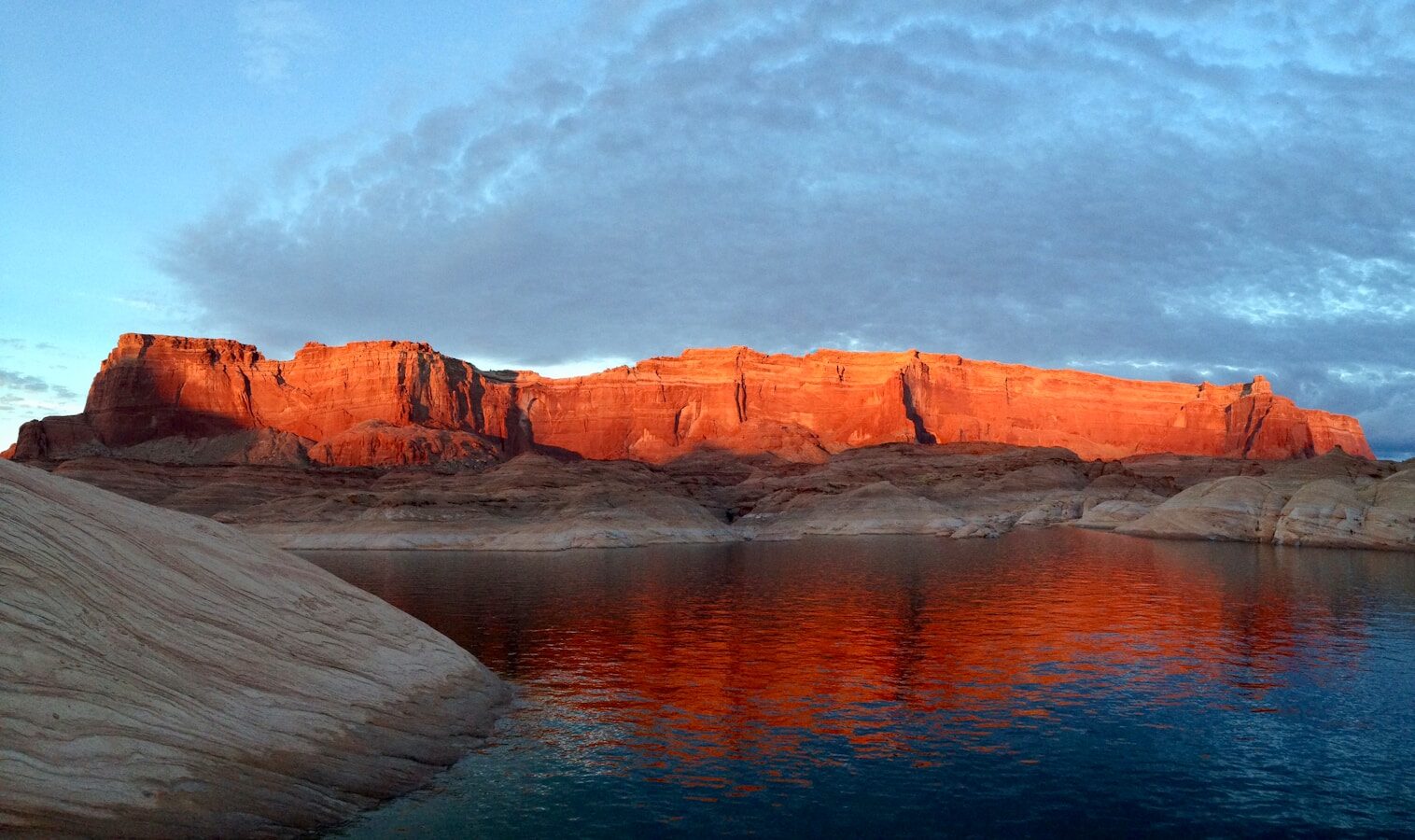
Lake Powell: America's Water Vault Is Disappearing
The West's largest reservoir is in freefall. 3 devastating hidden costs that will reshape life for 40 million Americans.
Shrinking to Crisis Level
Lake Powell once held 26.2 million acre-feet of water for 7 states. Decades of drought and over-allocation have stripped it to historic lows, threatening hydropower generation for millions of homes.
Power Grid Collapse Risk
Glen Canyon Dam's hydropower is the backbone of the Southwest grid. As water drops below the minimum power pool, electricity generation halts — forcing expensive fossil fuel replacement at a time when demand peaks from extreme heat.
Agricultural Collapse in 7 States
Farmers in Arizona, Nevada, California, Utah, Wyoming, Colorado, and New Mexico face water cuts of up to 80%. Crops vital to America's food supply — cotton, alfalfa, vegetables — are being fallowed, threatening food security and rural economies.
Ecological Extinction Cascade
The river barely reaches the sea. Native fish species — the Humpback Chub, Razorback Sucker — face extinction. The delta ecosystem that once supported millions of migratory birds is a fraction of its former self, with no recovery in sight under current trajectories.
Seven States. One River. No Easy Answer
The 1922 Colorado River Compact divided water based on a wet century — a historic miscalculation. Now states are locked in battle over cuts: cities vs. farms, upper vs. lower basin, Tribes vs. federal mandates. Renegotiation talks are the most contentious in the river's managed history.
Desalination, Recycling, or Rationing?
Cities are racing to build desal plants, advanced water recycling facilities, and smart metering systems. Phoenix cut usage 25% while growing. But even aggressive conservation may not offset 1.5 million acre-feet of annual overuse. The West must adapt or face a reckoning.
The Full Lake Powell Crisis Analysis
Economic costs, tribal rights, policy failures, and what the Bureau of Reclamation isn't telling you — the complete deep-dive into America's most critical water emergency.
Read the Full Story →