Impact of Climate Change on Early Spring
Published on February 23, 2026 by Dr. A. M.

Introduction
The impact of climate change on early spring is no longer a subtle shift. Across continents, spring is arriving earlier, warmer, and increasingly unpredictable. Plants are blooming weeks ahead of historical averages. Migratory birds are returning before peak food availability. Agricultural planting calendars are under pressure.
These changes matter because early spring acts as a biological trigger. It sets the pace for pollination, crop production, water cycles, and wildlife survival. When timing shifts, entire ecosystems respond.
This article explains the science behind these changes, examines environmental and economic consequences, and outlines strategic pathways to manage the impact of climate change on early spring effectively.
Key Concepts and Scientific Foundation
What Is Early Spring in Climate Science?
In climate research, early spring refers to the period when temperatures consistently rise above ecological thresholds that trigger biological activity. These thresholds include:
- Soil temperatures suitable for seed germination
- Day length cues for plant budding
- Thermal accumulation measured as growing degree days
- Insect emergence timing
Spring onset is typically measured using temperature data, plant phenology records, and satellite vegetation indices.
How Climate Change Alters Spring Timing
The primary driver is global temperature rise caused by increased atmospheric greenhouse gases. Warmer winters lead to:
- Reduced snow cover duration
- Earlier soil thaw
- Accelerated plant budburst
- Advanced insect emergence
According to long term temperature records, many regions in North America and Europe now experience spring 1 to 3 weeks earlier than mid 20th century averages.
Moreover, the Arctic is warming nearly four times faster than the global average. This polar amplification influences jet stream behavior, which can create unstable spring weather patterns in mid latitudes.
Phenological Shifts
Phenology refers to the timing of biological events. The impact of climate change on early spring is often measured through phenological changes such as:
- Earlier cherry blossom bloom
- Earlier leaf out in deciduous forests
- Earlier amphibian breeding
- Earlier migration in some bird species
However, not all species shift at the same rate. This mismatch creates ecological imbalance.
Environmental and Economic Impacts
Ecosystem Mismatch
One of the most significant ecological effects is trophic mismatch. For example:
- Caterpillars may emerge earlier due to warming
- Migratory birds may still arrive based on day length cues
- Nestlings may miss peak food availability
These timing mismatches reduce reproductive success and increase mortality.
Forest Health and Carbon Storage
Earlier springs extend the growing season. While this can temporarily increase carbon uptake, the benefits are not guaranteed.
Longer growing seasons can also lead to:
- Higher water demand
- Increased drought stress
- Expanded pest outbreaks
For example, bark beetle infestations in western North America have been linked to warmer winters that fail to kill overwintering larvae. This weakens forests and reduces long term carbon sequestration.
Agricultural Impacts
Farmers experience both benefits and risks from earlier springs.
Potential benefits:
- Longer growing seasons
- Opportunity for multiple crop cycles
Risks:
- Late frost damage to early budding crops
- Increased pest pressure
- Water management challenges
In fruit producing regions such as California and France, vineyards and orchards increasingly face frost losses after premature budbreak.
Economic losses from spring frost events have risen in several agricultural economies over the past two decades.
Water Systems and Snowmelt
Earlier snowmelt shifts river peak flows earlier in the year. This affects:
- Reservoir management
- Hydropower production
- Irrigation planning
- Aquatic ecosystems
In mountain regions such as the Rocky Mountains, reduced snowpack alters downstream water reliability during summer months.
Real World Case Studies and Applications
Cherry Blossoms in Japan
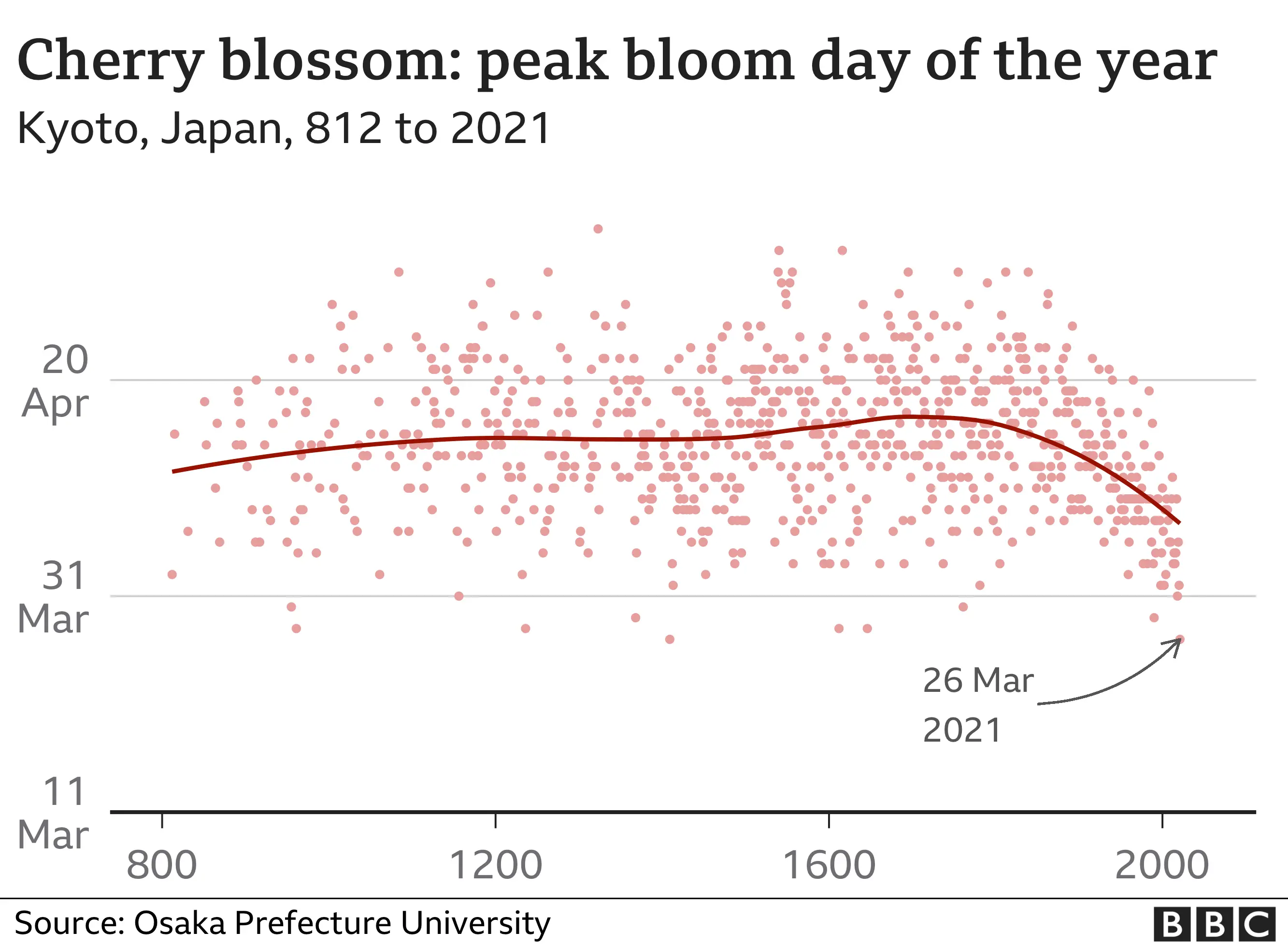
In Kyoto, historical cherry blossom records date back over 1,200 years. Recent decades show some of the earliest bloom dates ever recorded.
These records provide one of the longest biological climate datasets in the world. They clearly demonstrate the impact of climate change on early spring in East Asia.
Earlier bloom increases tourism volatility and exposes blossoms to frost risk.
Arctic Ecosystem Shifts
In the Arctic, warming temperatures accelerate snow melt and plant growth. However, migratory herbivores such as caribou depend on synchronized plant nutrition cycles.
Studies show that calves born after peak plant nutrition experience lower survival rates.
European Agricultural Frost Events
In recent years, vineyards across Germany and Italy have experienced damaging late spring frosts after unusually warm March temperatures triggered early budding.
This demonstrates that the impact of climate change on early spring increases climate volatility, not just warming trends.
Challenges and Barriers
Policy Lag
Climate adaptation policies often focus on summer heatwaves and sea level rise. Early spring shifts receive less strategic planning.
Agricultural insurance systems may not reflect new frost risk timing patterns.
Data Gaps
Many regions lack long term phenological monitoring systems. Without reliable data, forecasting mismatches remains difficult.
Infrastructure Rigidity
Water storage systems were designed based on historical snowmelt timing. Adjusting reservoir operations requires regulatory reform and investment.
Public Perception
Earlier flowering is sometimes viewed positively. However, visible beauty can mask ecological stress.
This perception gap slows urgency around managing the impact of climate change on early spring.
Solutions and Strategic Pathways
Strengthen Phenological Monitoring
Governments and research institutions should:
- Expand satellite vegetation tracking
- Support citizen science observation networks
- Integrate AI based bloom forecasting models
Improved monitoring reduces agricultural losses and biodiversity risks.
Climate Smart Agriculture
Farmers can adapt through:
- Frost protection systems
- Crop diversification
- Adjusted planting calendars
- Soil moisture conservation practices
Precision agriculture technologies help optimize decisions under shifting seasonal timing.
Water Management Reform
Reservoir operations should integrate dynamic snowpack forecasting. Additionally:
- Invest in natural water storage such as wetlands
- Improve groundwater recharge systems
- Diversify water supply portfolios
Ecosystem Based Adaptation
Protecting biodiversity improves resilience. Strategies include:
- Habitat connectivity corridors
- Assisted migration research
- Native species restoration
These approaches help buffer the impact of climate change on early spring across ecosystems.
Climate Mitigation
Ultimately, adaptation alone is insufficient. Rapid greenhouse gas reduction remains essential to stabilize seasonal cycles.
Frequently Asked Questions
How many days earlier is spring arriving due to climate change?
In many Northern Hemisphere regions, spring now arrives 7 to 21 days earlier compared to mid 20th century averages.
Does an earlier spring mean more crop productivity?
Not necessarily. While growing seasons may lengthen, frost risk, pest pressure, and water stress can offset productivity gains.
Why do some species fail to adapt to earlier springs?
Species rely on different environmental cues. Some respond to temperature, while others respond to daylight. When cues shift at different rates, mismatches occur.
Is the impact of climate change on early spring reversible?
If global warming stabilizes, seasonal timing could gradually stabilize. However, biological systems may take decades to rebalance.
Conclusion
The impact of climate change on early spring reshapes ecosystems, agriculture, water systems, and economic stability. While earlier blooming and longer growing seasons may appear beneficial, the underlying volatility creates serious ecological and financial risks.
Strategic adaptation, improved monitoring, and aggressive emissions reduction are essential. Policymakers, farmers, investors, and conservation professionals must treat shifting spring timing as a structural climate signal, not a seasonal curiosity.
Understanding and managing the impact of climate change on early spring today will determine ecosystem resilience and food security for decades to come.