COP28 Climate Change: A Turning Point for Humanity Facing a 50,000 Year Reality
In 2023, COP28 climate change negotiations unfolded against a stark scientific backdrop. Earth is now experiencing atmospheric carbon dioxide concentrations not seen in at least 50,000 years. This is not a symbolic threshold. It reflects a measurable shift in planetary systems that underpin food production, water security, economic stability, and human health.
COP28 represented more than another diplomatic gathering. It forced governments, investors, and industries to confront a climate trajectory that is accelerating faster than policy responses. The summit’s outcomes carry implications for energy markets, adaptation finance, and long term climate resilience.
This article examines the scientific foundation of the 50,000 year benchmark, evaluates COP28 climate change outcomes, and outlines practical strategies to convert pledges into measurable emissions reductions.
The Scientific Foundation Behind the 50,000 Year Climate Threshold

Atmospheric CO2 at Historic Highs
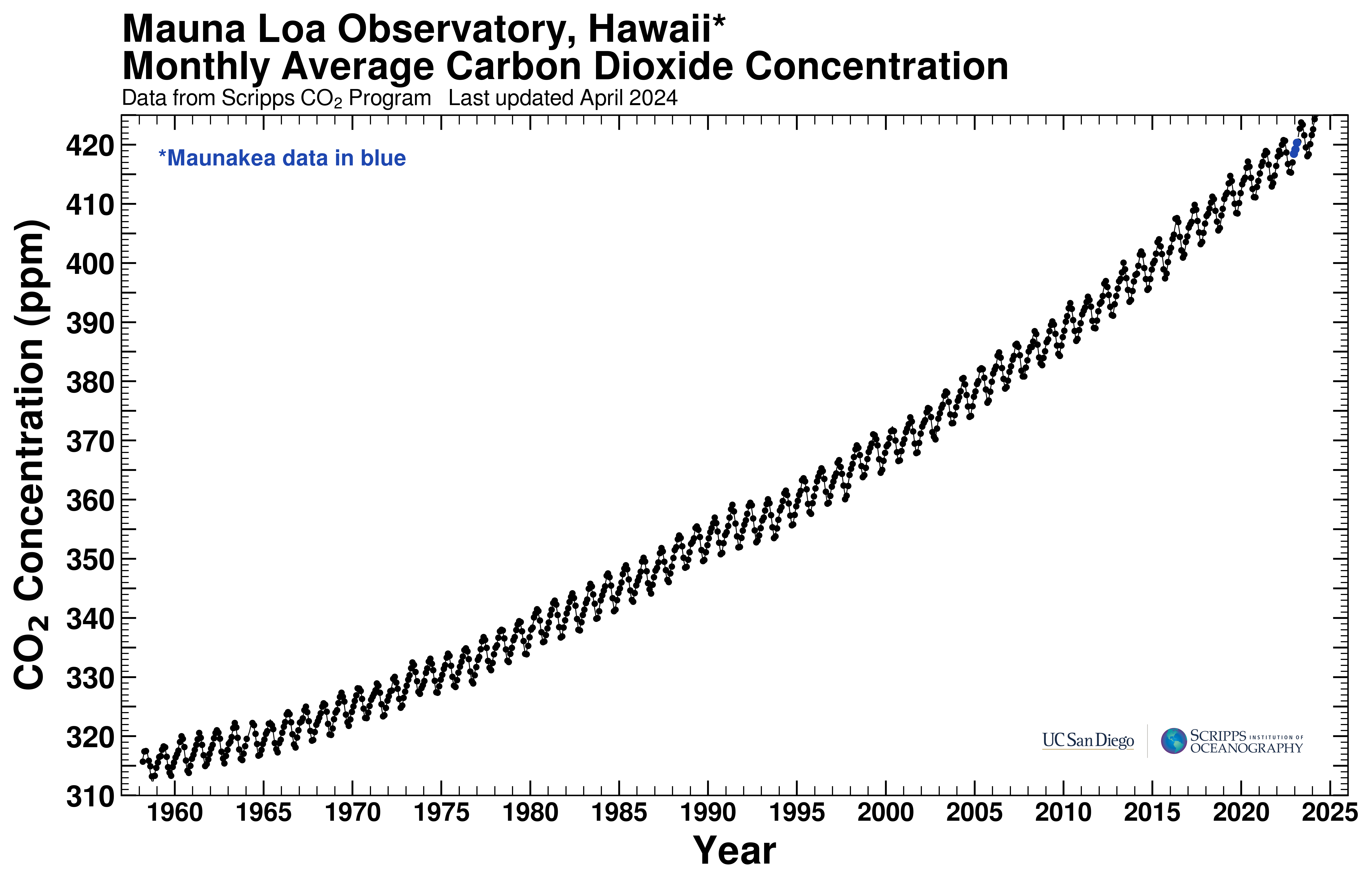
Measurements from the Mauna Loa Observatory show atmospheric CO2 exceeding 420 parts per million. Ice core data from Antarctica confirms that concentrations have not been this high for tens of thousands of years.
The last time CO2 approached similar levels, sea levels were several meters higher and global temperatures were significantly warmer. However, the critical difference today is speed. Human driven emissions from fossil fuels, deforestation, and industrial agriculture have elevated greenhouse gas concentrations within just two centuries.
Mechanisms Driving Rapid Warming
The greenhouse effect traps outgoing infrared radiation. As CO2, methane, and nitrous oxide accumulate, the energy imbalance increases. Consequently, global average temperatures have risen approximately 1.2 degrees Celsius above preindustrial levels.
This warming intensifies:
- Extreme heat events
- Heavy precipitation and flooding
- Marine heatwaves
- Glacial retreat
- Ocean acidification
The 50,000 year benchmark underscores that current warming is not cyclical variability. It is a structural shift in Earth’s climate system.
COP28 Climate Change Negotiations: What Was at Stake
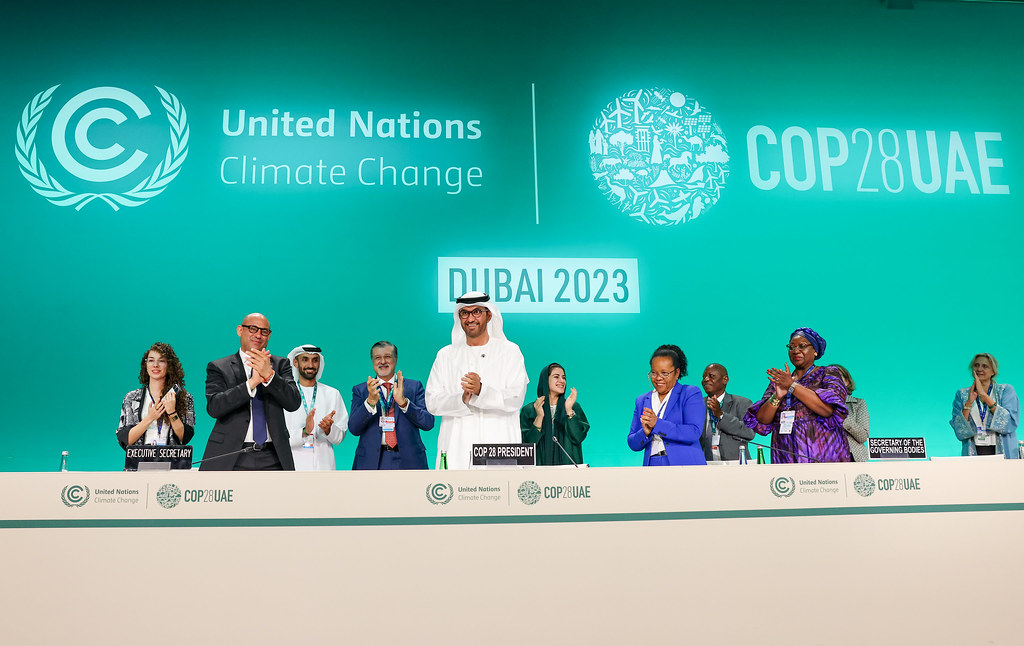
COP28, hosted in Dubai and convened under the United Nations Framework Convention on Climate Change, occurred during record global temperatures.
The Global Stocktake
A central feature of COP28 climate change discussions was the first Global Stocktake under the Paris Agreement.
The assessment revealed:
- Emissions are not declining fast enough
- Current pledges align with approximately 2.5 to 2.9 degrees Celsius warming
- Adaptation finance remains severely underfunded
Therefore, the summit’s credibility hinged on acknowledging fossil fuel dependency and accelerating clean energy transitions.
Fossil Fuel Language Breakthrough
For the first time in COP history, countries agreed on language calling for a transition away from fossil fuels in energy systems. While not legally binding, this signal affects capital flows and national energy strategies.
Investors monitor COP28 climate change commitments because policy direction shapes infrastructure spending, renewable deployment, and carbon pricing frameworks.
Environmental and Economic Impacts of the 50,000 Year CO2 Reality
Climate System Feedback Loops
Higher CO2 concentrations increase the likelihood of crossing tipping points, including:
- Greenland ice sheet destabilization
- Amazon rainforest dieback
- Permafrost thaw releasing methane
If triggered, these feedback loops amplify warming independently of future human emissions.
Economic Exposure
Climate risk is no longer abstract. It manifests in:
- Agricultural yield volatility
- Insurance losses from extreme weather
- Infrastructure damage
- Supply chain disruptions
The World Bank estimates that climate change could push over 100 million people into extreme poverty by 2030 without decisive mitigation and adaptation.
Energy Market Transition
COP28 climate change outcomes influence:
- Renewable energy investment
- Grid modernization
- Hydrogen development
- Carbon capture deployment
According to the International Energy Agency, clean energy investment now exceeds fossil fuel investment in many regions. However, emerging economies still struggle to access affordable finance.
Real World Applications and Policy Shifts
Renewable Energy Scaling
Countries such as Germany and China have accelerated solar and wind installations. Rapid cost declines in photovoltaic modules and battery storage are reshaping electricity markets.
At COP28, over 100 countries supported a goal to triple global renewable capacity by 2030. If implemented, this could significantly reduce coal and gas dependency.
Loss and Damage Funding
A major breakthrough involved operationalizing a Loss and Damage Fund to support vulnerable nations facing climate impacts. Small island states and least developed countries have long advocated for this mechanism.
Although initial pledges were modest relative to need, the political recognition of climate related losses marks progress in climate justice discourse.
Corporate Climate Disclosure
Financial regulators are increasingly mandating climate risk disclosure. Companies must assess physical and transition risks. Consequently, COP28 climate change negotiations reinforce market signals favoring decarbonization.
Challenges and Barriers
Fossil Fuel Dependence
Many economies rely heavily on oil, gas, or coal revenues. Transitioning away from these fuels raises employment and fiscal stability concerns.
Financing Gap
Developing countries require trillions of dollars annually for mitigation and adaptation. However, concessional finance remains insufficient. Debt burdens further constrain climate investment.
Political Resistance
Short election cycles often discourage long term climate commitments. Additionally, misinformation and lobbying can slow legislative action.
Technology and Infrastructure Constraints
Renewable energy integration requires:
- Grid expansion
- Storage solutions
- Transmission infrastructure
- Skilled workforce training
Without systemic planning, rapid deployment faces bottlenecks.
Solutions and Strategic Pathways After COP28 Climate Change Commitments
Accelerate Clean Energy Deployment
Governments should:
- Remove fossil fuel subsidies
- Implement carbon pricing mechanisms
- Streamline renewable permitting
- Invest in grid modernization
Policy certainty lowers investment risk and attracts private capital.
Scale Climate Finance
Multilateral development banks must reform lending structures to reduce borrowing costs for vulnerable nations. Blended finance models can leverage private investment for large scale renewable and adaptation projects.
Protect Natural Carbon Sinks
Forests, wetlands, and oceans absorb significant CO2. Therefore, land use policy must prioritize:
- Reforestation
- Sustainable agriculture
- Mangrove restoration
- Marine conservation
Nature based solutions complement technological mitigation pathways.
Strengthen Adaptation Strategies
Even if emissions decline rapidly, some warming is locked in. Cities and regions should:
- Upgrade flood defenses
- Improve heat resilient urban design
- Diversify crops
- Expand early warning systems
Adaptation reduces economic losses and protects vulnerable populations.
Frequently Asked Questions
What makes COP28 climate change negotiations different from previous COP meetings?
COP28 included the first Global Stocktake under the Paris Agreement and explicitly referenced transitioning away from fossil fuels. This language signals stronger policy direction.
Why is the 50,000 year CO2 level significant?
Ice core records show that current atmospheric CO2 concentrations exceed natural variability over tens of thousands of years. This indicates an unprecedented human driven climate shift.
Will COP28 climate change agreements limit warming to 1.5 degrees Celsius?
Current national commitments remain insufficient. However, stronger implementation and updated pledges could narrow the emissions gap.
How can individuals contribute after COP28?
Individuals can reduce energy consumption, support renewable energy adoption, advocate for science based policies, and align investments with low carbon strategies. Collective action amplifies policy impact.
Conclusion
COP28 climate change negotiations occurred at a pivotal moment in Earth’s climatic history. Atmospheric CO2 levels now reflect conditions unseen for at least 50,000 years. This reality demands systemic transformation across energy, finance, agriculture, and infrastructure.
The summit signaled progress, particularly in acknowledging fossil fuel transition and climate finance reform. Yet commitments must translate into rapid emissions reductions this decade.
For policymakers, investors, and citizens, the message is clear. The 50,000 year benchmark is not symbolic. It is a measurable warning.
Turning COP28 climate change pledges into action requires immediate implementation, sustained political will, and coordinated global investment. The next decade will determine whether humanity stabilizes the climate or locks in irreversible impacts.
The window for effective intervention remains open, but it is narrowing.