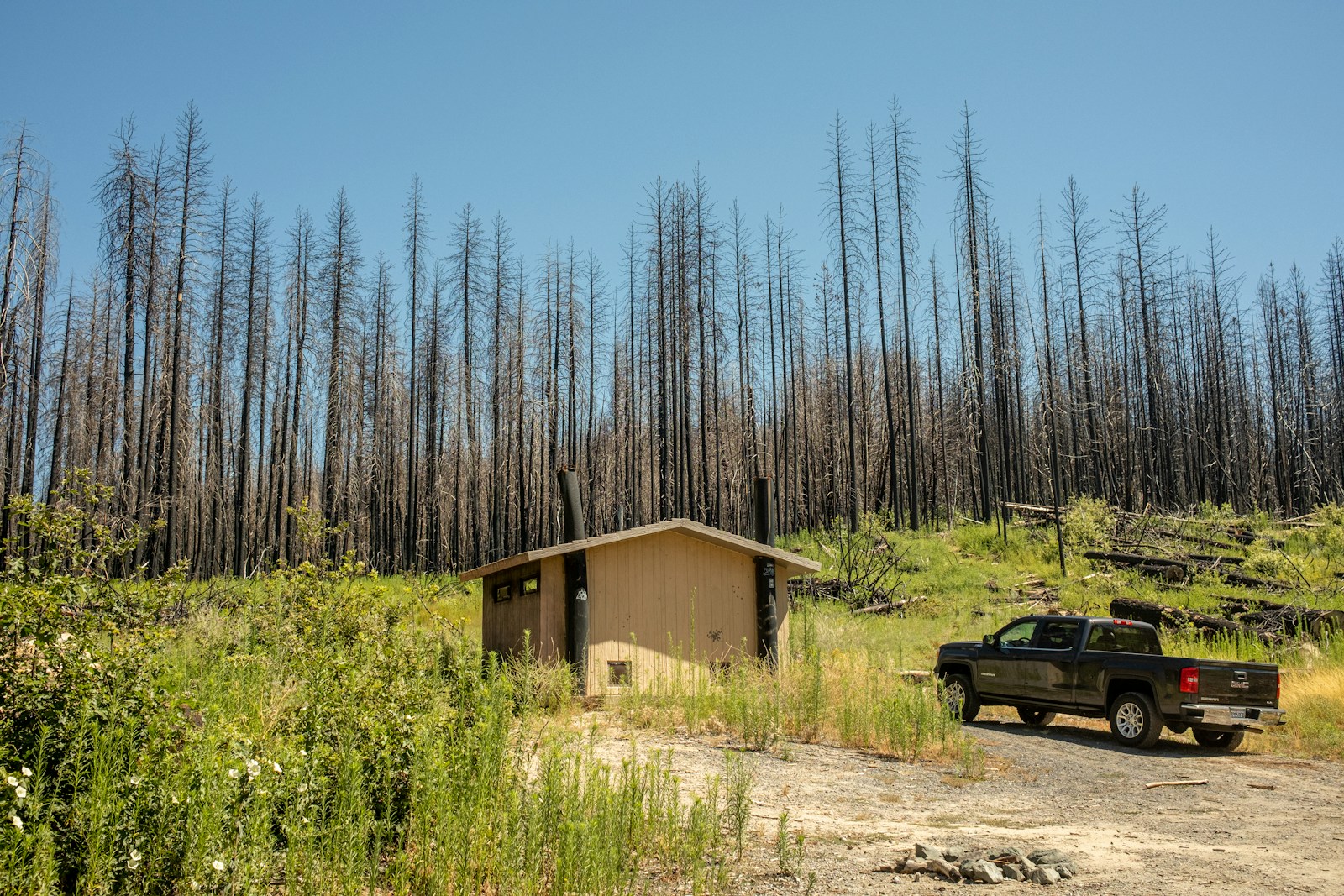
Wildfires have become one of the most devastating forces reshaping American communities. From the charred hillsides of California to the scorched forests of Colorado and Montana, post-wildfire rebuilding is no longer a rare event — it is an ongoing crisis demanding smarter, more resilient approaches. In 2023 alone, wildfires burned more than 2.7 million acres across the United States, destroying thousands of homes and costing billions in recovery. The question facing survivors, planners, and policymakers is no longer just “how do we rebuild?” but “how do we rebuild so this never happens the same way again?”
Why Traditional Rebuilding Methods Are Failing
For decades, post-wildfire reconstruction followed a simple script: clear the debris, pour new foundations, frame the same wood-frame structures, and move on. But this approach is costing lives and money at an accelerating pace. FEMA estimates that for every dollar invested in disaster-resilient construction, communities save an average of $6 in future disaster costs. Yet most post-wildfire rebuilding in the US still defaults to conventional building codes that offer minimal fire resistance.
California’s 2018 Camp Fire — which destroyed Paradise and killed 85 people — exposed a critical gap: homes built to standard codes were almost universally destroyed, while the handful of structures that survived shared a common thread of fire-resistant features. The scientific evidence is now overwhelming: standard wood-frame construction in a wildfire interface zone is not rebuilding — it is scheduling the next disaster.
Fire-Resistant Building Materials: The Science Behind Survival
Modern fire-resistant construction relies on a combination of materials that limit ignition and slow flame spread. Understanding these materials is essential for any post-wildfire rebuilding effort targeting long-term resilience:
- Fiber cement siding: Products like James Hardie Board offer Class A fire ratings and resist ignition from both direct flames and radiant heat. Unlike vinyl siding, which melts and spreads fire, fiber cement maintains structural integrity under intense heat.
- Metal roofing: Class A rated standing seam metal roofs can withstand burning ember exposure for up to two hours — the critical window when most homes ignite. The National Fire Protection Association (NFPA) reports that roof and attic ignition from embers is responsible for over 90% of home losses in wildland-urban interface fires.
- Tempered glass windows: Double-pane tempered glass resists radiant heat that can shatter standard windows, which then allows flames and embers to enter. Multi-pane windows with air gaps provide additional insulation against extreme temperatures.
- Concrete and masonry walls: Insulated concrete form (ICF) construction offers exceptional fire resistance, with concrete walls capable of withstanding temperatures exceeding 1,700°F without structural failure.
- Ember-resistant vents: The NFPA’s Firewise program specifically identifies vents as a critical vulnerability. 1/16-inch mesh ember-resistant vents — now required in many California fire zones — block the burning embers that penetrate attic spaces and ignite homes from within.
The University of California Fire Research Institute has documented that homes built with the full suite of fire-resistant features are 40-60% more likely to survive a wildfire than conventionally constructed neighbors, even in the same fire event. This is not marginal improvement — it is the difference between a neighborhood and a ruin.
Defensible Space: Fire-Resistant Landscaping That Works
No structure can be made fully fireproof if it sits within a sea of combustible vegetation. Creating and maintaining defensible space — the buffer zone between a structure and the surrounding landscape — is one of the most effective strategies in wildfire risk reduction.
California’s fire code establishes a three-zone approach that has become a national model:
- Zone 0 (0-5 feet from structure): The “ember-resistant zone” — noncombustible materials only: gravel, concrete, stone pavers. No mulch, no wood, no combustible plants. This is the highest-priority zone because embers landing here can ignite a home even without direct flame contact.
- Zone 1 (5-30 feet from structure): The “lean, clean, and green” zone — irrigated plants with high moisture content, widely spaced trees with branches pruned at least 6 feet from the ground, no ladder fuels connecting ground-level vegetation to tree canopies.
- Zone 2 (30-100 feet from structure): The “reduced fuel” zone — vegetation thinned to interrupt fire spread, dead plants and debris removed seasonally, grass kept short and irrigated where possible.
Research by the Insurance Institute for Business & Home Safety (IBHS) found that homes with proper Zone 0 compliance were 75% more likely to survive wildfire exposure than homes without it. Yet surveys of wildfire-prone communities consistently show that fewer than 30% of homeowners maintain all three zones to recommended standards.
Fire-resistant native plants are increasingly popular in Western communities. Species like California fescue, ceanothus (properly pruned), and native bunch grasses have lower oil content and higher moisture retention than invasive species like cheatgrass, which can carry fire across entire hillsides. Consulting with a fire-safe landscaping specialist before replanting after a fire is now strongly recommended by the NFPA’s Firewise USA program.
State Regulations: California, Colorado, and Montana
Post-fire rebuilding regulations vary significantly by state, and understanding local requirements is essential before breaking ground.
California has the most comprehensive wildfire building code in the nation. Following the 2017-2018 fire seasons, California’s Building Code Chapter 7A (now adopted statewide for high fire hazard severity zones) requires fire-resistant exterior wall assemblies, roof assemblies with Class A ratings, multi-pane windows, and ember-resistant vents for all new construction and substantial renovation in designated zones. The Office of the State Fire Marshal maintains the Wildland-Urban Interface (WUI) map that designates these areas.
Colorado passed HB22-1011 (the “Better Building Codes” bill) in 2022, allowing counties to adopt stronger wildfire building codes than state minimums. Summit, Jefferson, and Boulder Counties have led the way with requirements that mirror California’s Chapter 7A standards. However, adoption remains inconsistent — many rural Colorado counties still use outdated codes, leaving rebuilt homes vulnerable to future fires.
Montana enacted the Montana Wildfire Mitigation Act in 2021, creating a statewide grant program for defensible space creation and establishing fire-resistant construction guidelines for state-funded projects. Private rebuilding standards remain largely voluntary, though Ravalli and Flathead Counties have adopted local WUI codes following destructive fire seasons.
Community Wildfire Protection Plans (CWPs)
Individual resilient homes are only as strong as the communities around them. A Community Wildfire Protection Plan (CWPP) is a science-based, community-driven document that identifies local wildfire risks, prioritizes fuel reduction projects, and coordinates response across property owners, local governments, and federal agencies.
The Healthy Forests Restoration Act of 2003 established CWPPs as the primary mechanism for community-scale wildfire planning. As of 2024, more than 9,700 CWPPs have been developed across 46 states. Communities with active CWPPs are given priority consideration for FEMA and USDA Forest Service fuel reduction funding.
A well-constructed CWPP includes:
- Wildfire risk assessment mapping the highest-priority hazard areas
- Community-wide fuel reduction project priorities
- Evacuation route analysis and improvements
- Structure ignitability assessments
- Public education and outreach programs
- Specific recommendations for building code adoption
The Ashland, Oregon CWPP is frequently cited as a model program. Following its adoption and implementation, Ashland’s community structure survival rate in the 2020 Almeda Drive Fire was significantly higher than neighboring communities without a CWPP. The investment in planning paid dividends when fire conditions were worst.
The Wildfire Insurance Crisis: A Rebuilding Obstacle
One of the least-discussed but most significant barriers to sustainable post-wildfire rebuilding is the ongoing collapse of the wildfire insurance market. In 2023, State Farm and Allstate both announced they would no longer write new homeowner policies in California. Farmers Insurance reduced its California exposure by 100,000 policies. Seven of the 12 largest insurers in the state have limited or paused writing new policies in high-risk areas.
The financial mathematics are stark. California’s FAIR Plan — the state’s insurer of last resort — saw its policy count jump from 200,000 in 2018 to over 400,000 in 2023. Average FAIR Plan premiums in high-risk zones now exceed $3,000 annually, compared to $1,200-1,500 for standard market coverage. In some mountain communities, homeowners are being quoted $8,000-12,000 annually — or being declined entirely.
Survivors trying to rebuild face a compounding crisis: their home was destroyed, their insurer has left the market, and they cannot obtain coverage for a rebuilt structure at any reasonable price. This dynamic is driving what researchers are calling “managed retreat” — communities that simply cannot financially recover and rebuild, leading to depopulation of entire wildfire-vulnerable regions.
Solutions being explored include state-backed reinsurance pools, mandatory coverage requirements tied to defensible space compliance, and IBHS’s new FORTIFIED Home standard, which several insurers now use as a basis for reduced premiums in states that have adopted it, including Colorado and Montana.
Federal Funding: FEMA BRIC and Beyond
Federal programs offer meaningful financial support for communities rebuilding after wildfires, but navigating the landscape requires preparation.
FEMA’s Building Resilient Infrastructure and Communities (BRIC) grant program is the primary federal mechanism for pre-disaster hazard mitigation, including wildfire risk reduction. BRIC awarded over $2.3 billion in its fiscal year 2023 funding cycle, with wildfire mitigation projects among the highest-scoring categories. Eligible activities include fuel reduction projects, home hardening programs, early warning systems, and community education campaigns. Applications are submitted through State Hazard Mitigation Officers, and communities with approved CWPPs receive priority consideration.
FEMA’s Hazard Mitigation Grant Program (HMGP) provides post-disaster funding for long-term risk reduction. Following a presidential disaster declaration, HMGP makes available 15% of total FEMA disaster assistance for mitigation projects — meaning that large wildfire disasters generate significant mitigation funding for the affected communities.
USDA Forest Service Community Wildfire Defense Grants, established under the Infrastructure Investment and Jobs Act (2021), specifically target at-risk communities and Tribes for CWPP development and implementation. The program awarded $360 million in its first two funding cycles and is expected to continue through at least 2026.
HUD’s Community Development Block Grant — Disaster Recovery (CDBG-DR) provides flexible funding for long-term community recovery from presidentially declared disasters, including wildfire events. CDBG-DR funds can be used for housing reconstruction, infrastructure repair, and economic development in affected communities.
Indigenous and Traditional Ecological Knowledge in Wildfire Recovery
One of the most important — and most underutilized — resources in sustainable post-wildfire rebuilding is Indigenous ecological knowledge. Many Indigenous communities across the Western US have managed fire as a landscape tool for thousands of years. Prescribed burning, also called cultural burning, is now being integrated into state and federal wildfire management programs after decades of suppression.
The Karuk and Yurok Tribes of Northern California have been at the forefront of advocating for reintegration of traditional burning into landscape management. Research published in the journal Ecology and Society found that areas managed with traditional burning practices showed significantly lower fire intensity when wildfires did occur, and recovered more quickly afterward due to the presence of fire-adapted plant communities.
California’s AB 642 (2021) and AB 332 (2023) have streamlined permits for prescribed burning, including cultural burns led by Tribal Nations. This represents a significant shift in approach — from purely suppression-based management to integration of traditional ecological knowledge into state fire policy.
The Mental Health Dimension of Post-Wildfire Recovery
Sustainable rebuilding extends beyond bricks and mortar. Research from the University of California, Davis found that wildfire survivors experience rates of PTSD, depression, and anxiety comparable to combat veterans and hurricane survivors. In communities where wildfires have occurred multiple times — a pattern becoming increasingly common in the Sierra Nevada foothills and the Colorado Front Range — cumulative trauma compounds recovery challenges.
FEMA’s Individual Assistance program includes Crisis Counseling Program (CCP) grants to support states in providing free mental health services to survivors. Effective post-fire recovery planning now incorporates community mental health support from the earliest stages — including peer support programs, community resilience workshops, and integration of mental health professionals in rebuilding assistance centers.
Looking Forward: The Rebuild-Smarter Movement
A growing coalition of architects, planners, community organizers, and fire scientists is advancing what they call the “Rebuild Smarter” movement — a framework that uses post-wildfire rebuilding as an opportunity for comprehensive community resilience upgrades rather than simple replacement of what was lost.
Key principles of the Rebuild Smarter approach include:
- Right-sizing communities: In the highest-risk areas, voluntary buyout programs allow the most vulnerable structures to be replaced with open space, parks, or fire buffers rather than rebuilt homes
- Community-wide retrofitting programs: Coordinated neighborhood home hardening programs — where an entire block or subdivision upgrades together — achieve greater resilience and cost savings than individual retrofits
- Green infrastructure integration: Using post-fire landscape recovery to integrate stormwater management, habitat restoration, and carbon sequestration alongside wildfire risk reduction
- Net-zero rebuild standards: Several post-fire communities are piloting net-zero energy rebuild standards, combining fire-resistant materials with high-efficiency insulation, solar panels, and battery storage — reducing both fire risk and carbon footprint simultaneously
Paradise, California — the town destroyed in the 2018 Camp Fire — has become a national case study in post-wildfire rebuilding. The community adopted one of the strongest WUI building codes in the nation for new construction, established a comprehensive CWPP, and integrated mental health recovery into its official rebuilding plan. As of 2024, approximately 2,500 homes have been rebuilt to the new fire-resistant standards, and the community is on a long path back — but it is a path designed to be survivable the next time fire threatens.
The lesson from Paradise, and from every wildfire-affected community across the American West, is that the decisions made in the months immediately following a fire shape community resilience for generations. Rebuilding sustainably is not more expensive in the long run — it is far less costly than rebuilding the same structure twice.
For more on the climate forces driving increasing wildfire risk, read our coverage of the US National Parks Climate Crisis and the expanding public health emergency from wildfire smoke. Understanding the full scope of wildfire’s impact — from the emergency phase through long-term recovery — is essential for communities across the western United States preparing for an era of more frequent and more intense fire seasons.
Water Footprint Impact Calculator
Measure direct and virtual water consumption across household, agricultural, and industrial supply chains against regional watershed stress metrics.
Calculate Water Footprint →