Climate Change and Heavy Snow: 5 Shocking Truths
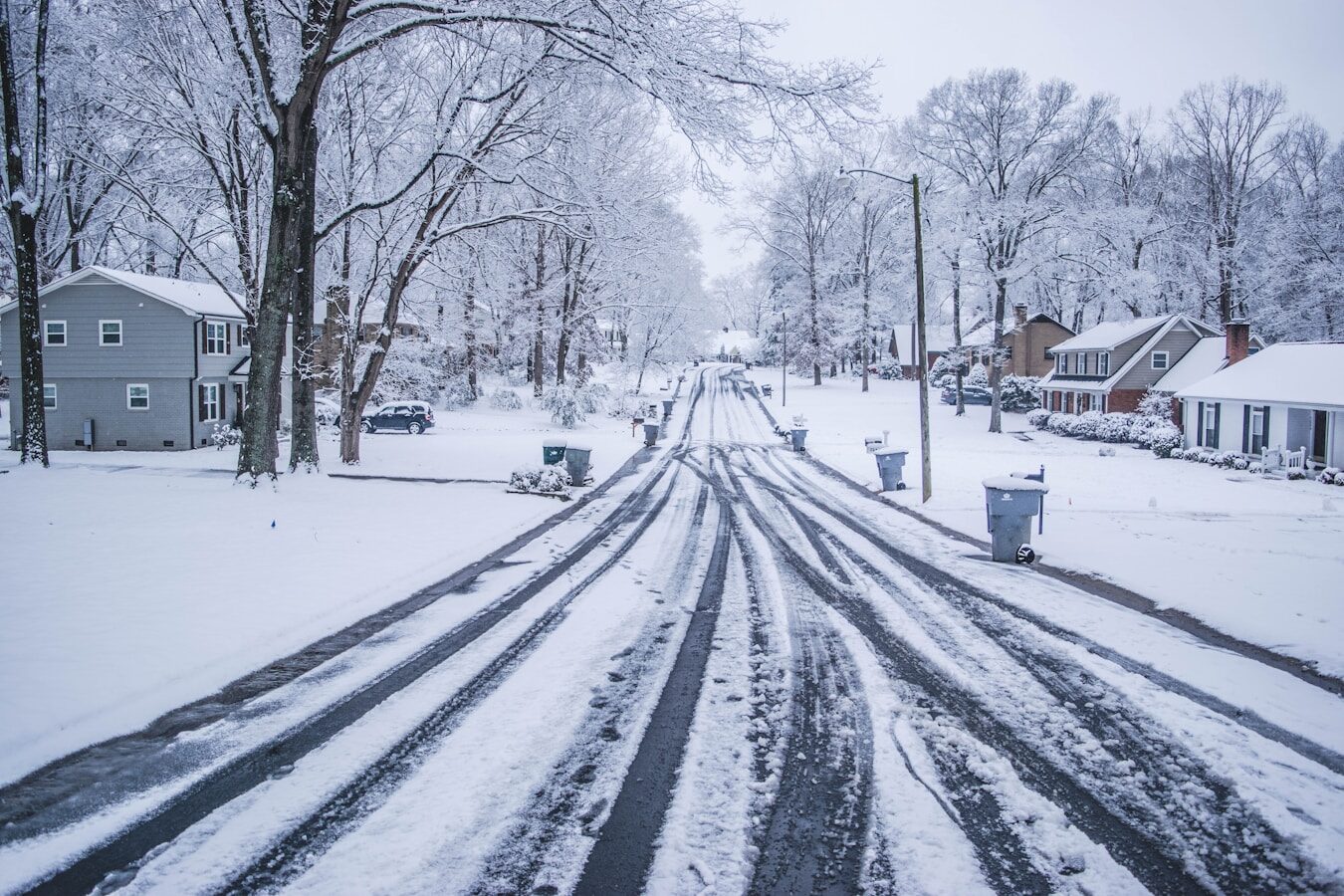
The intricate relationship between climate change and heavy snow remains one of the most misunderstood ecological phenomena of the modern era. When a historic blizzard paralyzes a region, contrarians rapidly point to the localized ice and freezing temperatures as undeniable proof that the Earth is not actually warming. However, from an ecological economics and atmospheric physics standpoint, rising baseline global temperatures are precisely what engineer these catastrophic winter extremes. This phenomenon is known as the Polar Vortex Paradox.
Far from a contradiction, the escalation of severe winter storms is a direct mechanical output of a destabilized atmospheric system. As global oceanic and atmospheric heat content reaches unprecedented thresholds, the delicate balance of high-altitude jet streams is fracturing, turning what used to be a stable Arctic freeze into a volatile global threat.
Table of Contents
The Mechanics Behind Climate Change and Heavy Snow
To decode why a warming planet weaponizes winter, we must first examine the stratospheric polar vortex. This massive three-dimensional ring of frigid, high-speed winds circles the North Pole, functioning as an atmospheric fence. When the global climate system operates under historical norms, this vortex is tight, fast, and stable, effectively trapping the coldest air masses far away from mid-latitude population centers.
However, the systemic stress introduced by escalating marine heatwaves and excess atmospheric carbon fundamentally alters thermodynamic boundaries. As the equatorial oceans absorb massive quantities of thermal energy, the temperature gradient between the equator and the poles begins to flatten, which fundamentally weakens the jet stream.
Arctic Amplification: The Catalyst of Collapse
The Arctic is currently warming nearly four times faster than the global average, a critical feedback loop known as Arctic Amplification (National Oceanic and Atmospheric Administration [NOAA], 2025). As reflective sea ice melts into dark, heat-absorbing ocean water, the thermal profile of the northern hemisphere shifts dramatically. This excess localized heat forces its way upward into the stratosphere, triggering Sudden Stratospheric Warming (SSW) events.
During an SSW, the polar vortex stretches, wobbles, or completely splinters. Billions of tons of sub-zero Arctic air are displaced, spilling southward deep into North America, Europe, and Asia. This is why localized extreme cold fronts do not disprove a warming baseline; they are the fatalistic symptom of a broken planetary cooling system.
Atmospheric Moisture and the Disrupted Water Cycle
While the shattered vortex delivers the freezing air, the warming atmosphere delivers the moisture required for historic blizzards. According to the Clausius-Clapeyron relation, the atmosphere can hold approximately 7% more water vapor for every 1°C increase in temperature (Intergovernmental Panel on Climate Change [IPCC], 2023). A warmer global baseline fundamentally accelerates evaporation rates across oceans and lakes.
When the rogue, frigid Arctic air collides with this highly saturated, warmer air, the resulting condensation does not fall as rain—it falls as record-shattering, dense snow. This interaction represents a severe disruption of the global water cycle, where precipitation patterns become dangerously concentrated and violently deployed.
Data Analysis: The Rise of Vortex Destabilization
The correlation between warming trends and vortex collapse is visible in multi-decadal atmospheric tracking. As baseline heat rises, the structural integrity of the polar winds rapidly decays.
| Decade | Recorded Major SSW Events | Severe Snowfall Anomalies (Northern Hemisphere) | Average Arctic Temp Anomaly (°C) |
|---|---|---|---|
| 1990–1999 | 6 | 14 | +0.4 |
| 2000–2009 | 9 | 22 | +1.1 |
| 2010–2019 | 14 | 35 | +1.8 |
| 2020–2025 (Projected Pace) | 11 | 28 | +2.4 |
The Contrarian Gap: Local Weather vs. Global Climate
A prevalent contrarian gap in mainstream climate discourse is the conflation of local weather events with global climate baselines. The presence of snow in Texas or blizzards in Spain is frequently weaponized to mock systemic climate models. However, predictive modeling has long warned of this exact outcome. The global climate is an interconnected fluid dynamics engine; injecting massive amounts of thermal energy into a closed system does not create uniform warmth. It creates aggressive volatility.
Predictive Insight for 2026 and Beyond: Moving forward, ecological economists warn that this volatility will target critical infrastructure. Power grids designed for localized historical baselines will face an exponential risk of catastrophic collapse as anomalous Arctic air plunges further south than engineered tolerances allow. The financial shockwaves of these unseasonal freezes will severely disrupt global agricultural yields, specifically early-spring planting cycles.
Actionable Intelligence: Systems-Level Responses
Understanding the science is only the first step. To mitigate the systemic impacts of this climate paradox, institutional and personal resilience must pivot toward volatility management:
- Winterize Vulnerable Infrastructure: Municipalities and private energy sectors must retrofit power grids and water routing systems to withstand sudden, 40-degree temperature drops, abandoning historical weather baselines for future predictive extremes.
- Accelerate Agricultural Contingencies: Precision agriculture frameworks must immediately integrate predictive SSW models, allowing farmers to delay planting or deploy crop-protection thermodynamics ahead of late-season Arctic spills.
- Audit Systemic Impact: Citizens and corporations must move beyond superficial sustainability efforts by aggressively reducing personal carbon footprints through systemic electrification, ultimately lowering the thermal stress applied to the polar vortex.