

Life Cycle Assessments Explained: The Scientific Method for Measuring True Sustainability
Introduction
Evaluating the true environmental impact of a product requires rigorous scientific methodology. Without standardized measurement, corporate sustainability claims often default to deceptive marketing. A life cycle assessment provides the necessary empirical framework to quantify ecological footprints accurately. This methodology tracks material inputs and emissions from resource extraction through final disposal.
Understanding this process is critical for policymakers, investors, and environmentally conscious consumers. Evaluating single attributes like recyclability often ignores massive energy consumption during manufacturing. Therefore, implementing comprehensive assessments prevents greenwashing and drives authentic ecological innovation. The following analysis explores the scientific foundation, economic impacts, and practical applications of this critical sustainability tool.
Table of Contents
Key Concepts and Scientific Foundation
A life cycle assessment operates on the principle of comprehensive environmental accounting. It prevents organizations from shifting environmental burdens from one stage of production to another.
Defining the Methodology
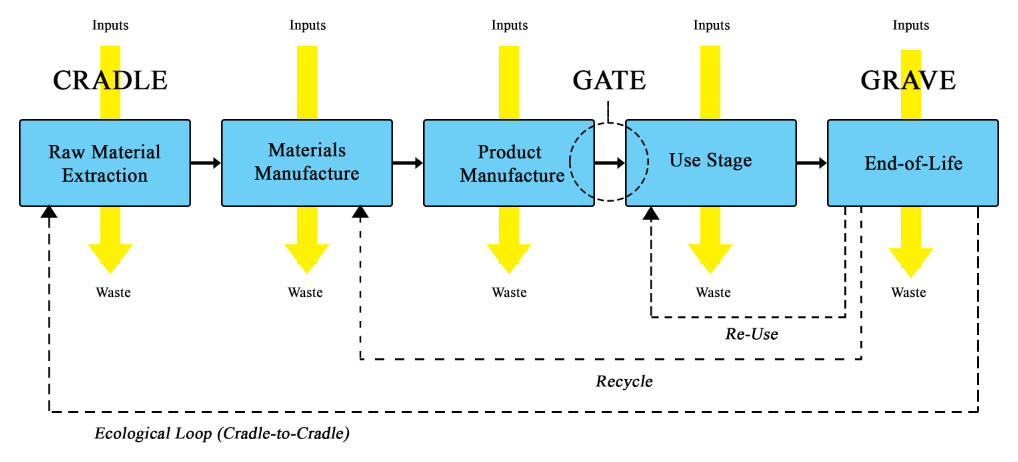
The International Organization for Standardization outlines the specific framework for these evaluations under ISO 14040. The process requires defining precise system boundaries. These boundaries determine which processes are included in the analysis. A “cradle-to-grave” analysis encompasses raw material extraction, manufacturing, distribution, consumer use, and end-of-life disposal. Alternatively, a “cradle-to-cradle” approach specifically models systems where waste materials become inputs for new products.
Mechanisms of Evaluation
The methodology relies on four distinct mechanisms. First, goal and scope definition establishes the boundaries and functional units of the study. Second, inventory analysis quantifies all energy inputs, water usage, and chemical emissions. Third, impact assessment translates these raw data points into specific ecological consequences like global warming potential or ocean acidification. Finally, interpretation involves analyzing the results to make informed, data-driven decisions.
Systems and Data Intersections
Executing a life cycle assessment requires complex global supply chain data. Analysts must track the electrical grids powering factories in different countries. Furthermore, they must calculate the precise fuel consumption of international shipping routes. Consequently, this scientific method connects industrial engineering metrics directly to atmospheric and marine science data.
Environmental and Economic Impacts
Implementing rigorous environmental accounting generates profound ecological and financial consequences. The data fundamentally alters how governments regulate industries and how corporations allocate capital.
Ecological Consequences
Accurate ecological accounting prevents well-intentioned but destructive design choices. For example, replacing plastic packaging with heavy glass can drastically increase greenhouse gas emissions due to transportation weight. A life cycle assessment identifies these hidden ecological trade-offs. Consequently, designers can target the specific supply chain stages responsible for the highest emissions and resource depletion.
Financial Implications
Optimizing product life cycles delivers substantial economic benefits. Identifying energy inefficiencies directly reduces manufacturing and transportation costs. Moreover, companies utilizing verified data can easily comply with emerging carbon taxation policies. Investors also rely on this data to accurately price climate risk within their portfolios.
Global Market Standardization
Standardized environmental metrics create fair market competition. When regulations mandate transparent reporting, companies can no longer compete using deceptive greenwashing tactics. Genuine sustainability leaders gain a competitive advantage. Furthermore, regional governments use this data to establish baseline criteria for green public procurement contracts.
Real World Case Studies and Applications
Practical applications of this scientific method reveal surprising insights across major global industries. Evidence-based analysis frequently contradicts popular consumer assumptions.
Electric Vehicle Battery Production
The automotive transition heavily relies on life cycle assessment data. Critics frequently argue that electric vehicle manufacturing generates more carbon than producing internal combustion engine vehicles. Rigorous assessments confirm that battery manufacturing is highly energy-intensive. However, the data proves that over the total lifespan of the vehicle, electric cars generate significantly fewer absolute emissions, especially when charged via renewable grids.
Agricultural Systems and Diet
Food production systems are prime candidates for this type of evaluation. Assessments comparing beef production to plant-based protein alternatives reveal massive disparities in land use, water consumption, and methane emissions. Policymakers use this data to design agricultural subsidies that incentivize lower-impact farming techniques.
Sustainable Packaging Innovations
The consumer goods sector actively applies this methodology to packaging design. A prominent beverage company recently utilized an assessment to compare aluminum cans, glass bottles, and recycled plastics. The scientific data revealed that transportation distances and regional recycling infrastructure drastically altered the most sustainable choice. As a result, the company optimized its packaging materials based on specific geographic markets rather than a universal standard.
Challenges and Barriers
Despite its scientific rigor, widespread adoption of comprehensive environmental accounting faces significant structural and technical hurdles.
Technical Data Gaps
The primary technical challenge involves securing accurate primary data. Opaque global supply chains often obscure the exact origin of raw materials. Consequently, analysts must rely on secondary industry averages. This reliance on proxy data can introduce significant margins of error into the final impact assessment.
Boundary Manipulation
Organizations can exploit system boundaries to artificially improve their results. A company might exclude the consumer use phase of a high-energy appliance to present a lower overall carbon footprint. This manipulation represents a sophisticated form of corporate greenwashing that requires expert auditing to detect.
Economic and Resource Barriers
Conducting a thorough life cycle assessment is expensive and highly time-consuming. Small and medium enterprises frequently lack the financial resources or specialized personnel required to execute these studies. Therefore, cost barriers prevent widespread standardization across smaller manufacturing sectors.
Solutions and Strategic Pathways
Accelerating the adoption of rigorous environmental measurement requires coordinated action to improve data access and enforce transparency.
Policy Reform and Mandates
Governments must mandate Environmental Product Declarations for heavy industries like construction and manufacturing. These declarations are standardized documents based directly on life cycle assessment data. The European Union is currently leading this transition by integrating these requirements into the Ecodesign for Sustainable Products Regulation.
Open Source Data Integration
Democratizing access to supply chain data is essential for widespread adoption. Scientific communities and governments should fund robust, open-source environmental databases. Providing free, high-quality inventory data drastically lowers the financial barrier for smaller companies to evaluate their own products.
Industry Transformation and AI
The integration of artificial intelligence is transforming the assessment process. Machine learning algorithms can rapidly process massive supply chain datasets to identify missing variables and optimize material choices in real time. Industry leaders must invest in these technologies to transition from static reports to dynamic, continuous environmental monitoring.
Frequently Asked Questions
What is the main purpose of a life cycle assessment?
The primary purpose is to scientifically quantify the total environmental impacts of a product, process, or service across its entire lifespan. This ensures that organizations make data-driven decisions to reduce resource consumption and pollution without simply shifting the damage to another stage of production.
What are the 4 main phases of a life cycle assessment?
The four standardized phases outlined by ISO 14040 are goal and scope definition, inventory analysis, impact assessment, and interpretation. These phases provide a consistent scientific framework for measuring complex environmental interactions.
How does a life cycle assessment prevent greenwashing?
It prevents greenwashing by requiring comprehensive data rather than isolated marketing claims. If a company claims a product is sustainable because it uses recycled plastic, the assessment will verify if the energy used to recycle that plastic actually offsets the benefits.
Why is cradle-to-grave different from cradle-to-cradle?
Cradle-to-grave evaluates a product from raw material extraction through to final disposal in a landfill. Cradle-to-cradle focuses on circular economy principles, designing products so that at the end of their useful life, their materials can be fully recycled or composted to create new products.
Conclusion
Transitioning to a resilient global economy requires replacing marketing narratives with rigorous scientific measurement. A life cycle assessment provides the definitive framework for understanding how human production systems interact with the natural world. By systematically tracking resource extraction, emissions, and waste, this methodology exposes inefficiencies and highlights genuine pathways for ecological restoration.
Overcoming the technical and economic barriers to widespread adoption requires decisive regulatory mandates and investments in open-source data infrastructure. Policymakers, industry leaders, and consumers must demand empirical evidence over superficial environmental claims. Ultimately, mandating transparent environmental accounting is an essential step toward preserving planetary boundaries and ensuring sustainable industrial design.