
The Anatomy of the 2027 Federal Science Budget Cuts
The scope of the proposed 2027 federal science budget cuts is staggering. While the administration emphasizes investments in defense, artificial intelligence, and quantum computing, environmental and basic sciences face an existential crisis. The reallocation of funds represents a fundamental pivot away from earth sciences.
The EPA faces a catastrophic reduction to $4.2 billion, crippling its ability to enforce environmental protections and monitor ecological health. Simultaneously, the NSF is slated to lose nearly 55% of its operating capital. This effectively suffocates basic research pathways that eventually lead to applied agricultural and climate solutions.
Furthermore, the National Oceanic and Atmospheric Administration (NOAA) would see its Office of Oceanic and Atmospheric Research entirely eliminated. This specific cut essentially blinds our meteorological infrastructure, stripping farmers and supply chain managers of the predictive climate data they rely on for survival.
Table of Contents
Summary of Proposed Agency Reductions
| Federal Agency | 2026 Budget (Billions USD) | 2027 Proposed (Billions USD) | Percentage Cut |
| National Science Foundation (NSF) | 8.8 | 4.0 | ~55% |
| Environmental Protection Agency (EPA) | 8.8 | 4.2 | ~52% |
| National Oceanic and Atmospheric Administration (NOAA) | 6.2 | 4.5 | ~27% |
| NASA (Overall) | 24.4 | 18.8 | ~23% |
| National Institutes of Health (NIH) | 47.2 | 41.3 | ~13% |
Data sourced from the White House Office of Management and Budget projections.

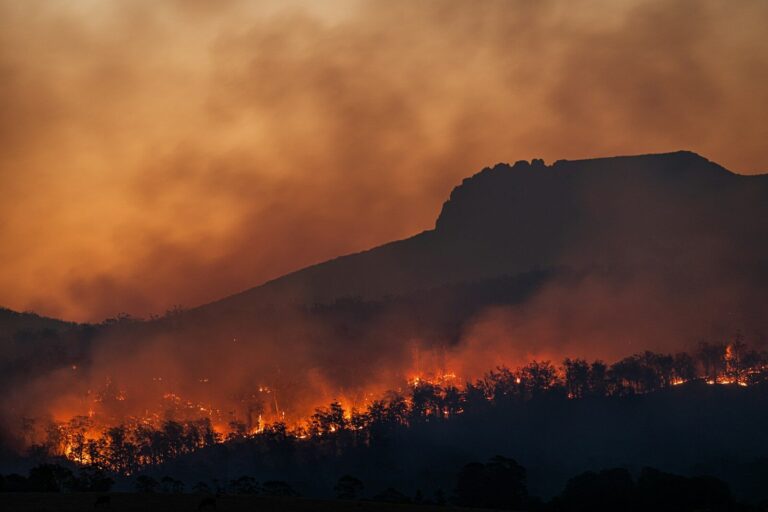
Extreme weather events are becoming harder to predict due to the 2027 federal science budget cuts. Robust Climate Policy is required to shield Agricultural Economics from unmitigated disaster.
Without NOAA’s advanced predictive models, farmers remain highly vulnerable to sudden, devastating weather events.
Bridging the Gap: Why Defunding Science Shocks Ecological Economics
To truly understand the severity of the 2027 federal science budget cuts, we must bridge the gap between abstract policy and tangible ecological economics. Federal science funding is not merely a subsidy for academics; it is the bedrock of risk management for the global food system.
Consider the elimination of NOAA’s oceanic research division. Oceans drive the world’s weather, dictating rainfall patterns, drought severity, and hurricane frequency. When we stop funding the science that maps oceanic temperature fluctuations, agricultural sectors lose their early warning systems.
This creates a chain reaction of economic degradation. Without accurate forecasting, crop yields plummet, food prices surge, and supply chain logistics fracture. You can read more about this interconnected vulnerability in our previous analysis.
The Hidden Costs of Ignoring Systemic Climate Patterns
Ecological economics teaches us that environmental health and financial stability are inextricably linked. By defunding the EPA and NSF, the administration is inadvertently transferring the financial burden of climate adaptation directly onto local municipalities and independent farmers.
When the government steps back from monitoring water quality or soil degradation, the costs of agricultural failure multiply. Basic science is the ultimate preventative medicine for a changing climate. Gutting this infrastructure does not save money; it simply delays the bill. Future generations will pay exponentially more to manage unmitigated ecological disasters that these foundational programs were designed to predict and prevent.
The Ripple Effect on Agriculture and Global Health
The 2027 federal science budget cuts go far beyond environmental monitoring; they actively target the intersection of human behavior and climate adaptation. The NSF’s proposed dissolution of the Social, Behavioral and Economic Sciences (SBE) directorate is a glaring example.
Climate change is not just an atmospheric issue; it is a profound human challenge. Adapting to shifting agricultural zones, managing water scarcity, and transitioning to sustainable energy all require an intimate understanding of behavioral economics.
By removing the social science component, policymakers are effectively driving blind. They are attempting to engineer climate solutions without understanding how human populations will react, adopt, or resist these necessary changes.
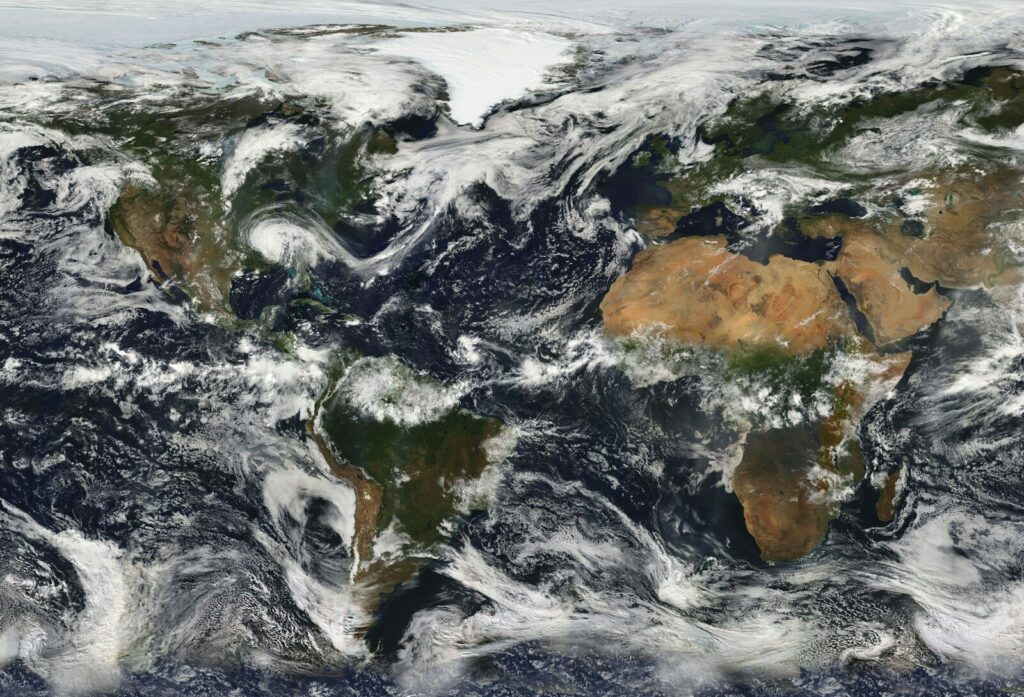
Restricted access to vital climate data is a severe consequence of the 2027 federal science budget cuts. Open communication is essential for the survival of Ecological Systems and modern Agricultural Economics.
Restricting the publication of federally funded data limits global cooperation on urgent environmental crises.
Throttling Open Access in the Wake of the 2027 Federal Science Budget Cuts
Perhaps one of the most insidious elements of the proposed budget is the restriction on academic publishing fees. The proposal prohibits spending federal funds on article processing charges (APCs) for many academic journals.
While framed as a cost-saving measure, this policy threatens to lock vital climate and agricultural research behind prohibitive paywalls. Open access to federally funded research is critical for rapid, global responses to ecological crises. For further context, see our detailed breakdown in (Why Open Access Matters for Global Agriculture).
If international researchers, local agronomists, and environmental NGOs cannot freely access the latest data on soil biome resilience or carbon sequestration, global innovation stalls. Organizations like the scientific journal Nature have historically championed the validation and dissemination of this critical data.
The Devastating Impact on Space-Based Earth Observation
It is easy to view NASA as purely a space exploration agency, but its earth science division is vital for monitoring our planet’s ecological health. The proposed 47% drop in funding for NASA’s science division represents an “extinction-level event” for earth observation projects.
Satellites track deforestation, monitor glacial melt, and measure atmospheric greenhouse gases with unparalleled precision. These tools are non-negotiable assets for modern environmental policy.
When we power down the satellites that monitor terrestrial changes, we lose the ability to hold industrial polluters accountable. We also lose the macro-level data required by agencies like the National Oceanic and Atmospheric Administration to calibrate localized weather models.
Restoring Resilience in the Face of Policy Shifts
The battle over the federal budget is fundamentally a battle over what kind of future we are preparing for. If the 2027 federal science budget cuts are fully realized, the United States will surrender its leadership in global climate resilience.
We must recognize that investing in science is not a discretionary luxury; it is critical infrastructure. The health of our soil, the stability of our weather, and the security of our food supply all depend on the rigorous, objective data produced by these threatened agencies.
As these congressional negotiations unfold, the environmental and agricultural communities must forcefully articulate the systemic value of this research. The survival of our ecological and economic systems depends on it.