The Climatological Baseline for the 2026 Atlantic Hurricane Season
Global weather patterns are inextricably linked to systemic ocean circulation and heat distribution mechanisms. To accurately forecast the 2026 Atlantic hurricane season, scientists must first establish a climatological baseline utilizing current sea surface temperatures (SSTs) and upper-ocean heat metrics. The primary engine for any tropical cyclone is the release of latent heat from evaporating ocean water.
Currently, the Main Development Region (MDR) of the Atlantic basin is exhibiting thermal signatures that exceed historical multi-decadal averages. This persistent warming is not a localized anomaly but a systemic feature of the ongoing Atlantic Multidecadal Oscillation positive phase. When ocean waters exceed the critical threshold of 26.5 degrees Celsius down to a depth of at least 50 meters, the thermodynamic fuel for rapid intensification becomes abundant.
Furthermore, analyzing this baseline requires a holistic view of global atmospheric pressure systems. High-pressure ridges dominating the subtropical Atlantic dictate the eventual path of these systems. As we evaluate the early indicators for the 2026 Atlantic hurricane season, the interplay between these high-pressure ridges and the unusually warm oceanic baseline paints a concerning picture for coastal vulnerabilities.
Table of Contents
ENSO Impacts on the 2026 Atlantic Hurricane Season
The most significant interannual climate variability influencing Atlantic cyclogenesis is the El Niño-Southern Oscillation (ENSO). This coupled ocean-atmosphere phenomenon dictates global wind shear patterns. During a robust El Niño phase, strong westerly winds traverse the Caribbean and tropical Atlantic, effectively tearing apart developing storms before they can consolidate.
However, current climatological modeling for the 2026 Atlantic hurricane season suggests a rapid transition away from El Niño toward a neutral or weak La Niña state. A La Niña configuration dramatically reduces vertical wind shear across the Atlantic basin. Without this disruptive shear, atmospheric instability increases, allowing thunderstorms to organize into sustained, rotating vortices.
Understanding this transition is essential for recognizing systemic climate linkages. The cooling of the equatorial Pacific (La Niña) directly correlates with increased storm frequency thousands of miles away in the Atlantic. This teleconnection highlights the fragile balance of our global climate systems, a concept explored deeply in our analysis of global atmospheric teleconnections (Understanding Global Climate Teleconnections and Weather Fronts).
Oceanic Heat Content and Systemic Climate Shifts

While surface temperatures are critical, the true metric of danger for the 2026 Atlantic hurricane season lies beneath the waves. Oceanic Heat Content (OHC) measures the total thermal energy stored within the upper ocean layers. High OHC acts as a deep reservoir of high-octane fuel for passing storms.
Traditional storms churn the ocean, bringing up cooler water from below, which naturally limits their own intensity. However, when the OHC is exceptionally high, this upwelling process only brings up more warm water. This mechanism, known as the “warm wake” effect, prevents the storm from self-regulating and frequently leads to rapid intensification near coastlines.
The continuous absorption of anthropogenic greenhouse gas emissions by our oceans is the root cause of this elevated OHC. The world’s oceans act as a massive thermal buffer, absorbing over 90% of the excess heat generated by global warming. According to the National Oceanic and Atmospheric Administration, this systemic heat storage fundamentally alters the carrying capacity of tropical cyclones.
The Amplifying Role of the Gulf Loop Current
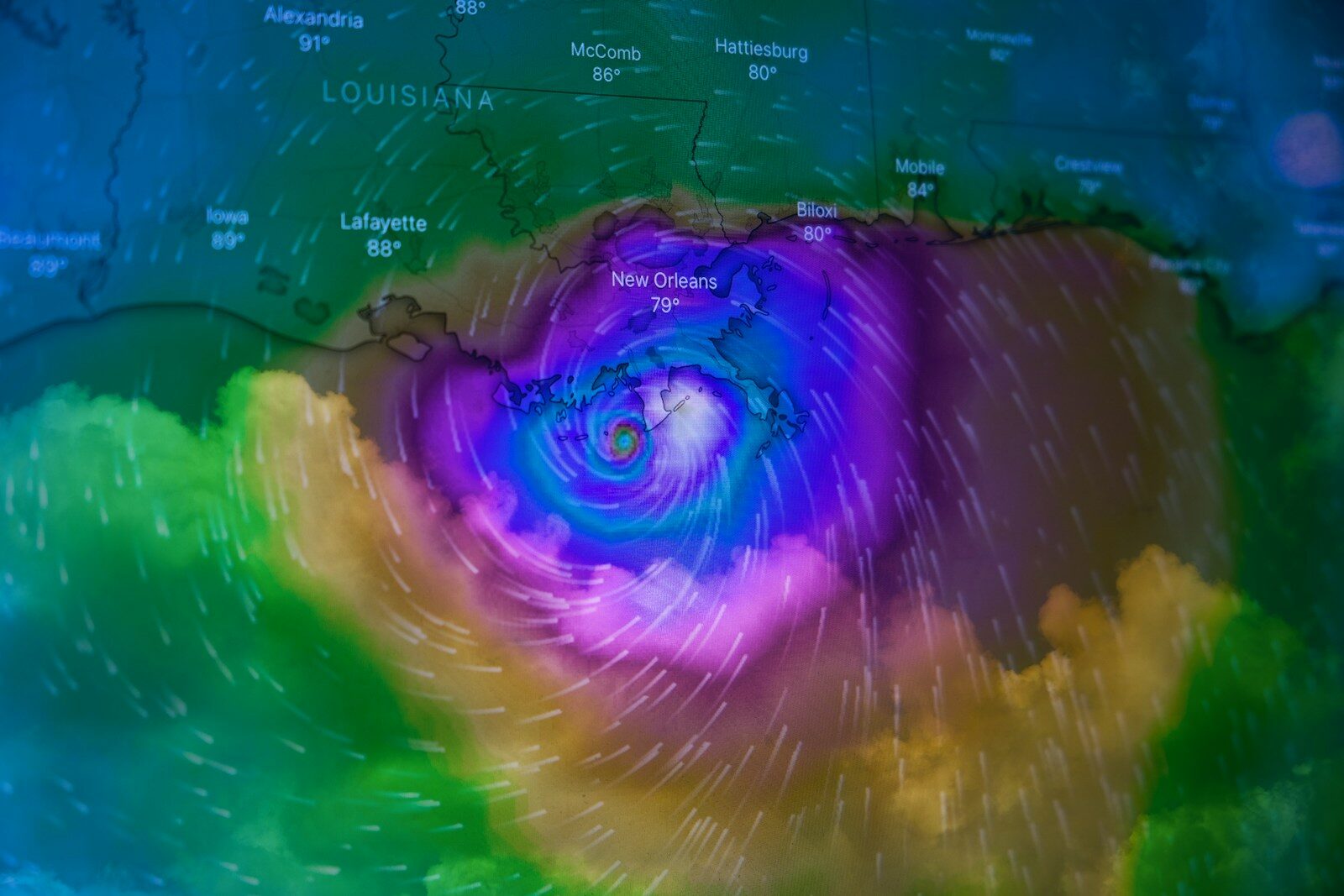
Within the context of elevated OHC, the Gulf of Mexico Loop Current represents a specific and acute hazard. This current transports incredibly warm Caribbean water northward into the Gulf. If a storm track during the 2026 Atlantic hurricane season aligns with this deep, warm eddy, the potential for catastrophic, explosive growth increases exponentially.
The Loop Current’s behavior is notoriously difficult to predict long-term, but its presence is a recognized systemic amplifier of extreme weather. Understanding the mechanics of these ocean currents is vital for ecological economics, as coastal infrastructure is rarely designed to withstand the sudden leap in storm category that the Loop Current facilitates.
Projected Storm Frequency and Intensity Models
Advanced computational modeling provides our most reliable glimpse into the impending 2026 Atlantic hurricane season. By running thousands of ensemble forecasts utilizing current ENSO data, OHC levels, and historical analogs, climatologists can generate probabilistic outlooks for storm frequency and severity.
It is important to note that a higher frequency of storms does not automatically equate to higher landfalls. Steering currents dictate the path. However, the systemic issue remains: the overall kinetic energy generated by the season is expected to be substantially higher than the 30-year historical average.
The following data table synthesizes the aggregate consensus from major meteorological institutions regarding the projected output for the upcoming season.
| Meteorological Metric | Historical Average (1991-2020) | 2026 Season Projection | Primary Driving Factor |
| Named Storms | 14.4 | 18 – 22 | Reduced Atlantic Wind Shear |
| Hurricanes (Cat 1-5) | 7.2 | 9 – 11 | Elevated Sea Surface Temps |
| Major Hurricanes (Cat 3+) | 3.2 | 4 – 6 | High Oceanic Heat Content |
| Accumulated Cyclone Energy | 123 | 160 – 195 | La Niña Atmospheric Conditions |
Bridging the Gap: Ecological Economics and Extreme Weather
The physical science of the 2026 Atlantic hurricane season is only half of the equation. To truly understand the gravity of these events, we must bridge the gap between meteorology and ecological economics. Extreme weather events are not merely natural disasters; they are profound economic shocks that expose the vulnerabilities of our current societal infrastructure.
When a major hurricane disrupts a coastal ecosystem, the economic reverberations are felt globally. The destruction of coastal wetlands, which act as natural storm buffers, requires billions of dollars in artificial infrastructure replacement. Furthermore, the insurance industry is facing a systemic crisis as the actuarial models of the past fail to account for the increased frequency of billion-dollar disasters.
This intersection of climate volatility and economic stability is the defining challenge of our era. The systemic financial risks posed by the 2026 Atlantic hurricane season highlight the urgent need to transition from reactive disaster management to proactive ecological resilience, a concept central to the principles of sustainable economic frameworks.
Agricultural Systems at Risk

The agricultural sector is uniquely vulnerable to the torrential rainfall and inland flooding associated with modern, slower-moving hurricanes. Systemic shifts in atmospheric steering currents have resulted in storms that stall over landmasses, dumping historic volumes of precipitation. This leads to massive topsoil erosion, crop decimation, and livestock mortality.
The disruption of agricultural yields due to the 2026 Atlantic hurricane season could trigger localized food insecurity and spike global commodity prices. This demonstrates how environmental degradation directly compromises human life support systems. For deeper context on agricultural vulnerabilities, explore our cluster resource on food security dynamics.
Coastal Resilience and Systemic Adaptation Strategies
As we face the realities of the 2026 Atlantic hurricane season, the focus must shift decisively toward systemic adaptation and coastal resilience. Building higher seawalls is a temporary, localized fix to a pervasive global issue. True resilience requires the restoration of natural coastal ecosystems, such as mangrove forests, oyster reefs, and barrier islands.
These natural systems provide superior, cost-effective attenuation of wave energy and storm surges compared to rigid concrete infrastructure. Organizations like the World Resources Institute advocate heavily for “Nature-based Solutions” as a primary defense mechanism against intensifying tropical cyclones.
Furthermore, urban planning must evolve. Adapting to the 2026 Atlantic hurricane season means rethinking zoning laws, retreating from highly vulnerable floodplains, and designing infrastructure that can absorb and rapidly recover from inundation. The cost of proactive adaptation is undeniably high, but the price of systemic inaction in the face of warming oceans will be exponentially greater.