Newly Discovered Mosasaur Fossil Could Help Solve Evolutionary Mystery
Published on March 11, 2026 by Dr. A. M.
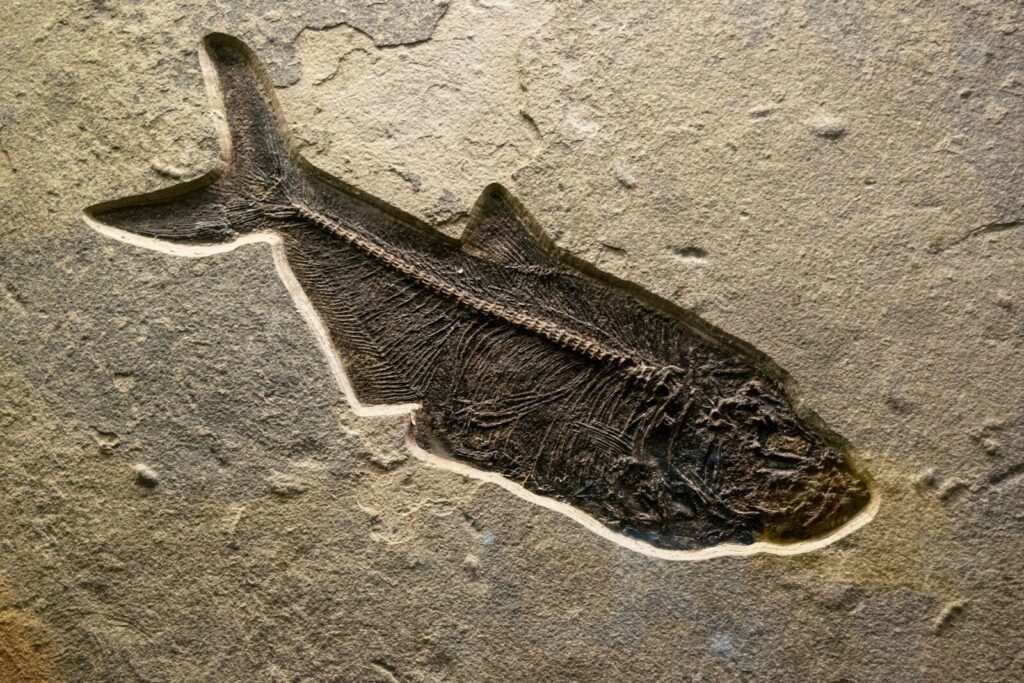
A New Mosasaur Fossil Is Giving Scientists Clues About Marine Evolution
A newly discovered mosasaur fossil is giving paleontologists an important opportunity to investigate one of the lingering mysteries of marine reptile evolution: how mosasaurs adapted from land-dwelling ancestors into powerful ocean predators.
Mosasaurs dominated the world’s oceans during the Late Cretaceous period, roughly 100–66 million years ago, just before the mass extinction that wiped out the dinosaurs. Although their fossils have been studied for over a century, the details of their early evolutionary transition into marine ecosystems remain incomplete.
The newly analyzed fossil may help fill a crucial gap.
Table of Contents
What Were Mosasaurs?

Mosasaurs were large marine reptiles related to modern monitor lizards and snakes. Some species grew more than 15 meters (50 feet) long, making them among the most formidable predators in prehistoric seas.
Key characteristics included:
- Long, streamlined bodies
- Paddle-like limbs adapted for swimming
- Powerful jaws filled with sharp teeth
- Flexible skulls capable of swallowing large prey
They occupied ecological roles similar to those of today’s killer whales and large sharks, preying on fish, turtles, and even other marine reptiles.
But how these reptiles evolved from land-based ancestors into fully aquatic hunters has remained one of paleontology’s most intriguing puzzles.
The Newly Discovered Fossil
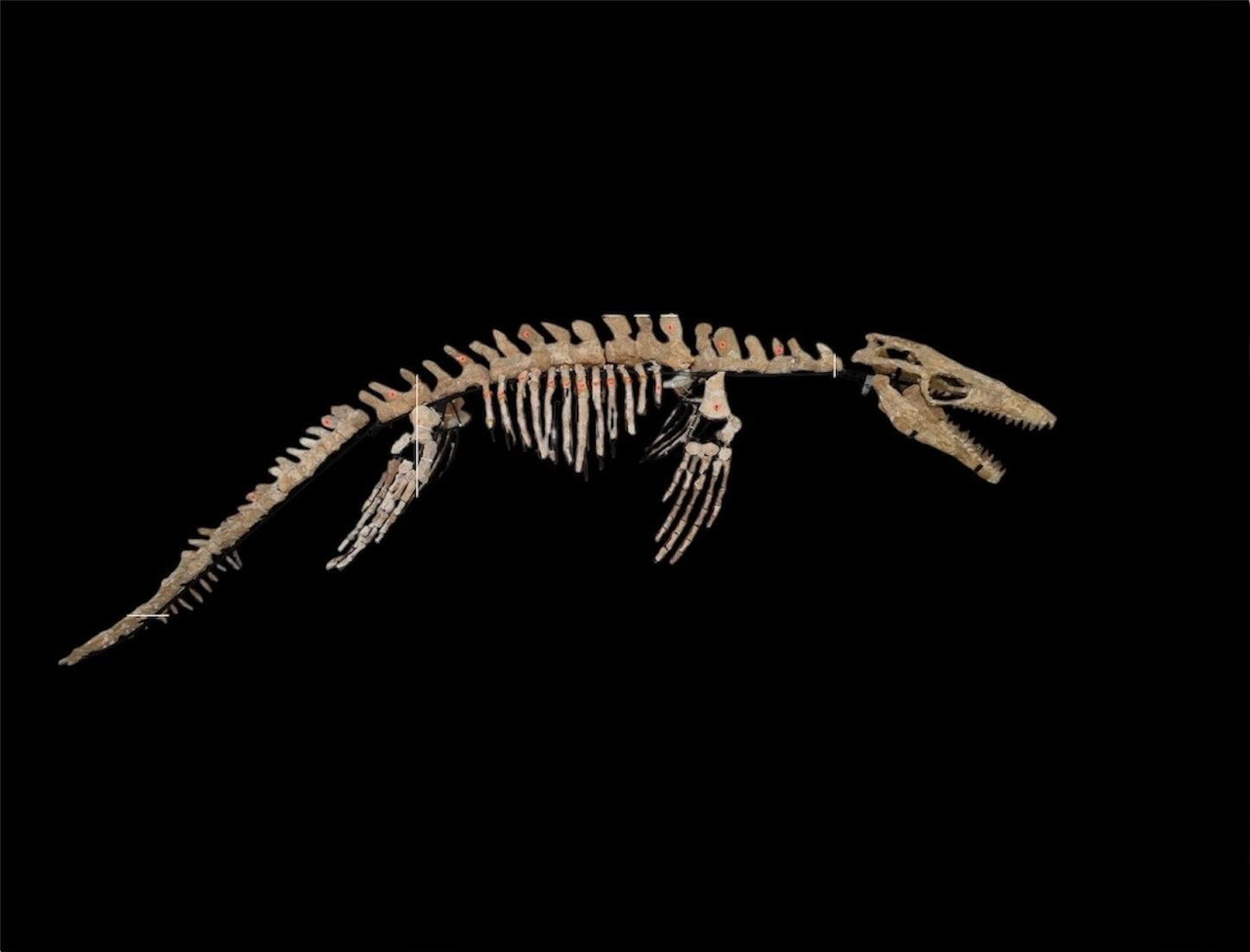
The newly discovered mosasaur fossil contains well-preserved skeletal features, particularly in the limbs, vertebrae, and skull structure. These elements are critical because they reveal how early mosasaurs adapted their bodies for life in water.
Researchers believe the fossil represents a transitional species — one that still retains features of terrestrial reptiles while showing clear adaptations for marine movement.
Early findings suggest:
- Limbs that are intermediate between walking legs and swimming flippers
- A body structure optimized for side-to-side swimming motion
- Skull adaptations linked to marine feeding strategies
These traits could help scientists map out how quickly mosasaurs evolved into fully marine predators.
Why This Discovery Matters for Evolutionary Science
The fossil may help answer a broader evolutionary question: how rapidly animals can transition between major environments, such as land and sea.
Several well-known groups made this transition, including:
- Whales
- Sea turtles
- Ichthyosaurs
- Mosasaurs
However, mosasaurs appear to have undergone one of the fastest evolutionary transformations into marine life among reptiles.
The newly discovered fossil could provide evidence about:
- The sequence of anatomical changes
- The ecological pressures driving adaptation
- The timeline of mosasaur diversification
Understanding this transition improves our knowledge of evolutionary flexibility in vertebrates.
A Window Into Late Cretaceous Oceans
Mosasaurs lived during a time when global sea levels were significantly higher, creating vast inland seas across parts of North America, Europe, and Asia.
These environments supported complex marine ecosystems including:
- Ammonites
- Large predatory fish
- Sea turtles
- Plesiosaurs
Mosasaurs eventually rose to the top of this food web.
Studying fossils from this period helps scientists reconstruct ancient marine ecosystems and predator-prey dynamics.
The Broader Scientific Value of Fossil Discoveries
Each fossil discovery adds a small but essential piece to the larger evolutionary puzzle.
Even partial skeletons can reveal:
- Growth patterns
- Muscle attachments
- Swimming mechanics
- Feeding behaviors
- Evolutionary relationships between species
As paleontologists refine evolutionary timelines using new fossils, they can better understand how ancient ecosystems functioned and how species adapted to changing environments.
What Researchers Will Study Next
The fossil is likely to undergo detailed scientific analysis including:
- CT scanning of bone structures
- Comparative anatomy studies
- Evolutionary modeling
- Phylogenetic analysis
These studies will help determine where this species fits within the mosasaur family tree and whether it represents a previously unknown species.
If confirmed as a transitional form, the fossil could become one of the most important discoveries for understanding mosasaur evolution.
A Reminder of How Much of Earth’s History Remains Hidden
Despite more than a century of paleontological research, scientists continue to uncover fossils that reshape our understanding of prehistoric life.
Large predators like mosasaurs once ruled ancient oceans — yet their evolutionary origins are still being pieced together from scattered fossils around the world.
Each discovery brings researchers closer to understanding how life on Earth adapts, evolves, and transforms over millions of years.
FAQs
What is a mosasaur?
A mosasaur was a large marine reptile that lived during the Late Cretaceous period and was related to modern monitor lizards and snakes.
When did mosasaurs live?
Mosasaurs lived between about 100 and 66 million years ago, disappearing during the mass extinction that ended the age of dinosaurs.
Why is this new fossil important?
The fossil may represent a transitional species, helping scientists understand how mosasaurs evolved from land reptiles into ocean predators.
How large could mosasaurs grow?
Some species reached over 15 meters (50 feet) in length.