Lake Mead Warming: A Systemic Climate Risk to Water and Energy Infrastructure
Published on February 26, 2026 by Dr. A. M.
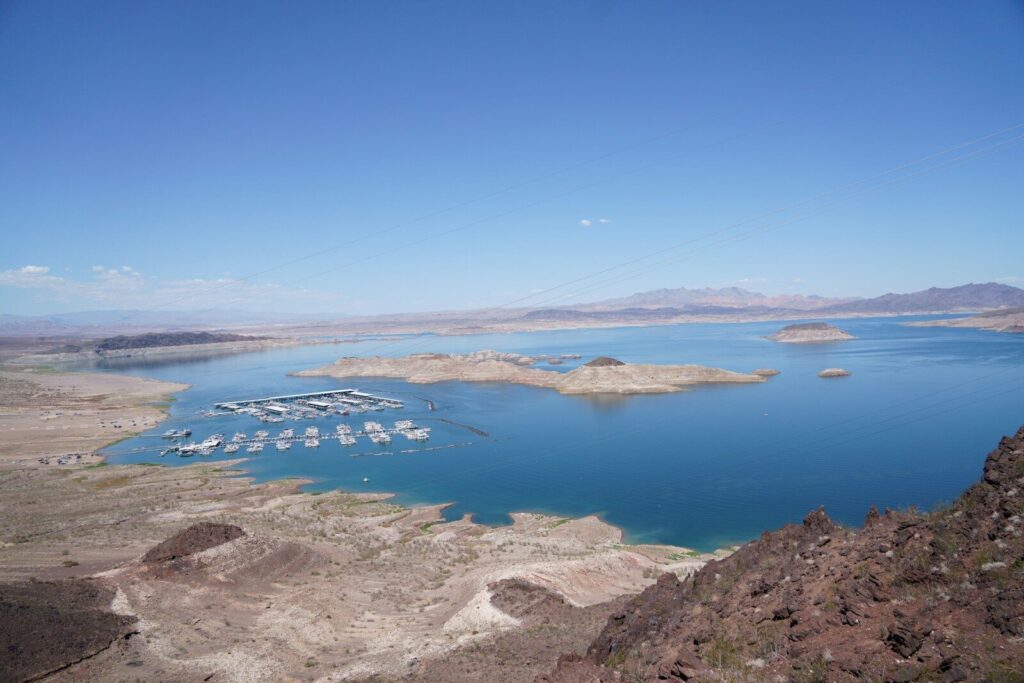
Lake Mead warming is emerging as a critical climate risk for the western United States. New projections indicate that inflowing water temperatures could rise by as much as 10.8°F by 2026. This is not simply a seasonal fluctuation. It represents a structural shift in the hydrology of the Colorado River Basin.
Lake Mead, formed by the Hoover Dam, supplies drinking water to roughly 25 million people and supports hydropower generation across multiple states. However, infrastructure designed for 20th century climate conditions is now operating under unprecedented thermal stress.
This article examines the science behind Lake Mead warming, its environmental and economic consequences, and the adaptation pathways needed to secure water and energy resilience.
Scientific Foundations of Lake Mead Warming


What Is Driving Lake Mead Warming?
Lake Mead warming is primarily driven by three interconnected mechanisms:
- Rising regional air temperatures linked to greenhouse gas accumulation
- Reduced snowpack in the Rocky Mountains
- Lower reservoir levels that amplify heat absorption
Warmer air increases surface water temperatures directly. At the same time, diminished snowpack alters seasonal runoff timing. Earlier snowmelt exposes reservoirs to longer periods of solar heating.
Lower water levels further intensify the effect. Shallow water bodies warm faster because they have less thermal mass to buffer temperature fluctuations.
Thermal Stratification and Water Quality
As Lake Mead warms, stronger thermal stratification develops. This occurs when warm surface water sits above cooler, denser bottom layers.
Stratification reduces vertical mixing. Consequently:
- Dissolved oxygen levels decline in deeper waters
- Nutrient cycling becomes disrupted
- Harmful algal bloom risk increases
These processes complicate water treatment operations and increase operational costs for municipal utilities.
Environmental and Economic Impacts
Hydropower Efficiency at Hoover Dam
Hydropower output at Hoover Dam depends on both water volume and water density. Warmer water is less dense. While the density change is modest, combined with declining water levels, it can reduce turbine efficiency.
Moreover, prolonged high temperatures may affect mechanical systems that were engineered for historically stable thermal regimes.
Lower hydropower generation has economic consequences:
- Increased reliance on natural gas peaker plants
- Higher electricity prices
- Elevated grid vulnerability during heatwaves
Given the scale of Hoover Dam operations, even small efficiency losses can translate into substantial regional energy impacts.
Drinking Water Infrastructure Stress
Lake Mead warming also challenges drinking water treatment systems in Nevada, Arizona, and California.
Warmer source water can:
- Increase microbial activity
- Accelerate biofilm growth in pipes
- Raise treatment chemical demand
Utilities may need to invest in advanced filtration and cooling adaptations. These upgrades increase costs that are ultimately passed to ratepayers.
Ecosystem Disruption
The Colorado River ecosystem evolved under cooler thermal regimes. Rising reservoir temperatures threaten:
- Native fish species
- Riparian habitats
- Biodiversity stability
Warmer waters can favor invasive species while stressing temperature-sensitive native populations.
Over time, ecological imbalance can reduce fisheries productivity and undermine conservation investments.
Real World Signals from the Colorado River Basin
Recent reporting from Nevada indicates that projected inflows could be significantly warmer by 2026. These projections reflect regional climate modeling aligned with observed warming trends across the Southwest.
The broader Colorado River Basin is already experiencing:
- Multi-decade megadrought conditions
- Persistent reservoir depletion
- Increasing water allocation conflicts
Lake Mead warming amplifies these existing pressures. It is not an isolated phenomenon. Instead, it is a multiplier of systemic water risk.
Lessons from Other Warming Reservoirs
Globally, warming reservoirs in Mediterranean climates show similar patterns:
- Increased algal blooms
- Higher evaporation losses
- Declining hydropower reliability
These examples demonstrate that adaptation must begin before thresholds are crossed.
Challenges and Barriers
Infrastructure Designed for a Different Climate
Most of the Colorado River system infrastructure was designed in the early to mid 20th century. Engineers relied on historical hydrological averages that no longer reflect present climate realities.
Redesigning intake systems, turbines, and treatment facilities requires:
- Large capital investment
- Federal and interstate coordination
- Regulatory reform
Political and Interstate Complexity
The Colorado River Compact governs water allocation among multiple states. Any adaptation strategy must navigate:
- Competing agricultural and urban interests
- Tribal water rights
- Federal oversight
This complexity slows reform even as Lake Mead warming accelerates.
Financial Constraints
Modernizing infrastructure is expensive. However, delayed action increases long-term costs through emergency repairs, power shortages, and water quality crises.
Solutions and Strategic Pathways
Lake Mead warming demands systemic adaptation rather than incremental fixes.
1. Infrastructure Modernization
Priority actions include:
- Upgrading turbine systems for variable temperature performance
- Retrofitting water intake structures for thermal flexibility
- Expanding advanced water treatment capacity
Federal infrastructure funding should prioritize climate resilience metrics.
2. Basin-Wide Water Management Reform
Improved water governance can reduce thermal stress indirectly by stabilizing reservoir levels.
Key strategies include:
- Agricultural efficiency incentives
- Urban water recycling expansion
- Managed aquifer recharge
Maintaining higher reservoir volumes reduces warming intensity.
3. Nature-Based Solutions
Riparian restoration and upstream forest management improve watershed cooling. Healthy forests enhance snow retention and moderate runoff timing.
Additionally, shade restoration along tributaries can reduce inflow temperatures before water reaches Lake Mead.
4. Emissions Reduction
Ultimately, Lake Mead warming reflects global atmospheric change. Long-term stabilization requires:
- Accelerated renewable energy deployment
- Electrification of transport
- Industrial decarbonization
Regional adaptation must align with national climate mitigation targets.
Frequently Asked Questions
Why is Lake Mead warming faster than expected?
Regional air temperature increases, prolonged drought, and lower reservoir levels all intensify heat absorption. Reduced snowpack further alters seasonal inflow patterns.
How does warmer water affect hydropower?
Warmer water slightly reduces density and can stress turbine systems. Combined with low water levels, it may reduce generation efficiency and reliability.
Can infrastructure upgrades solve the problem?
Upgrades can reduce risk but cannot eliminate warming trends. Long-term resilience requires both infrastructure modernization and greenhouse gas reductions.
Is this linked to climate change?
Yes. Observed temperature increases across the Southwest align with broader climate change patterns driven by greenhouse gas emissions.
Conclusion
Lake Mead warming is not an isolated anomaly. It is a systemic signal that climate conditions in the Colorado River Basin have shifted beyond historical design assumptions.
Rising water temperatures threaten hydropower reliability, drinking water quality, and ecological stability. While infrastructure modernization can reduce risk, long-term resilience requires coordinated basin management and aggressive emissions reductions.
The path forward demands proactive adaptation rather than reactive crisis management. Policymakers, utilities, and investors must treat Lake Mead warming as a strategic climate risk and act accordingly.
The time for structural climate resilience planning is now.