Climate Change and Winter Storms: 5 Brutal Truths
As temperatures abruptly plummet and heavy snowfall paralyzes unexpected regions across the United States, understanding the connection between climate change and winter storms becomes critical. While global warming implies an overall increase in average temperatures, the systemic impacts on atmospheric circulation create highly volatile and extreme localized weather events.
This disruption forces us to reevaluate our understanding of seasonal predictability. We are witnessing a profound shift in meteorological baselines that directly impacts both our economy and our food supply. By analyzing the structural mechanics of a warming planet, we can better anticipate these severe disruptions.
Bridging the gap between isolated weather events and broad ecological economics requires looking past the immediate freeze. It requires an expert-level examination of atmospheric thermodynamics, jet stream instability, and the cascading effects on global agricultural systems.
Table of Contents

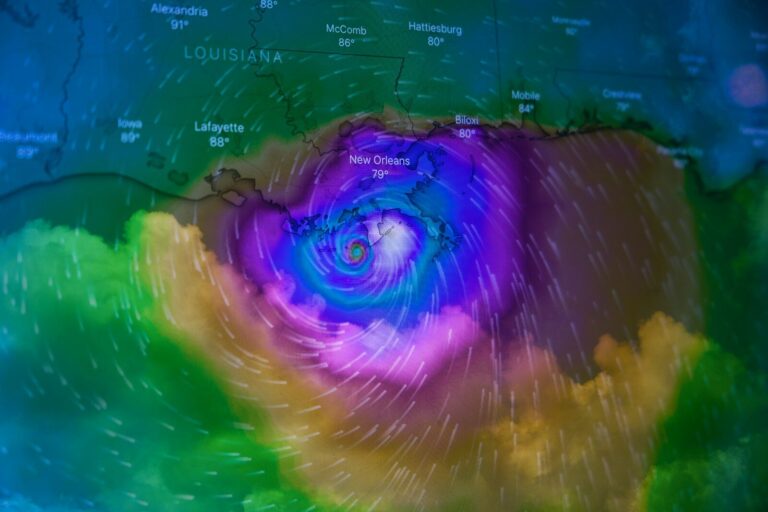
A satellite graphic showing a destabilized jet stream driving extreme weather across North America. The systemic relationship between climate change and winter storms highlights the consequences of Arctic amplification.
A visual mapping of the destabilized polar jet stream pushing Arctic air deep into lower latitudes.
The Mechanics Linking Climate Change and Winter Storms
The scientific consensus on global warming often leads to public confusion when severe cold snaps occur. However, the connection between climate change and winter storms is deeply rooted in atmospheric physics. As the Earth’s surface absorbs more heat, the temperature differentials that govern global wind patterns begin to break down.
This breakdown primarily affects the polar jet stream, a fast-moving ribbon of air that usually contains frigid air within the Arctic. As the Arctic warms at a disproportionately rapid rate, this protective barrier weakens. A weakened jet stream begins to undulate, creating deep troughs that allow freezing polar air to spill aggressively into the southern United States.
Furthermore, a warmer atmosphere inherently holds more moisture. For every degree Celsius the temperature rises, the atmosphere can hold approximately seven percent more water vapor. When this moisture-laden air collides with displaced Arctic cold fronts, the result is unprecedented, catastrophic snowfall and ice accumulation.
Arctic Amplification and Stratospheric Warming
To fully grasp the dynamics of climate change and winter storms, one must look at Sudden Stratospheric Warming (SSW) events. These events occur when rapid temperature increases in the stratosphere disrupt the polar vortex.
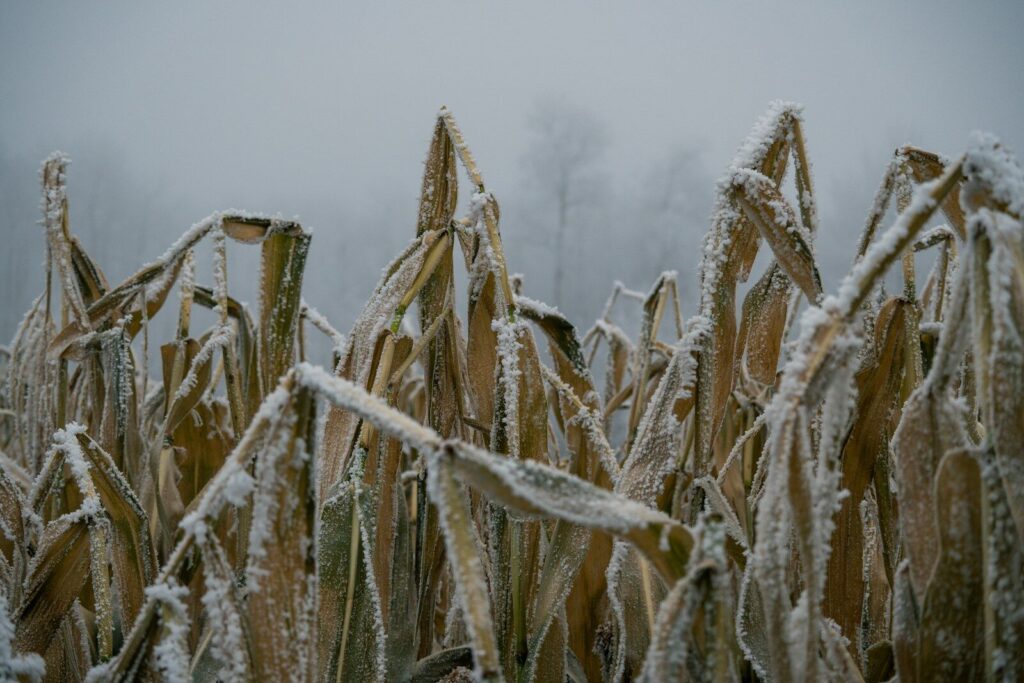
Frost-damaged crops demonstrating the severe agricultural impact of extreme weather. Mitigating the effects of climate change and winter storms requires new strategies in ecological economics to ensure food security.
Sudden hard freezes devastate winter crops, severely impacting regional ecological economics.
When an SSW occurs, the typically stable circulation of cold air fragments. These fragments are then pushed southward, leading to multi-day, deep-freeze events in regions completely unequipped for such extremes. This is a direct consequence of the phenomena known as Arctic amplification.
- Weakened Pressure Gradients: The temperature gap between the equator and the Arctic is shrinking, slowing down west-to-east atmospheric flow.
- Rossby Waves: Large-scale meanders in high-altitude winds become more exaggerated, locking severe weather patterns into place for days or weeks.
- Moisture Loading: Warmer ocean temperatures fuel winter storm systems, leading to heavier precipitation upon landfall.
The Ecological Economics of Extreme Cold
The intersection of severe winter weather and human systems creates a massive strain on ecological economics. When a massive winter storm hits unprepared regions, the economic fallout is immediate and cascading. We see this acutely in the agricultural sector, where sudden freezes destroy winter yields and disrupt planting cycles.
According to data from the National Oceanic and Atmospheric Administration, billion-dollar weather disasters are increasing in both frequency and severity. Winter storms are a rapidly growing contributor to this financial toll. The destruction of citrus crops, winter wheat, and the mass loss of livestock create inflationary pressures on global food markets.
This requires a fundamental shift in how we value agricultural resilience. Modern farming operations must now account for extreme volatility, investing in expensive frost-protection infrastructure. For further reading on this specific topic cluster, see: (Building Agricultural Resilience Against Climate Extremes).
Data Overview: Historical Winter Storm Impacts
To understand the systemic risk, we must look at the historical data regarding massive winter storm anomalies and their resulting economic burdens. The table below illustrates the cascading financial and agricultural damage caused by recent jet stream disruptions.
| Storm Event / Year | Primary Atmospheric Driver | Estimated Economic Cost | Major Agricultural Impact |
| Texas Freeze (2021) | Disrupted Polar Vortex | $195 Billion | Massive livestock loss, severe citrus crop destruction. |
| Elliott (Dec 2022) | Bomb Cyclone / Jet Stream Dip | $5.4 Billion | Winter wheat damage, supply chain paralysis. |
| Midwest Freeze (2019) | Sudden Stratospheric Warming | $3.1 Billion | Delayed spring planting, infrastructure damage. |
Infrastructure Stress and Supply Chain Paralysis
Our current municipal and agricultural infrastructure was built for the climate of the 20th century. As the dynamic between climate change and winter storms intensifies, power grids, water systems, and transportation networks are failing under the stress. When temperatures drop below the operational thresholds of regional power plants, the resulting blackouts exacerbate the crisis.
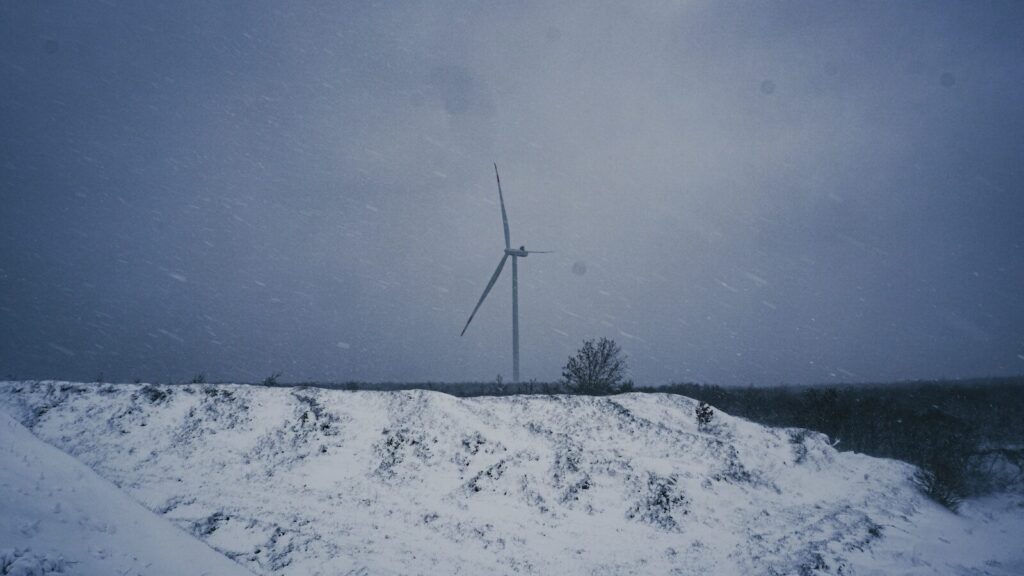
A wind turbine stopped by ice buildup during a severe winter storm. Adapting our energy grids to withstand extreme weather is essential as climate change and winter storms continue to test infrastructural limits.
Energy infrastructure must be weatherized against both extreme heat and unprecedented winter freezes.
This lack of infrastructural winterization leads to catastrophic supply chain paralysis. Roads become impassable, preventing the transport of essential agricultural goods and emergency supplies. The World Meteorological Organization consistently highlights the need for governments to aggressively update their infrastructure to handle these new climatic extremes.
The failure of power grids during these storms also highlights the vulnerability of our energy transition. As we move toward renewable energy, systems must be robustly winterized. Failing to do so risks public safety and further damages the credibility of sustainable development initiatives.
Forging Systemic Agricultural Resilience
Addressing the symptoms of these weather anomalies is no longer sufficient. We must proactively build systemic resilience to mitigate the risks associated with climate change and winter storms. This requires a comprehensive approach to ecological design, focusing on regenerative agriculture and localized supply chains.
Farmers are increasingly turning to advanced predictive modeling to anticipate late-season frosts and disruptive snowfalls. By planting cover crops and improving soil health, agricultural lands can better insulate root systems against extreme temperature drops. You can learn more about these methods in our guide on (Soil Regeneration and Temperature Regulation).
Furthermore, policymakers must integrate climate volatility into urban planning and agricultural subsidies. Financial safety nets must be restructured to support farmers who invest in climate-resilient infrastructure. Only by acknowledging the systemic nature of these threats can we begin to adapt effectively.
In conclusion, the paradoxical nature of freezing storms on a warming planet is a stark reminder of our atmosphere’s complexity. We must abandon the expectation of stable seasonal norms. By understanding the intricate mechanics driving these events, we can forge a path toward true ecological and economic resilience.