Environmental Impact of SpaceX Launches and Starlink Expansion
Published on March 2, 2026 by Dr. A. M.
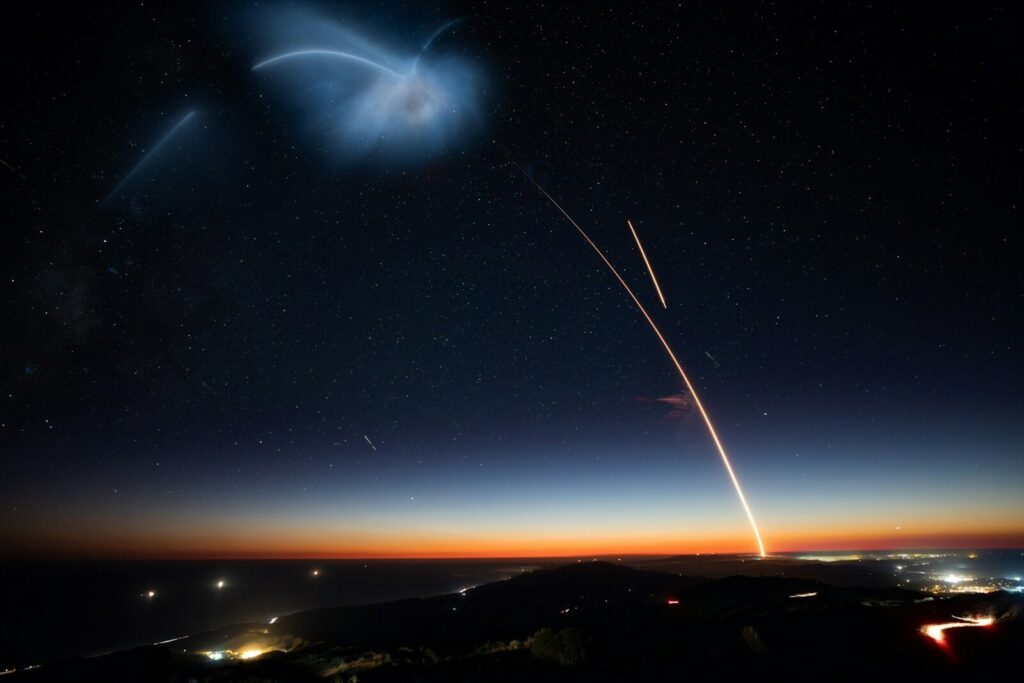
The environmental impact of SpaceX launches is gaining attention as Falcon 9 rockets lift off regularly from Cape Canaveral in Florida. Each launch supports the rapid expansion of the Starlink satellite network. However, beyond the excitement of liftoff, important environmental questions remain.
Rocket launches produce emissions, affect local air quality, and contribute to atmospheric changes. As launch frequency increases, sustainability considerations become more urgent.
Understanding the environmental impact of SpaceX launches requires examining fuel use, atmospheric chemistry, ocean landings, and long term orbital effects.
Falcon 9 Launch Activity and Growth
SpaceX now conducts frequent Falcon 9 missions from Cape Canaveral Space Force Station. The recent Starlink mission carried 29 broadband satellites into orbit.
While reusable boosters reduce manufacturing waste, launch cadence continues to rise.
Each mission involves:
• Rocket propellant combustion
• High altitude emissions
• Ocean recovery operations
• Infrastructure energy use
Therefore, the scale of operations matters as much as individual efficiency gains.


Caption: Frequent Falcon 9 launches support satellite expansion while raising environmental questions.
Rocket Fuel and Atmospheric Effects
The environmental impact of SpaceX launches begins with rocket propellant. Falcon 9 uses refined kerosene and liquid oxygen. When burned, the fuel produces carbon dioxide, water vapor, and soot particles.
Although total emissions remain small compared to aviation or shipping, rocket exhaust releases pollutants directly into the upper atmosphere.
Scientists study how high altitude emissions affect:
• Ozone chemistry
• Atmospheric circulation
• Radiative balance
Because rockets release soot at high altitudes, particles may persist longer than ground level pollution.
Local Environmental Effects in Florida
Cape Canaveral hosts one of the most active launch sites in the United States. Increased launch frequency affects surrounding ecosystems and communities.
Potential local impacts include:
• Noise pollution
• Air quality shifts
• Marine disturbance from drone ship landings
• Increased infrastructure traffic
At the same time, the region experiences climate stress from sea level rise and stronger storms.
You can explore how climate risk affects coastal infrastructure in our analysis of escalating hurricanes.

Caption: Space launch operations occur within coastal ecosystems already facing climate pressure.
Satellite Constellations and Orbital Sustainability
The environmental impact of SpaceX launches also extends beyond Earth surface effects. Starlink satellites form a large constellation in low Earth orbit.
While broadband access expands connectivity, growing satellite numbers raise concerns about:
• Orbital congestion
• Space debris
• Night sky brightness
• Astronomical interference
Sustainable space operations require debris mitigation and responsible deorbit planning.
Moreover, manufacturing thousands of satellites demands raw materials and energy.
This issue connects to broader discussions about the environmental impact of AI and digital infrastructure growth.
Reusability and Emission Tradeoffs
SpaceX promotes booster reuse as a sustainability improvement. Reusable first stages reduce manufacturing energy and material demand.
However, reuse does not eliminate launch emissions.
Therefore, the environmental impact of SpaceX launches depends on total mission volume. If launch frequency doubles or triples, overall emissions rise even with reuse.
This pattern mirrors other sectors where efficiency gains sometimes lead to higher total consumption.
Policy and Transparency
As commercial space activity expands, policymakers may examine environmental reporting requirements.
Questions include:
• Should rocket emissions be tracked separately in national inventories
• How should upper atmosphere pollution be monitored
• What are acceptable launch frequency thresholds
Space activity now intersects with climate accountability.
Transparency helps align innovation with sustainability goals.
Balancing Innovation and Environmental Responsibility
Space based internet services offer benefits such as rural connectivity, emergency communication, and economic development.
However, environmental responsibility must grow alongside technological ambition.
The environmental impact of SpaceX launches remains smaller than many industrial sectors today. Yet continued expansion could shift that balance.
Ultimately, sustainable space development depends on cleaner fuels, transparent accounting, and coordinated global standards.
Rocket launches symbolize human progress. At the same time, they remind us that even space innovation depends on Earth systems.