7 Proven Strategies for Agricultural Supply Chain Resilience
Published on March 26, 2026 by Dr. A. M.
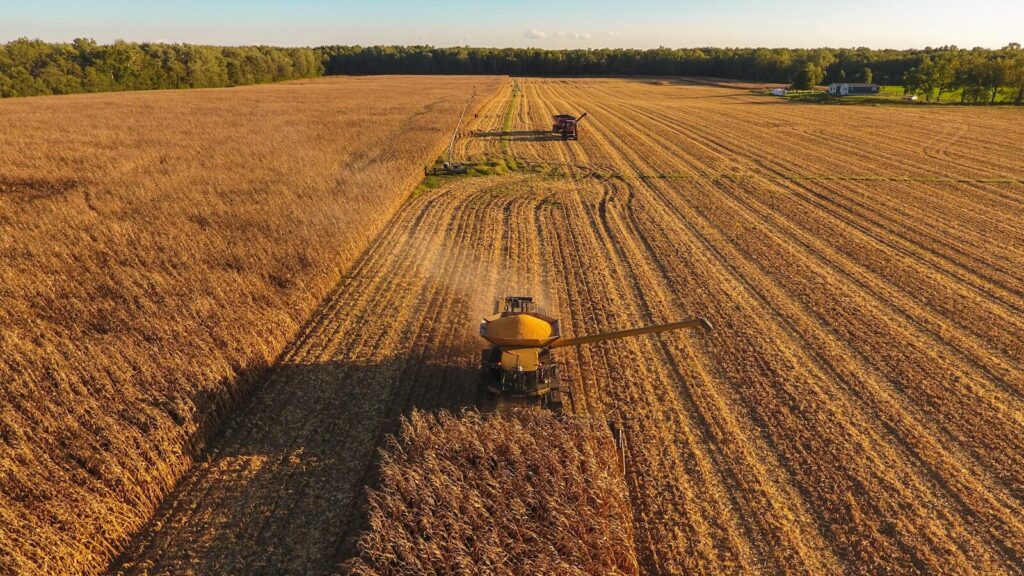
The effective closure of the Strait of Hormuz has severely fractured global fertilizer distribution, making agricultural supply chain resilience an absolute, immediate macroeconomic necessity. As millions of tons of urea, ammonia, and liquefied natural gas remain trapped behind geopolitical blockades, the structural vulnerability of modern farming is laid bare. This systemic crisis extends far beyond temporary price inflation; it threatens the very foundation of global food security. To truly bridge the gap between volatile international conflicts and planetary ecological health, we must profoundly restructure our agronomic frameworks. We must move beyond synthetic, fossil-fuel-dependent nitrogen and aggressively transition toward a decentralized, biologically sound agricultural model.
Table of Contents
The Architecture of Vulnerability in Global Food Systems
The current global agricultural paradigm is built upon a highly precarious, heavily centralized petrochemical foundation. The traditional Haber-Bosch process, which sustains the diets of roughly half the global population, requires massive inputs of natural gas. When strategic maritime chokepoints are disrupted, the flow of these critical hydrocarbon energy sources is immediately severed. This artificial scarcity triggers rapid spikes in the cost of synthetic fertilizers, which inevitably cascade into severe global food inflation.
This hyper-centralization guarantees that a localized geopolitical conflict instantly transforms into a worldwide systemic agricultural crisis. Nations that rely heavily on imported agrochemicals find themselves entirely at the mercy of distant maritime disputes and volatile energy markets. This structural flaw perfectly illustrates why establishing localized agricultural supply chain resilience is critical for maintaining national sovereignty. We cannot continuously base global caloric production on the uninterrupted flow of fossil fuels through contested international waters.
The macroeconomic fallout from the Hormuz disruption disproportionately impacts developing nations, triggering severe economic instability and threatening widespread famine. This cascading failure demands a radical shift toward ecological economics in agriculture, where true costs and systemic risks are accurately calculated. By transitioning away from vulnerable global commodities, nations can begin to insulate their populations from external geopolitical shocks.
The Role of Green Ammonia in Agricultural Supply Chain Resilience
To secure our future food systems, we must fundamentally alter the thermodynamics and the geography of nitrogen fertilizer production. Green ammonia represents a vital technological leap in achieving this necessary decentralization. Unlike conventional ammonia, which extracts hydrogen from methane via steam reforming, green ammonia utilizes water electrolysis powered entirely by renewable energy. This process extracts hydrogen from water and combines it with atmospheric nitrogen, completely bypassing the need for natural gas.
By deploying modular green ammonia facilities powered by local solar or wind grids, regions can manufacture their own fertilizers domestically. This technological pivot dramatically enhances agricultural supply chain resilience by severing the vital link between crop nutrition and imported fossil fuels. When fertilizer is produced regionally using infinite renewable resources, international shipping blockades lose their power to disrupt local food supplies.
Decoupling Nitrogen from Volatile Geopolitics
The widespread adoption of green ammonia essentially democratizes the production of vital agricultural inputs. By shifting the manufacturing base from a few fossil-rich geopolitical hotbeds to virtually any region with renewable energy capacity, we eliminate systemic chokepoints. This structural decoupling ensures that farmers maintain reliable, cost-stable access to essential nitrogen, regardless of the macroeconomic climate.
Furthermore, replacing natural gas with renewable energy drastically reduces the catastrophic carbon footprint associated with conventional fertilizer production. This dual benefit—stabilizing supply chains while simultaneously mitigating greenhouse gas emissions—makes green ammonia a cornerstone of modern ecological security. The Food and Agriculture Organization continuously highlights the need for such innovative, low-carbon technologies to stabilize global food production against systemic shocks.
Regenerative Agriculture as a Systemic Defense Mechanism
While technological innovations like green ammonia are critical, they must be paired with a profound biological transition in how we manage soil. Regenerative agriculture utilizes the biological mechanics of the natural world to drastically reduce the need for external synthetic inputs. By maximizing biodiversity, integrating cover crops, and minimizing mechanical soil disturbance, regenerative practices naturally cycle essential nutrients. This systemic approach is a fundamental pillar of genuine agricultural supply chain resilience.
When soils are healthy and biologically active, they naturally harbor complex networks of nitrogen-fixing bacteria and mycorrhizal fungi. These microscopic ecosystems provide crops with necessary nutrients, acting as an internal biological buffer against synthetic fertilizer shortages. As geopolitical shocks restrict external chemical availability, farms operating under regenerative paradigms experience significantly less yield depression. We must aggressively implement sustainable soil management practices to fortify our agricultural baselines against inevitable future disruptions.
Building Deep Agricultural Supply Chain Resilience in Topsoil
The ecological benefits of regenerative farming extend far beyond simple nutrient replacement; they directly address the escalating climate crisis. Soils rich in organic matter boast vastly superior water-retention capabilities, acting as massive biological sponges during intense rainfall and severe droughts. This physical resilience is crucial, as erratic climate patterns continuously threaten global crop yields and compound the damage of fertilizer shortages. The National Oceanic and Atmospheric Administration closely tracks these accelerating climate extremes, underscoring the urgent need for biologically resilient agricultural landscapes.
Furthermore, regenerative systems actively draw down legacy atmospheric carbon, transforming agricultural lands from massive emission sources into vital carbon sinks. By deeply embedding agricultural supply chain resilience directly into the topsoil, we create a robust, self-sustaining food production framework. This biological defense mechanism is the ultimate safeguard against the systemic fragility of the traditional agrochemical nexus.
Data Analysis: Centralized Fragility vs. Decentralized Resilience
To fully comprehend the necessity of this paradigm shift, we must objectively analyze the systemic disparities between the current model and the proposed decentralized future. The following table illustrates how shifting away from synthetic nitrogen directly fortifies global food systems.
| Systemic Attribute | Centralized Petrochemical Agriculture | Decentralized Resilient Agriculture |
| Nitrogen Source | Natural gas (Methane steam reforming) | Green ammonia (Electrolysis) & Biological fixation |
| Geopolitical Risk | Extreme; deeply tethered to global maritime chokepoints | Minimal; reliant on regional renewable grids and soil biology |
| Price Stability | Highly volatile; mirrors international fossil fuel markets | Highly stable; driven by fixed renewable costs and local inputs |
| Ecological Impact | Degrades soil microbiome; massive greenhouse gas emitter | Restores topsoil; carbon negative through natural sequestration |
| Supply Chain Model | Fragile, hyper-globalized, just-in-time delivery | Robust, localized, inherently circular nutrient economies |
This data conclusively proves that relying on imported, fossil-derived fertilizers is an inherently flawed strategy for long-term national security. True agricultural supply chain resilience requires a total transition toward the decentralized, ecologically sound metrics outlined above.
Policy Frameworks for an Uncertain Geopolitical Future
Achieving this systemic transition requires immediate, coordinated action from international policymakers and regional agricultural boards. We can no longer afford to subsidize the extreme macroeconomic risks inherent in fossil-fuel-dependent farming. Governments must strategically reallocate agricultural subsidies, shifting financial support away from synthetic agrochemicals and directly toward regenerative practices and green ammonia infrastructure.
Crucial policy initiatives must include:
- Capital Grants for Green Ammonia: Providing substantial financial backing for the rapid deployment of regional, renewable-powered nitrogen facilities.
- Transition Subsidies for Farmers: Offering multi-year financial safety nets for agricultural producers actively transitioning to regenerative, low-input biological models.
- Decentralized Infrastructure Investment: Funding the expansion of localized composting networks and regional biological manufacturing hubs.
- Carbon and Resilience Markets: Establishing rigorous financial markets that accurately value and reward verified soil carbon sequestration and reduced input reliance.
These aggressive policy shifts are essential for constructing fully regenerative food systems capable of weathering the geopolitical storms of the coming decades.
Securing Import-Reliant Economies
For nations historically dependent on imported food and fertilizer, these policy frameworks are not optional; they are matters of sheer survival. Import-reliant economies must aggressively pursue food sovereignty by treating soil health and localized nutrient production as critical national security infrastructure. By actively localizing their agricultural supply chains, these vulnerable nations can finally decouple their domestic food security from the volatility of international conflicts.
Conclusion: The Imperative for Decentralized Food Systems
The catastrophic bottleneck at the Strait of Hormuz serves as a definitive, unignorable warning regarding the systemic fragility of modern agriculture. We cannot sustainably feed a growing global population by relying on centralized petrochemicals shipped through contested geopolitical chokepoints. Establishing ironclad agricultural supply chain resilience is the defining macroeconomic and ecological challenge of our current era.
By scaling green ammonia technologies and deeply embedding regenerative agricultural practices, we can effectively dismantle this architecture of vulnerability. This necessary evolution protects global food security, stabilizes rural economies, and actively heals our degraded planetary climate systems. The transition away from synthetic nitrogen is no longer merely an environmental ideal; it is the fundamental prerequisite for enduring human survival in a highly volatile geopolitical landscape.