Klamath Dam Removal and Biodiversity: The Largest River Restoration in U.S. History
In the mountains of southern Oregon and northern California, a century-old chapter of American water infrastructure is ending.
Four hydroelectric dams along the Klamath River — once symbols of industrial progress — are now being dismantled in what has become the largest dam removal and river restoration project in U.S. history.
But the real story isn’t just about removing concrete.
It’s about what happens when a river is allowed to flow freely again — and how biodiversity, salmon populations, and entire ecosystems may begin to recover after decades of disruption.
Table of Contents
Why the Klamath River Matters
The Klamath River runs more than 250 miles from Oregon to the Pacific Ocean in Northern California, historically supporting one of the most productive salmon ecosystems on the West Coast.
For thousands of years, Indigenous communities such as the Yurok, Karuk, and Klamath Tribes depended on these salmon runs for food, culture, and economic survival.
But beginning in the early 1900s, a series of hydroelectric dams fundamentally changed the river system.
The four dams now being removed include:
- Iron Gate Dam
- Copco No. 1 Dam
- Copco No. 2 Dam
- J.C. Boyle Dam
Together, they blocked over 400 miles of historic salmon habitat.
The ecological consequences accumulated slowly but dramatically.
How Dams Disrupted the River Ecosystem
Hydroelectric dams often appear climate-friendly because they produce electricity without burning fossil fuels.
Yet on rivers like the Klamath, their ecological impacts have been profound.
Key disruptions included:
Blocked Fish Migration
Salmon and steelhead rely on upstream migration to reach spawning grounds. The dams effectively cut off vast stretches of habitat.
Warmer Water Temperatures
Reservoirs created by dams can warm river water, making it less suitable for cold-water fish species.
Toxic Algae Blooms
The Klamath reservoirs became notorious for harmful algal blooms, which thrive in slow-moving, warm water.
Altered Sediment Flow
Dams trap sediment that rivers naturally transport downstream, affecting riverbed habitats and coastal ecosystems.
Over decades, these changes contributed to dramatic declines in salmon populations.
At times, entire fisheries collapsed.
The Decision to Remove the Dams
The idea of removing the dams gained momentum after years of conflict between energy companies, Indigenous tribes, farmers, fishermen, and environmental groups.
Several factors ultimately tipped the balance:
- High cost of relicensing the dams
- Expensive environmental mitigation requirements
- Declining economic value of the aging hydroelectric facilities
- Growing recognition of Indigenous water rights
- Scientific evidence showing restoration potential
In 2022, federal regulators approved the transfer of dam ownership to the Klamath River Renewal Corporation, enabling removal to begin.
The dismantling process accelerated in 2023–2024.
What Happens When a River Is Freed
Removing dams does not instantly restore an ecosystem.
Instead, rivers typically go through a period of rapid ecological reorganization.
Scientists expect several stages of change along the Klamath.
Sediment Release
Decades of trapped sediment will gradually move downstream, reshaping river channels and rebuilding habitats.
Habitat Reconnection
More than 400 miles of historic salmon habitat will reopen.
Temperature Stabilization
Free-flowing rivers generally maintain cooler temperatures than reservoir systems.
Algae Reduction
Without stagnant reservoirs, the conditions that promote toxic algal blooms may decline.
This transformation may take years — but the ecological trajectory is widely expected to improve.
Salmon Recovery: The Most Visible Test
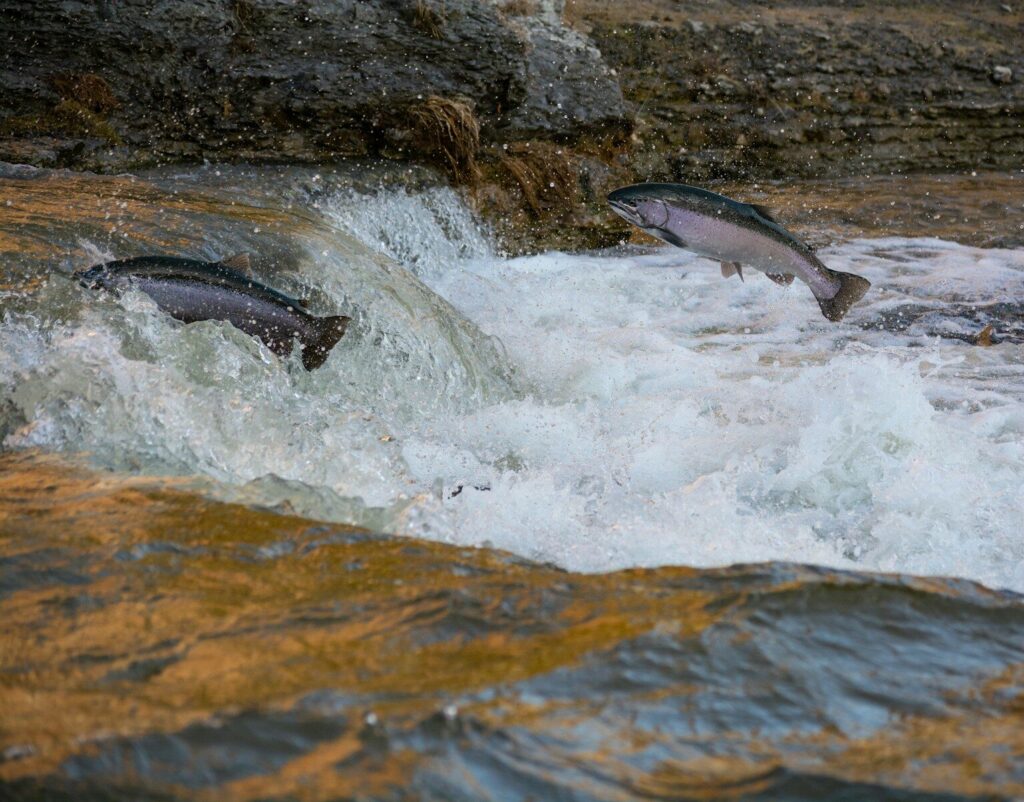
The recovery of Chinook salmon, coho salmon, and steelhead trout will be one of the clearest indicators of the project’s success.
Historically, the Klamath River supported some of the largest salmon runs in California.
Over the past century, these populations collapsed.
Several factors contributed:
- Dams blocking migration
- Water withdrawals for agriculture
- Habitat degradation
- Ocean changes linked to climate change
With the dams removed, scientists hope salmon will gradually recolonize newly accessible spawning grounds.
Early monitoring will focus on whether fish successfully navigate the reopened river system.
Indigenous Leadership in the Restoration Effort
One of the most important aspects of the Klamath restoration project is the role of Indigenous nations.
For decades, tribes along the river argued that dam removal was essential not only for ecological recovery but also for cultural survival.
Salmon are central to the traditions, ceremonies, and food systems of these communities.
Tribal scientists and ecological knowledge holders have played a major role in:
- habitat restoration planning
- fish monitoring programs
- long-term watershed management
The dam removals represent a rare case where tribal advocacy reshaped a major U.S. environmental infrastructure decision.
Climate Change and River Restoration
Although dam removal alone cannot solve climate change, restoring rivers may increase ecosystem resilience.
Free-flowing rivers tend to:
- support greater biodiversity
- regulate water temperature more naturally
- create more complex habitats
These characteristics can help ecosystems adapt to shifting climate conditions.
For salmon — already stressed by warming oceans — access to cooler upstream habitats may become increasingly important.
In this sense, the Klamath project is not just about fixing past environmental damage.
It may also be a climate adaptation strategy for freshwater ecosystems.
A Growing Movement: Dam Removal Across the United States
The Klamath project is the most dramatic example so far, but it’s part of a broader national trend.
Across the United States:
- More than 2,000 dams have been removed since the 1990s
- Many aging dams are reaching the end of their operational life
- Restoration projects are gaining public support
Many smaller removals have already shown measurable benefits, including:
- increased fish populations
- improved water quality
- restored wetlands and floodplains
The Klamath River may become a test case for whether large-scale ecosystem restoration can work at watershed scale.
The Long-Term Question: Can the River Fully Recover?
Even with the dams gone, the Klamath River faces ongoing challenges.
These include:
- agricultural water demands
- drought intensified by climate change
- wildfire impacts on watersheds
- ocean ecosystem shifts affecting salmon survival
Restoration is not a single event.
It is a long-term process that may unfold over decades.
Yet the removal of the dams represents a profound shift in how society views rivers.
For much of the 20th century, rivers were treated primarily as infrastructure systems — sources of electricity, irrigation water, and flood control.
Today, projects like the Klamath restoration suggest a different perspective is emerging.
One that sees rivers as living ecological systems capable of renewal when barriers are removed.
The Klamath River as a Symbol of Ecological Restoration
When the last sections of concrete disappear and the river flows freely again, the Klamath will become something rare in modern America:
A large river system returning to something closer to its natural state.
Whether salmon return in great numbers, wetlands regenerate, and biodiversity rebounds will depend on many factors.
But one thing is already clear.
The Klamath dam removal marks a turning point in the relationship between human infrastructure and natural ecosystems.
It shows that sometimes, the most powerful environmental intervention is not building something new — but removing what once seemed permanent.
FAQs
Why are the Klamath dams being removed?
The dams are being removed because they blocked salmon migration, worsened water quality, and had become costly to maintain. Dam removal was seen as the best way to restore the river ecosystem.
How many dams are being removed on the Klamath River?
Four dams are being removed: Iron Gate, Copco No. 1, Copco No. 2, and J.C. Boyle.
How much habitat will reopen after the dam removal?
More than 400 miles of historic salmon habitat will become accessible again once the dams are fully removed.
Is this the largest dam removal project in the United States?
Yes. The Klamath River project is considered the largest dam removal and river restoration project in U.S. history.
When will the ecosystem fully recover?
Full recovery could take decades. Scientists expect gradual improvements in salmon populations, water quality, and biodiversity over time.