Traditional festive decorations often come with a significant environmental price tag. As global energy demand spikes during the winter months, the adoption of eco-friendly holiday lights has become a critical strategy for reducing household carbon footprints. By transitioning to high-efficiency lighting technology, consumers can maintain festive traditions while adhering to modern sustainability standards and climate goals.
This transition is not merely about aesthetics. It involves a fundamental shift in how we manage seasonal energy loads and electronic waste. Understanding the technology behind sustainable lighting allows for smarter purchasing decisions that benefit both the planet and your utility budget.
Table of Contents
Scientific Foundation: How Modern Lighting Works
The primary driver behind the move to eco-friendly holiday lights is the shift from incandescent bulbs to Light Emitting Diodes (LEDs). Incandescent bulbs operate by heating a filament until it glows, a process that wastes approximately 90% of its energy as heat. This inefficiency makes them a liability for both fire safety and energy conservation.
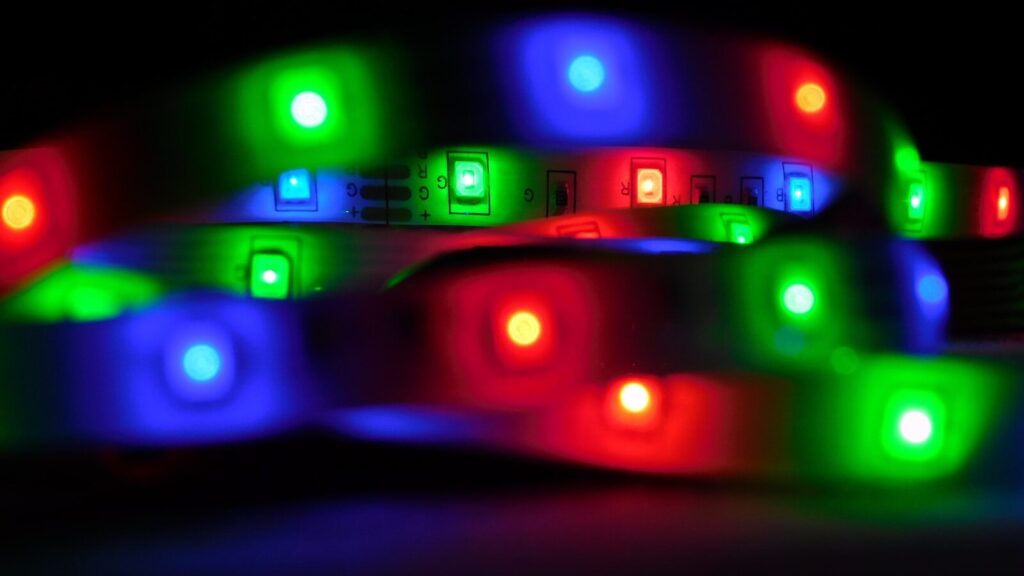
In contrast, LEDs produce light through the movement of electrons in a semiconductor material. This process, known as electroluminescence, is significantly more direct and efficient. Because LEDs do not rely on heat to produce light, they remain cool to the touch and require a fraction of the electricity to achieve the same lumen output as traditional bulbs.
Furthermore, the physical construction of these lights has evolved. Sustainable options now often feature epoxy plastic lenses rather than fragile glass. This increases durability and ensures the products last for many seasons, directly addressing the issue of “planned obsolescence” in seasonal consumer goods.
Environmental and Economic Impacts of Decorative Lighting
The environmental impact of holiday lighting is measurable on a national scale. Data from the Department of Energy indicates that if all decorative lights were replaced with eco-friendly holiday lights, the energy savings could exceed 2 billion kilowatt-hours per year. This reduction is equivalent to the annual electricity consumption of over 200,000 households.
Carbon Footprint Reduction
Most electricity used during the winter months is still sourced from fossil fuel power plants. High-energy decorations contribute directly to atmospheric CO2 concentrations. Switching to LED or solar-powered options can reduce the carbon emissions associated with your holiday display by up to 80%.
Financial Benefits
While the upfront cost of eco-friendly holiday lights may be slightly higher than incandescent sets, the return on investment is rapid. LEDs use about 75% to 80% less energy. For a household running multiple strands for six hours a day, this translates to significant savings on the December and January power bills. Additionally, LEDs are rated for 25,000 to 50,000 hours of use, meaning they outlast traditional bulbs by decades.
Real World Applications and Innovation
Innovations in the sustainability sector have expanded the variety of eco-friendly holiday lights available to consumers. Solar-powered holiday lights represent the pinnacle of carbon-neutral decorating. These systems utilize a small photovoltaic cell to charge an internal battery during daylight hours, which then powers the LEDs at night.
Solar-Powered Outdoor Displays
In regions with sufficient winter sunlight, solar strings eliminate the need for extension cords and external power outlets. This is particularly useful for landscaping and rooflines. These units often include integrated light sensors that automate the “on/off” cycle, ensuring no energy is wasted during daylight.
Smart Lighting Systems
The integration of Matter-enabled smart plugs and timers allows users to control their eco-friendly holiday lights via mobile applications. By scheduling lights to turn off during late-night hours when no one is awake to see them, homeowners can cut energy consumption by an additional 30% to 50% compared to manual operation.
Challenges and Barriers to Adoption
Despite the clear benefits, several obstacles prevent the universal adoption of eco-friendly holiday lights. One major barrier is the legacy of existing decorations. Many households possess functional but inefficient incandescent strands and are hesitant to discard them due to the perceived waste of a working product.
The E-Waste Dilemma
When consumers do decide to upgrade, they often dispose of old lights in general trash. Holiday lights contain copper, glass, and plastic, but they also contain trace amounts of lead in the wire insulation. This makes them a hazardous waste concern if they reach a landfill. Proper recycling programs are essential but often lack public awareness.
Initial Capital Outlay
For large-scale commercial displays or highly decorated residential properties, the cost of replacing hundreds of light strands can be significant. While the long-term savings are proven, the initial “green premium” remains a hurdle for lower-income households and small businesses.
Solutions and Strategic Pathways for Sustainability
To maximize the impact of your eco-friendly holiday lights, a strategic approach to decoration is necessary. Sustainability is not just about what you buy, but how you use it.
1. Prioritize Quality Over Quantity
Instead of covering every square inch of a property with low-quality lights, focus on high-impact areas with durable, professional-grade LEDs. This reduces the total energy load and the amount of material that will eventually need recycling.
2. Implement Automated Controls
Use programmable timers or smart home hubs to ensure lights are only active during peak viewing hours, typically 5:00 PM to 10:00 PM. This simple step can halve your seasonal energy usage.
3. Utilize Reflective Decor
Enhance your eco-friendly holiday lights by incorporating mirrors, tinsel, or shiny ornaments. These items reflect the light produced by the LEDs, making a display appear brighter and fuller without increasing electricity demand.
4. Support Recycling Initiatives
When old lights fail, do not throw them in the trash. Many hardware retailers and local municipalities offer seasonal “light trade-in” programs. These initiatives ensure that the copper and plastic are recovered and reused in new manufacturing cycles.
Frequently Asked Questions
Are LED holiday lights really better for the environment?
Yes. LED eco-friendly holiday lights use up to 80% less energy than traditional incandescent bulbs and last up to 25 times longer. This reduces both energy demand and the frequency of replacement, which keeps decorative waste out of landfills.
Can I recycle my old holiday lights?
You should not put holiday lights in standard curbside recycling bins as the wires can tangle in sorting machinery. Instead, look for specialized e-waste recycling centers or retail take-back programs at stores like Home Depot or Lowe’s during the holiday season.
Do solar holiday lights work in the winter?
Solar-powered eco-friendly holiday lights work in the winter as long as the solar panel receives direct or indirect sunlight during the day. While they may run for fewer hours on very cloudy days, modern lithium-ion batteries are quite efficient at storing enough charge for several hours of festive illumination.
Conclusion
Transitioning to eco-friendly holiday lights is a practical and impactful way to align festive traditions with environmental values. By choosing LED technology, utilizing solar power, and implementing smart timers, you can significantly reduce energy waste and lower your carbon footprint. This shift does not require a sacrifice in holiday spirit; rather, it represents a more thoughtful and sustainable way to celebrate.
As you plan your decorations this year, take the time to audit your current lighting inventory. Replace aging, inefficient strands with high-quality sustainable alternatives and ensure your old lights are recycled responsibly. Small changes in our holiday habits contribute to a much larger global movement toward energy efficiency and climate resilience.
Authoritative Source: Bureau of Reclamation – Water Data
The Carbon Mathematics of Holiday Lighting: From Incandescent to LED and Beyond
America’s holiday lighting tradition is beautiful—and energy-intensive. According to the U.S. Department of Energy, Americans use approximately 6.63 billion kilowatt-hours (kWh) of electricity for holiday lights each year—enough power to light Washington, D.C., for 4.3 years. This figure represents more electricity than the entire annual consumption of El Salvador, and translates to roughly 3.96 million metric tons of CO₂ emissions, equivalent to the annual emissions of about 850,000 gasoline-powered cars. The scale of the seasonal lighting habit makes it one of the most visible and most addressable household carbon expenditures of the year.
The technology shift from traditional incandescent Christmas lights to LED alternatives represents one of the clearest wins in residential energy efficiency. LED holiday lights use 70–80% less energy than equivalent incandescent strings, according to DOE testing. A typical 100-light incandescent C7 strand draws approximately 40 watts; an equivalent LED strand draws just 4.8 watts. For a homeowner running 10 strands for six hours per night across 45 days of the holiday season, the switch from incandescent to LED reduces electricity consumption from roughly 108 kWh to just 13 kWh—a savings of 95 kWh per season, or approximately $15–$28 at average U.S. retail electricity rates.
Beyond the light-strand choice, additional practices significantly reduce the holiday carbon footprint: using timers to limit display hours to peak viewing times, selecting ENERGY STAR–certified decorations and displays, choosing solar-powered outdoor lighting where feasible, and properly recycling old incandescent lights through participating hardware store programs rather than landfilling them. LED lights also last 25 times longer than incandescents, meaning less manufacturing energy and fewer replacement purchases over time.
The holiday season is also a prime opportunity to assess your full household energy footprint. Heating, cooking for large gatherings, increased travel, and decorative lighting all spike energy consumption between November and January. Our Carbon Footprint Calculator includes a detailed household energy module that helps you identify your peak usage periods and discover the highest-return efficiency investments for your home—not just for the holidays, but year-round.
Authoritative Source: U.S. Department of Energy — LED Holiday Lighting — DOE Energy Saver — LED Lighting Guide
💡 Carbon Footprint Calculator
Holiday lights are one of the year’s biggest home energy surges. Calculate your full household carbon footprint and discover where LEDs, timers, and efficiency upgrades can save the most.
Calculate My Holiday Footprint →Dr. Ahmad Mahmood, Environmental Scientist and Founder of Sustainability Awakening, has reviewed this article for scientific accuracy. Dr. Mahmood specializes in climate systems, environmental policy, and sustainability education. All content reflects current peer-reviewed research and data from official sources.
Last verified: October 2026 | About the Author
Water Footprint Impact Calculator
Measure direct and virtual water consumption across household, agricultural, and industrial supply chains against regional watershed stress metrics.
Calculate Water Footprint →