
The Devastating Impact of Pesticide-Coated Seeds on US Wildlife: 11 Alarming Realities
Introduction
Pesticide-coated seeds, also known as prophylactic seed treatment, is a method of industrial crop protection where seeds are encased in a concentrated chemical “envelope” of insecticides and fungicides prior to planting. Unlike traditional spray applications that target visible pest outbreaks, these coatings—primarily composed of neonicotinoids—are designed to be absorbed by the germinating plant, turning the entire organism into a systemic toxin from the roots to the pollen. While marketed as a precision tool to reduce chemical volume, the high water solubility of these coatings means that only a fraction of the pesticide is actually taken up by the crop; the remaining majority leaches into the surrounding soil and groundwater, creating a persistent, invisible hazard for non-target wildlife and foundational ecosystems.
1. The Mechanics of Systemic Toxicity
Unlike traditional foliar sprays that sit on the leaf surface, seed coatings utilize systemic insecticides—primarily neonicotinoids like Imidacloprid, Clothianidin, and Thiamethoxam. Once the seed germinates, the chemical is absorbed by the roots and translocated through the plant’s vascular system (xylem).
- The Reality: Every single cell of the growing plant—from the root tip to the pollen grain—becomes toxic to any organism that consumes it.
2. The “Lethal Kernel” for Farmland Birds
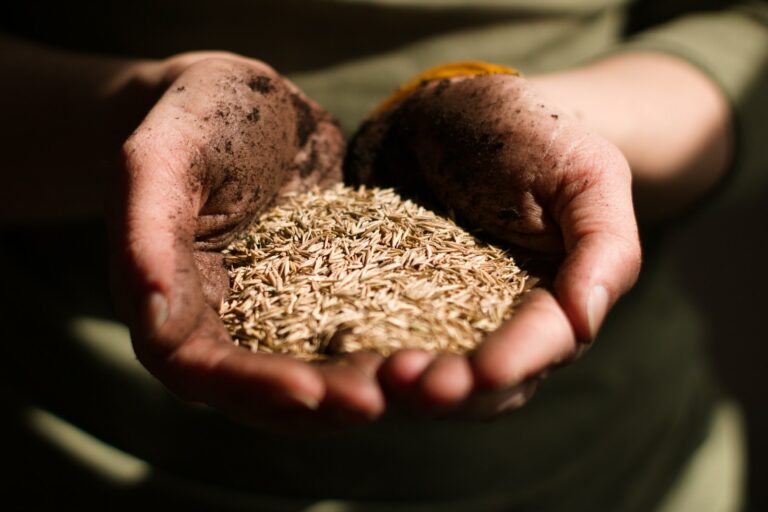
For a granivorous bird like a Blue Grosbeak or a Ring-necked Pheasant, a single corn seed coated with neonicotinoids can be fatal.
- The Dosage: Research indicates that eating just one to three treated seeds can cause acute poisoning, leading to reproductive failure or immediate death. During spring planting, these seeds are often left exposed at the ends of rows (“spillage”), creating a lethal buffet for migrating birds.
3. The “Treated Article” Regulatory Loophole
A major driver of this crisis is a legal technicality. Under the Federal Insecticide, Fungicide, and Rodenticide Act (FIFRA), the EPA classifies coated seeds as “treated articles” rather than “pesticide applications.”
- The Consequence: This exemption means that the millions of pounds of pesticides applied via seeds are not tracked with the same rigor as liquid sprays, making it nearly impossible for the USGS to map the true density of chemical saturation across the Corn Belt.
4. The “Dust Drift” Phenomenon
During planting, farmers use “lubricants” like talc or graphite to help seeds move through vacuum-pressure planters. These lubricants become contaminated with concentrated pesticide dust.
- The Impact: As the planter moves, a toxic cloud of “planter dust” is exhausted into the air. This dust can carry 700 times the lethal dose for a honeybee and settles on nearby flowering hedgerows, killing “non-target” pollinators instantly.
5. Bioavailability and Soil Persistence
Neonicotinoids are notoriously stable. Depending on soil pH and moisture, their half-life can range from 200 to over 1,000 days.
- The Accumulation: Because these seeds are planted annually, the chemicals build up in the soil profile. This creates a “toxic legacy” where even if a farmer switched to organic today, the soil could remain hazardous to earthworms and beneficial microbes for years.
6. The Collapse of the Aquatic Invertebrate Base
Up to 95% of the seed coating does not stay in the plant; it washes into the surrounding environment. Being highly water-soluble, these chemicals leach into tile drains and local watersheds.
- The Specific Victim: Mayflies, caddisflies, and midges—the literal “protein” of the freshwater food web—are hypersensitive to neonicotinoids. When these populations crash, the fish and birds that rely on them starve.
7. Neurological Disorientation in Pollinators
Even at “sub-lethal” doses (amounts that don’t kill them immediately), seed coatings destroy the brains of bees.
- The Effect: Neonicotinoids bind to nicotinic acetylcholine receptors. This impairs a bee’s ability to navigate, forage, and learn. A bee exposed to treated corn pollen may fly out to find food and simply forget how to get back to the hive.
8. The “Chemical Cocktail” Synergy
Seeds are rarely coated with just one chemical. They are typically treated with a mixture of insecticides and fungicides (like Metalaxyl).
- The Hidden Danger: While the fungicide might not kill a bee on its own, it can inhibit the bee’s ability to metabolize the insecticide, making the insecticide up to 1,000 times more toxic than it would be in isolation.
9. Impact on Beneficial Predatory Insects
Seed treatments don’t just kill pests; they kill the “free labor” of the farm. Ground beetles and lacewings that eat aphids are poisoned when they consume pests that have fed on treated plants.
- The Irony: By killing the natural predators, seed coatings can actually trigger secondary pest outbreaks, making the farmer even more dependent on chemicals.
10. Trophic Cascades in Mammals
Newer research is showing impacts on larger wildlife. White-tailed deer in areas with high neonicotinoid use have shown increased rates of congenital jaw deformities and reduced organ weights.
- The Pathway: This occurs through the consumption of treated “cover crops” or contaminated water sources, proving that the impact is scaling up the food chain.
11. The Loss of the Soil Microbiome
The soil is a living organism. High concentrations of seed-coating residues reduce the activity of earthworms, which are essential for soil aeration and nutrient cycling.
- The Damage: Studies show that treated seeds can reduce earthworm biomass, leading to compacted, “dead” soil that requires more synthetic fertilizer to produce the same yield.
Summary Table: The Lifecycle of a Coated Seed
| Phase | Environmental Impact | Key Target Affected |
| Planting | Talc/Graphite “Dust Drift” | Honeybees, Native Bees |
| Germination | 95% Leaching into Soil/Water | Earthworms, Mayflies |
| Growth | Systemic Xylem Transport | Aphids, Caterpillars, Birds |
| Flowering | Contaminated Pollen/Nectar | Butterflies, Hoverflies |
| Post-Harvest | Residue Persistence in Soil | Soil Microbes, Future Crops |
Conclusion
The use of pesticide-coated seeds represents a shift from “reactive” pest management to “prophylactic” saturation. While it offers a convenient “insurance policy” for industrial agriculture, the ecological cost is a fragmented food web and a silent spring for US grasslands. To protect what remains of our biodiversity, the “treated article” loophole must be closed, and integrated pest management (IPM) must return to the forefront of American farming.