
🛰️ NOAA Aurora Forecast: Northern Hemisphere
This NOAA satellite composite shows predicted aurora oval intensity. The further south the oval extends, the more US states can see it.
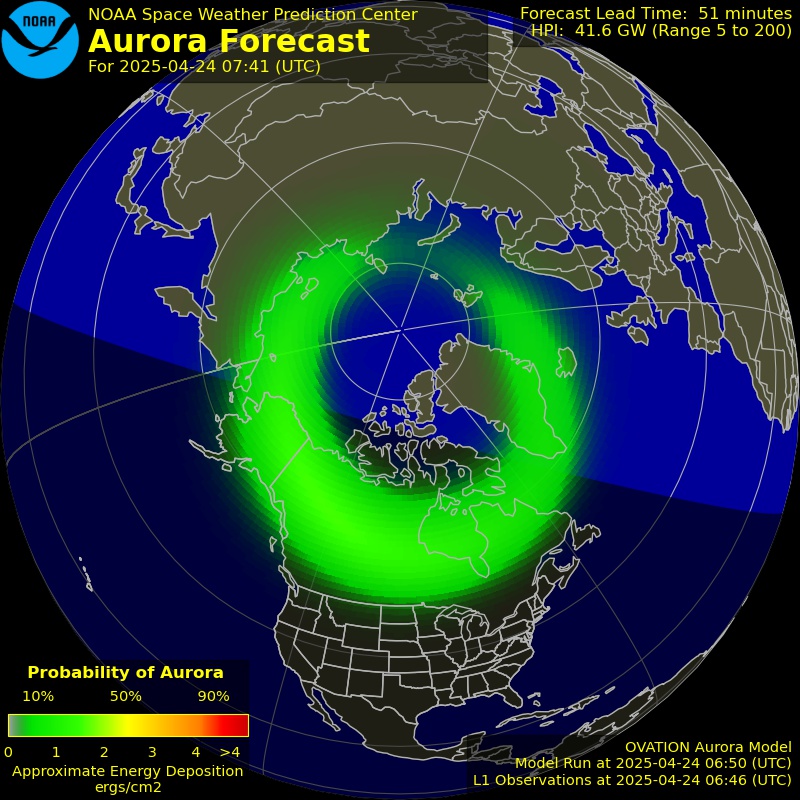
Image: NOAA SWPC — refreshes automatically
📅 3-Day Kp Forecast
🗺️ USA State Aurora Visibility by Kp Level
Find your state below to see the minimum Kp index needed for aurora visibility. Higher Kp = stronger storm = more states can see it.
| State / Region | Min. Kp Needed | Best Chances | Best Viewing Spots |
|---|
Escape Light Pollution
Drive at least 30 miles from city lights. Use the Light Pollution Map to find dark sky areas near you.
Face North, Look Low
Aurora often appears as a green arc near the northern horizon. Let your eyes adjust to darkness for 20 minutes before judging visibility.
Camera Reveals More
Phone cameras with night mode capture aurora invisible to the naked eye. Set a 10–30 second exposure for dramatic shots. Try iPhone ProRes or Android Night Sight.
Peak Hours: 10pm–2am
Aurora is most active around local midnight. The equinoxes (March and September) historically produce the most geomagnetic storms — plan trips accordingly.
Clear Skies Are Essential
Even a Kp 8 storm is invisible through clouds. Check Clear Outside for cloud-cover forecasts tailored to stargazers.
Set Up Aurora Alerts
NOAA’s Space Weather Alerts send email/SMS when a geomagnetic storm watch is issued. SpaceWeatherLive app also works great for real-time push alerts.
📍 Best Aurora Viewing Locations in the USA
World-class aurora destination. 200+ nights/year. Chena Hot Springs and the Fairbanks Aurora Season (Sept–March) draw thousands of visitors.
Pictured Rocks National Lakeshore and Tahquamenon Falls offer pristine dark skies over Lake Superior — a stunning aurora backdrop.
Boundary Waters Canoe Area (BWCA) and Lake Superior’s North Shore provide some of the darkest skies in the lower 48 states.
Glacier National Park has some of the least light-polluted skies in the contiguous US. St. Mary Lake is a legendary aurora photography location.
Palouse region and North Cascades offer clear, dark skies far from Seattle’s glow. The May 2024 Kp 9 storm was visible statewide.
Acadia National Park (Maine) and the Northeast Kingdom (Vermont) are the East Coast’s premier aurora spots with ocean and mountain backdrops.
🌞 Solar Maximum 2025–2026: Best Aurora Years in a Decade
Solar activity follows an 11-year cycle. We are currently at Solar Cycle 25’s maximum — meaning the sun is producing the most sunspot activity and coronal mass ejections (CMEs) in over a decade. More CMEs = more geomagnetic storms = more aurora.