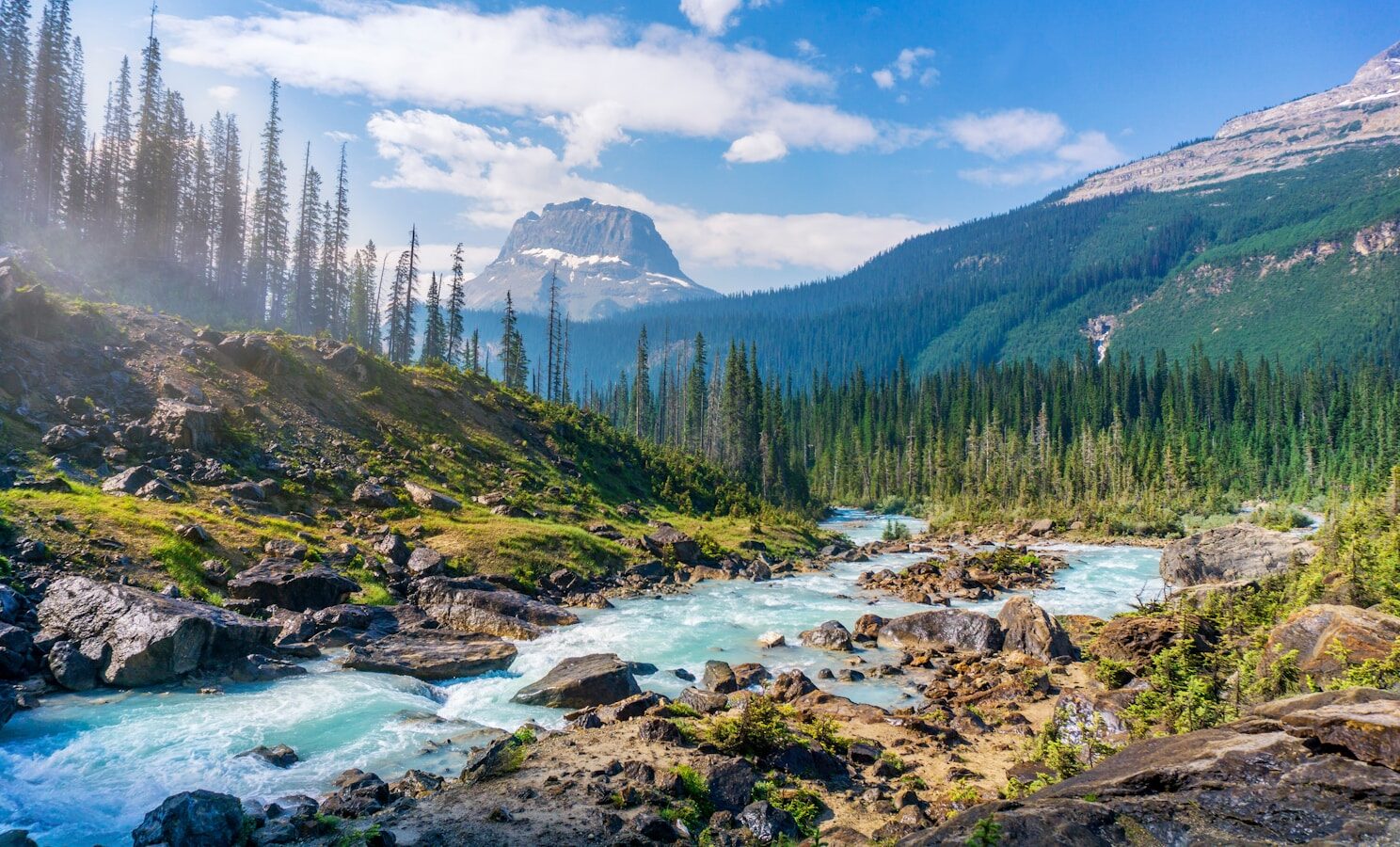
The 2026 push for national park hunting deregulation represents a profound paradigm shift in how the United States manages its most protected ecological sanctuaries. In a quiet but sweeping directive, the Department of the Interior has mandated the removal of “unnecessary regulatory or administrative barriers” to hunting and fishing across 55 sites governed by the National Park Service (NPS) in the lower 48 states. While framed as an economic stimulus for rural communities and an expansion of public access, this structural change introduces severe systemic risks to delicate environmental baselines.
Table of Contents
The Economic Catalyst Behind the Policy Shift
To understand the urgency behind this executive push, one must look at demographic and macroeconomic trends. According to U.S. Census data, only 4.2% of the population identified as hunters in 2024. This consistent urbanization and decline in sporting participation have triggered an ongoing revenue crisis for state wildlife agencies, which heavily rely on license sales and excise taxes levied on firearms and ammunition.
By forcing open protected federal lands, policymakers aim to artificially stimulate a shrinking industry. However, leveraging pristine ecosystems to patch budgetary shortfalls mirrors broader environmental policy rollbacks, prioritizing short-term financial extraction over long-term ecological preservation.
Erasing the Climatological and Ecological Baseline
National parks are not merely recreational zones; they serve a vital scientific function as untouched control groups. When assessing planetary boundaries, scientists rely on these sanctuaries to measure natural predator-prey dynamics, flora regeneration, and natural resilience against climate change.
Introducing external mortality pressures—such as hunting dogs, tree stands, and vehicular retrieval of game—alters these baseline metrics irreparably. This dynamic adds compounding pressures on US wildlife already struggling with habitat fragmentation and chemical pollution.
Proposed Regulatory Reversals at a Glance
The specific rollbacks ordered by the administration dismantle site-specific, science-based regulations designed by local ecologists and park superintendents. The table below highlights some of the most controversial adjustments:
| National Park Site | Previous Restriction | Proposed Deregulation |
|---|---|---|
| Cape Cod National Seashore (MA) | Strict seasonal limitations | Extension of hunting through spring and summer |
| Jean Lafitte National Historical Park (LA) | Protection of apex predators | Legal harvesting of alligators |
| Lake Meredith National Recreation Area (TX) | Sanitation and waste protocols | Allowing hunters to clean game in public restrooms |
The Predictable Crisis: Human-Wildlife Conflict
A contrarian insight missed by mainstream political discourse is the looming crisis of spatial conflict. The National Park Service manages over 300 million recreational visits annually. By stripping away localized safety protocols—such as buffer zones around trails and infrastructure—the integration of active firearms and animal harvesting into highly trafficked tourist corridors will inevitably result in a statistical spike in human-wildlife and human-human conflicts by 2027.
Former park management officials, including former Yellowstone superintendent Dan Wenk, have publicly questioned the necessity of the order, noting that existing regulations were forged through decades of careful stakeholder consensus. Upending this framework threatens not only visitor safety but the core tenets of recent biodiversity restoration efforts.
Actionable Intelligence: Navigating the Deregulation Landscape
As this federal directive cascades into local park management plans, environmental advocates and ecological economists must pivot from reactive outrage to strategic systemic intervention.
- Engage in localized NPS Comment Periods: While the overarching mandate is federal, individual park superintendents must draft implementation plans. Demand rigorous Environmental Impact Statements (EIS) for each localized change.
- Audit Excise Tax Allocation: Advocate for transparency in how the anticipated boost in Pittman-Robertson Act funds (excise taxes on guns/ammo) is distributed, ensuring capital is routed specifically to non-game species conservation.
- Shift to Alternative Funding Models: To truly protect public lands, systemic reliance on hunting licenses must end. Support legislative frameworks that propose a “backpack tax” or universal outdoor recreation fees to fund wildlife agencies sustainably.
Related: US Climate Policy Web Story
📋 Related: See how these policy changes fit into the bigger picture in our web story US Climate Policy 2025-2026: What Changed and What’s Next — covering the major regulatory shifts reshaping environmental protection in America.
Authoritative Source: NOAA Climate Data
🎬 Watch our Web Story: National Park Hunting Deregulation: 7 Shocking Ecological Impacts
🎬 Watch our Web Story: National Park Hunting Deregulation: 7 Shocking Ecological Impacts
📖 Related: Western Tribal Water Rights: 2 Vital Bills Fixing the West
The Legal Framework: What the National Park Service Organic Act Actually Says
The National Park Service was established by the Organic Act of 1916, which directed the new agency to “conserve the scenery and the natural and historic objects and the wild life therein and to provide for the enjoyment of the same in such manner and by such means as will leave them unimpaired for the enjoyment of future generations.” That dual mandate — conservation and enjoyment — has been interpreted by courts and agency practice to give conservation primacy when the two come into conflict. Hunting, which involves the lethal taking of wildlife, has historically been restricted in national parks on the grounds that it is incompatible with the conservation mandate and with the experience of the millions of visitors who come to parks seeking wildlife viewing rather than hunting opportunity.
National recreation areas, national monuments, and national seashores — units of the National Park System established under different enabling legislation — have sometimes allowed more flexibility on hunting, particularly where traditional or subsistence hunting was practiced before a unit’s establishment. The policy debate over hunting in national parks has often turned on these distinctions: proponents argue that management hunts to control wildlife populations or expanded hunting in recreation areas is consistent with NPS’s mission; opponents argue that any expansion represents a precedent-setting erosion of the parks’ foundational conservation purpose.
Wildlife Population Management: Science, Politics, and Lethal Control
The wildlife management arguments for allowing some form of hunting or lethal control in national parks rest on genuine ecological realities. In a fully functioning ecosystem, large predators — wolves, mountain lions, bears — control ungulate populations (deer, elk, bison) through predation, preventing overgrazing that degrades plant communities and the broader ecosystem. Most national parks lost their apex predators long before the parks were established, through the same 19th and early 20th century extirpation campaigns that eliminated wolves and mountain lions from much of their range. In parks without effective predator control, ungulate populations can explode beyond what vegetation can support, causing overgrazing, erosion, and reduction in songbird habitat as browse pressure strips shrubs and understory plants.
The Yellowstone wolf reintroduction, launched in 1995, demonstrated dramatically what predator restoration can accomplish. The reintroduction triggered what ecologists called a “trophic cascade” — wolves changed elk behavior (elk avoiding river corridors where wolves could trap them), which reduced overgrazing of willows and aspens along streams, which allowed vegetation to recover, which in turn supported beavers, songbirds, and even altered stream hydrology. Yellowstone is now cited worldwide as the most compelling natural experiment in the ecological value of apex predator restoration. But Yellowstone is the exception. Most national parks lack the size, connectivity, and political will for full predator restoration. The management alternatives — doing nothing and accepting overgrazing, or conducting management hunts — involve difficult trade-offs. Wildlife management and biodiversity conservation in protected areas requires confronting these trade-offs honestly.
The Visitor Experience Dimension: America’s Wildlife Viewing Economy
National parks generate enormous economic value for gateway communities through wildlife viewing, hiking, and nature-based recreation. According to the National Park Service’s own economic impact analyses, park visitors contribute approximately $20-26 billion annually to local economies surrounding parks, supporting hundreds of thousands of jobs in hospitality, guiding, retail, and transportation. Wildlife viewing — watching bears, bison, wolves, elk, and other iconic species — is a central motivation for many park visits, particularly to parks like Yellowstone, Grand Teton, Denali, and Glacier.
The economic value of wildlife as a non-consumptive tourism resource substantially exceeds the economic value of hunting in most park contexts. A 2016 study found that wildlife watching in the United States generates approximately $75 billion in economic activity annually — comparable to hunting, but supported by a much larger population of participants. In national park contexts specifically, where millions of visitors arrive expecting a wildlife experience, the economic return on conserving wildlife in a viewable state is generally far higher than the revenue that hunting tags would generate.
This calculus is not lost on gateway communities. Towns like Gardiner, Montana (Yellowstone’s north entrance) and Jackson, Wyoming (Grand Teton’s gateway) have economies built almost entirely on park tourism, including wildlife viewing. Hunting expansions that might reduce the habituation and density of wildlife near park boundaries — making wildlife viewing less productive — are viewed with concern by the businesses that depend on visitor spending. Ecotourism as sustainable economic development depends on the continued abundance and accessibility of wildlife that well-managed parks can provide.
Subsistence Hunting Rights: Indigenous Rights and Rural Communities
The most nuanced dimension of hunting in national park units involves subsistence rights for Indigenous peoples and rural Alaskan residents. Alaska’s national parks and preserves operate under ANILCA (the Alaska National Interest Lands Conservation Act of 1980), which explicitly allows subsistence hunting for rural residents — including on federal lands in Alaska that would otherwise be strictly managed under NPS regulations. The Alaskan subsistence framework recognizes that for many rural and Indigenous communities, hunting is not recreational but essential — a food security practice integral to cultural identity and survival in remote areas where grocery store alternatives are expensive or unavailable.
Disputes over Alaska subsistence hunting rights have sometimes involved federal-state conflicts over which state or federal regulatory body has jurisdiction, and whether state hunting regulations that apply broadly (allowing commercial hunting guides, for example) are consistent with the federal subsistence priority that ANILCA establishes. Federal courts have generally upheld the federal subsistence priority in navigable waters and other contested areas. The Biden administration’s regulations in 2024 that established federal subsistence management primacy over certain Alaska waters were controversial — supported by Indigenous subsistence hunters and opposed by non-subsistence sport hunters and the state government.
The 2024-2026 Regulatory Landscape: Current Debates and Policy Shifts
The Trump administration’s second term (2025-) has revisited hunting access on federal public lands broadly, including national park system units. Interior Department policy reviews have examined whether current NPS hunting restrictions in national recreation areas, national seashores, and other non-park units are appropriately calibrated. Proposals to expand hunting access in specific units — citing wildlife management needs, traditional use arguments, and recreational access — have moved through regulatory processes that trigger significant public comment.
Conservation organizations including the National Parks Conservation Association, Defenders of Wildlife, and Center for Biological Diversity have mounted legal and public advocacy challenges to hunting expansions, arguing that the NPS Organic Act’s conservation mandate prohibits significant hunting expansions without Congressional authorization. Hunting advocacy groups including Safari Club International and the National Rifle Association have supported expanded hunting access, framing it as consistent with wildlife management best practices and recreational rights. The regulatory battles are playing out in administrative comment periods, federal court filings, and Congressional oversight hearings.
For the 335 million Americans who visit national parks annually, the stakes are direct. The iconic wildlife encounters — a grizzly in Yellowstone’s Lamar Valley, a wolf pack in Denali, a manatee in Everglades — that define the American park experience depend on management regimes that prioritize wildlife conservation and non-consumptive use. Protecting national parks as conservation strongholds against regulatory erosion is a perennial challenge that requires sustained civic engagement from the millions of Americans who value these landscapes.
Water Footprint Impact Calculator
Measure direct and virtual water consumption across household, agricultural, and industrial supply chains against regional watershed stress metrics.
Calculate Water Footprint →