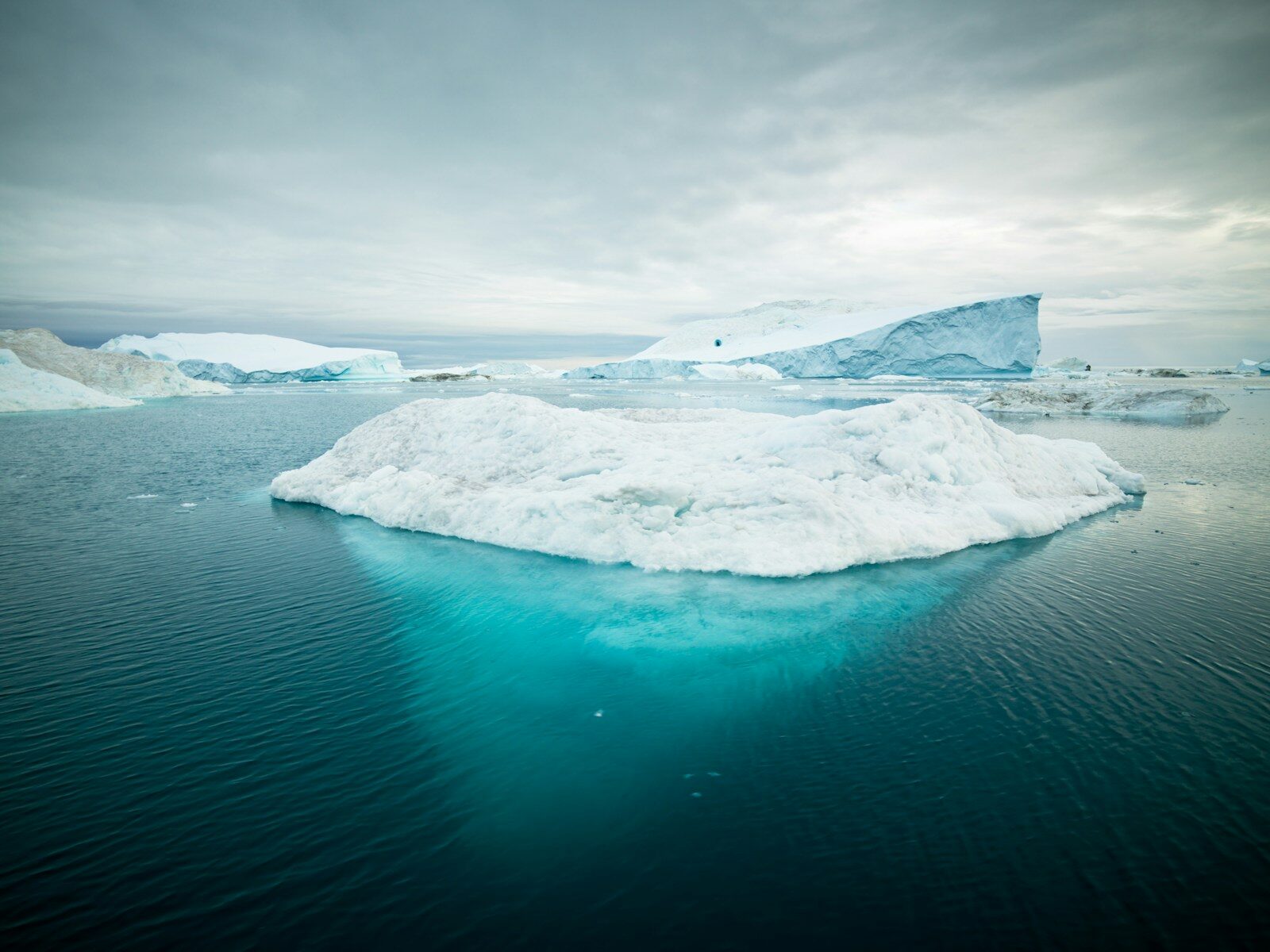
When analyzing the Earth’s destabilizing climate, the 2025 sea-ice extent serves as a stark, undeniable indicator of systemic cryosphere collapse. The cryosphere—encompassing the planet’s frozen water, from colossal ice sheets to seasonal snowpack—plays a fundamental role in regulating the global climate system. However, as the Earth’s energy imbalance continues to trap immense thermal energy, these frozen reserves are deteriorating at an unprecedented, mathematically predictable rate.
🎬 Watch our Web Story: Arctic Sea Ice Is Collapsing: 6 Consequences for the USA
📖 Related: AMOC & Ocean Current Disruptions Explained
The World Meteorological Organization’s latest data paints a grim picture of our planetary boundaries. From the record-low sea ice in the Arctic and Antarctic to the accelerating mass loss of terrestrial glaciers, the melting cryosphere is not an isolated environmental tragedy. It is a massive economic and ecological liability. This article bridges the gap between the physics of polar ice loss and its cascading impacts on global radiative forcing, ocean circulation, and biological survival.
Table of Contents
The Physics of the Cryosphere: Albedo and Radiative Forcing
To understand why the reduction of the 2025 sea-ice extent is so dangerous, we must examine the physics of the “albedo effect.” Albedo refers to the fraction of incoming sunlight that is reflected by a surface. Bright white sea ice and fresh snow act as the Earth’s natural mirrors, reflecting a significant portion of solar radiation back into space. This critical mechanism helps maintain the planet’s thermal equilibrium.
When warming atmospheric and oceanic temperatures melt this ice, they expose the dark ocean water or bare land underneath. Because these darker surfaces have a much lower albedo, they absorb more solar radiation, which subsequently warms the surrounding environment even further. This creates a dangerous, self-reinforcing positive feedback loop: warming causes ice loss, which lowers albedo, which causes more warming.
Furthermore, the physical integrity of terrestrial glaciers is under chemical and particulate attack. Exposed glacier ice is naturally darker than seasonal snowpack, but it is becoming increasingly sensitive to darkening from external pollutants. Mineral dust, black carbon, algal activity, and fallout from global forest fires all concentrate dark material on the ice surface, dramatically increasing the rate of solar absorption and melting.
For a broader understanding of how this thermal accumulation fits into the macro-climate, review our foundational guide on Earth’s energy imbalance.
Analyzing the Collapse: The 2025 Sea-Ice Extent
The observational satellite data detailing the 2025 sea-ice extent reveals a synchronized deterioration across both hemispheres. Sea ice expands in polar regions each autumn and winter as ocean water freezes, and decays during the summer warming periods. However, the 2025 data shows severe disruptions to this natural thermodynamic cycle.
The Arctic: Record Low Maximums
In the Northern Hemisphere, the annual average Arctic sea-ice extent in 2025 was the lowest or second lowest in the satellite era (which began in 1979), recorded at 10.10 ± 0.33 million km². This stands in stark contrast to the long-term average of 11.01 ± 0.29 million km².
Following a delayed freeze-up in late 2024, the Arctic saw its lowest maximum extent on record in 2025. Peaking between March 20 and 21, the maximum extent reached only 14.19 ± 0.40 million km². The downward trend in the minimum Arctic sea-ice extent is approximately 14% per decade, which is mathematically equivalent to losing 77,000 km² of vital ice coverage every single year.
The Antarctic: A Shifting Baseline
Historically, the Antarctic sea-ice extent showed a small but positive long-term increase until roughly 2015. That trend has now violently reversed. The annual average Antarctic ice extent in 2025 was the third lowest since 1979, recorded at 10.81 ± 0.26 million km².
Even more concerning, the annual minimum daily extent tied for the second lowest in the observed record, bottoming out at 2.06 ± 0.10 million km² between February 23 and March 1. The scientific community now notes that the past four years have seen the four lowest Antarctic sea-ice minima on record. Researchers are actively investigating whether this represents a permanent regime shift in Antarctic sea-ice physics.
To review the raw satellite imagery and methodologies tracking these shifts, you can explore the archives at the National Snow and Ice Data Center.
The Terrestrial Crisis: Glacial Mass Balance in 2025
While the 2025 sea-ice extent governs ocean surface dynamics, the loss of land-based ice presents a direct threat to global sea levels and freshwater resources. Glaciers act as massive terrestrial water towers, accumulating mass from snowfall and losing it through melting and calving.
In the 2024/2025 hydrological year, data from global reference glaciers indicated another year of extremely negative mass balance. In fact, the mass loss from this set of reference glaciers was among the five most negative on record since 1950.
Key Data Points on Glacial Retreat:
- Historical Context: Eight of the ten most negative annual glacier mass balances since 1950 have occurred recently, since 2016.
- Regional Devastation: In 2025, exceptional levels of glacier mass loss occurred in Iceland—which experienced its warmest year on record—and along the Pacific coast of North America.
- The Sea-Level Threat: Ice loss from glaciers contributed approximately 21% of the total global sea-level rise over the period spanning 1993 to 2018.
The Intergovernmental Panel on Climate Change states with medium confidence that the synchronous, global nature of this glacier retreat is entirely unprecedented in at least the last 2,000 years.
Bridging the Gap: Systemic Cascades of Ice Loss
The rapid decline of the 2025 sea-ice extent and glacial mass balance is not occurring in a vacuum. These physical changes cascade directly into the biological and economic systems that support human civilization.
Marine Ecosystem Degradation
The loss of sea ice dramatically alters ocean circulation, atmospheric dynamics, and localized surface heating. This leads to severe ecosystem and habitat degradation. For species that rely on sea ice for breeding and hunting—such as polar bears, seals, and specialized marine microorganisms—the diminishing ice acts as an extinction multiplier.
This biodiversity loss directly impacts human populations, particularly Indigenous communities. Reduced ice disrupts traditional hunting grounds and devastates localized food stocks, directly driving food insecurity and reduced livelihoods in polar regions.
Global Water Security and Agriculture
On land, the melting of freshwater glacial resources causes severe, downstream economic disruptions. In the short term, accelerated glacial melt increases the risk of catastrophic flooding, landslides, and avalanches. In the long term, once these “water towers” are depleted, the resulting water scarcity will devastate regions that rely on glacial runoff for agriculture, drinking water, and hydroelectric power generation. This directly threatens to reduce agricultural yields on a continental scale.
| Cryosphere Component | 2025 Metric | Long-Term Economic/Ecological Risk |
| Arctic Sea-Ice | Lowest maximum daily extent ($14.19$ million km²) | Enhanced radiative forcing, habitat loss, disrupted ocean circulation. |
| Antarctic Sea-Ice | Tied for 2nd lowest minimum ($2.06$ million km²) | Potential regime shift in global ocean thermodynamics and marine biodiversity. |
| Global Glaciers | Top 5 most negative mass balance on record | Freshwater scarcity, extreme coastal flooding, built infrastructure degradation. |
Economic Realities: New Routes and Resource Conflicts
The collapse of the 2025 sea-ice extent also opens up complex geopolitical and economic vulnerabilities. As the Arctic melts, new commercial transportation routes are becoming navigable. While some global shipping conglomerates view this as an economic opportunity, it introduces massive risks.
Increased access leads to unregulated commercial resource exploitation, overfishing, and unprecedented water pollution in highly sensitive, previously pristine environments. Furthermore, the race to secure these newly exposed resources is already triggering geopolitical friction, escalating the potential for international conflict over maritime borders and extraction rights.
To understand how global economic systems must pivot to address these resource disputes, explore our analysis on sustainable macroeconomics and conflict resolution.
Adapting to a Melting World
The data confirming the deterioration of the 2025 sea-ice extent and glacial mass is unequivocal. Human influence is very likely the main driver of the global retreat of glaciers since the 1990s, and the thermodynamic momentum of this melting is largely locked in.
We can no longer treat the cryosphere as a distant, isolated environment. The physical melting of ice directly translates to coastal inundation in Miami, agricultural droughts in the Himalayas, and altered weather patterns across Europe.
The path forward requires aggressive, immediate decarbonization to slow the rate of albedo loss. Simultaneously, global governments and economic planners must invest heavily in anticipatory adaptation. We must engineer coastal defenses for higher sea levels, redesign agricultural water management to survive without glacial runoff, and establish strict international treaties to prevent the exploitation of the fragile, thawing Arctic. The ice is vanishing; our systemic response must be rapid and resolute.
Authoritative Source: Bureau of Reclamation – Water Data
Global Ice Loss Acceleration: What 2025 Glacier and Sea Ice Data Reveals About the Pace of Change
The cryosphere—Earth’s frozen water systems including glaciers, ice sheets, sea ice, and permafrost—is losing mass at an accelerating rate that is consistently outpacing the projections of earlier climate models. The World Glacier Monitoring Service (WGMS), which coordinates global glacier monitoring data from over 130 countries, reported in 2023 that 2022 was the most extreme year for glacier mass loss in the 50-year observational record—with glaciers in the Swiss Alps losing approximately 6% of their total volume in a single year. NASA’s GRACE and GRACE-FO satellite gravity missions, which measure ice mass changes by detecting their gravitational signature from orbit, show that the Greenland ice sheet is losing approximately 280 billion tons per year and the Antarctic ice sheet approximately 150 billion tons per year—rates that have more than doubled since the early 2000s.
Arctic sea ice, while less directly relevant to sea level rise (floating ice displaces its weight in water already), is a critical climate regulator. The Arctic has warmed approximately four times faster than the global average since 1979—a phenomenon called “Arctic amplification” driven by the ice-albedo feedback: as bright, reflective sea ice retreats, it exposes darker ocean water that absorbs more solar energy, causing further warming. NSIDC (National Snow and Ice Data Center) data shows that Arctic summer sea ice extent has declined by approximately 40% since satellite observations began in 1979. Climate models and direct observations increasingly project an ice-free Arctic Ocean in summer by the 2030s or 2040s under current emissions trajectories—decades earlier than mid-20th-century projections anticipated.
The consequences of accelerating ice loss cascade through interconnected systems. Melting land ice from Greenland and Antarctica is the primary driver of sea level rise, which NOAA projects will reach 1–2 feet globally by 2050 and 1–4 feet by 2100 under intermediate emissions scenarios, with higher-end outcomes if ice sheet dynamics prove more volatile than current models project. Permafrost thaw in the Arctic releases ancient stores of methane and CO₂, creating a self-amplifying warming feedback. Glacier retreat threatens freshwater supplies for hundreds of millions of people in Asia and South America who depend on seasonal meltwater for drinking water and irrigation during dry seasons.
Ice loss is one of the most direct and measurable indicators of cumulative greenhouse gas emissions over time. Every fraction of a degree of warming preserved by emissions reductions translates directly into billions of tons of ice saved and centimeters of sea level rise avoided. Our Carbon Footprint Calculator helps you translate your daily choices into their cumulative climate impact—connecting personal action to the planetary scale of the changes these measurements reveal.
Authoritative Source: National Snow and Ice Data Center (NSIDC) — Arctic Sea Ice News and Analysis — NSIDC — Arctic Sea Ice News and Analysis
🧊 Carbon Footprint Calculator
Every degree of warming we avoid saves billions of tons of ice and limits sea level rise. Calculate your carbon footprint and connect your daily choices to the planetary systems they affect.
Calculate My Climate Impact →Dr. Ahmad Mahmood, Environmental Scientist and Founder of Sustainability Awakening, has reviewed this article for scientific accuracy. Dr. Mahmood specializes in climate systems, environmental policy, and sustainability education. All content reflects current peer-reviewed research and data from official sources.
Last verified: October 2026 | About the Author
Water Footprint Impact Calculator
Measure direct and virtual water consumption across household, agricultural, and industrial supply chains against regional watershed stress metrics.
Calculate Water Footprint →